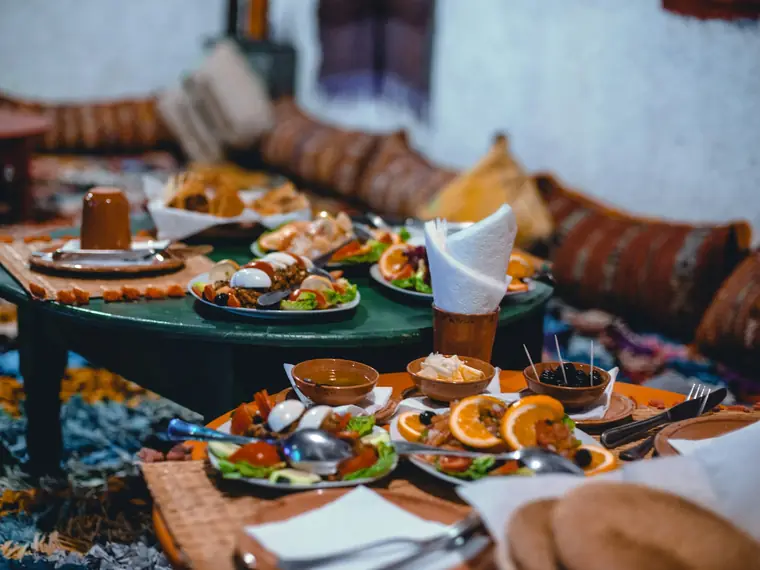
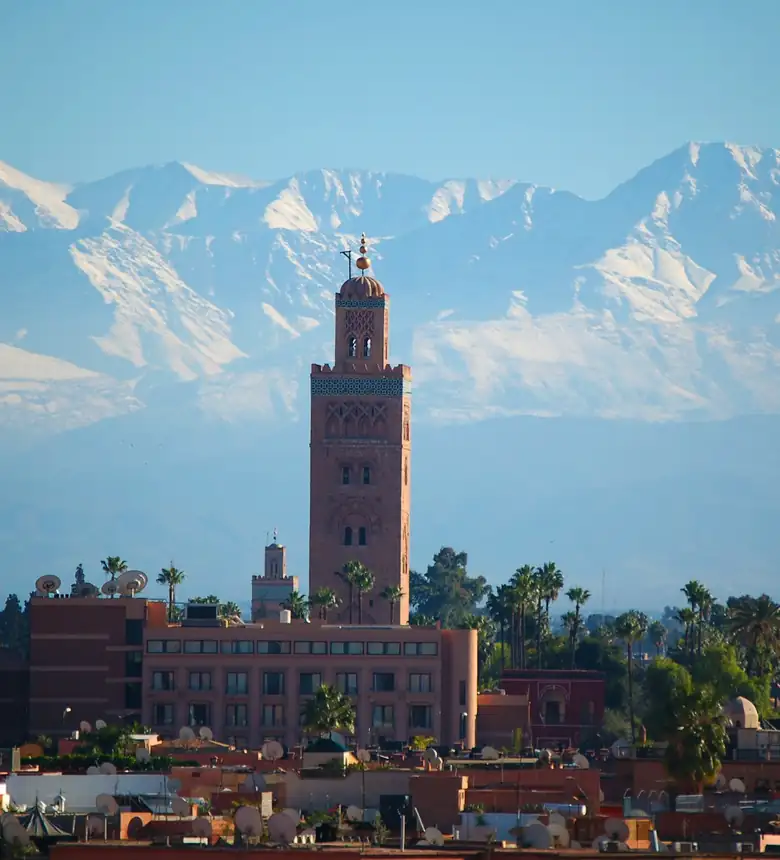
Moroccan cooking is one of the great cuisines of the Mediterranean and Africa, shaped by Amazigh farmers, Arab spice traders, Andalusian refugees and Saharan caravans. Its signature is balance: sweet with savoury, soft with crisp, slow-cooked meat with bright preserved lemon. You will eat well almost everywhere, from a family table in the Atlas to a food stall on Jemaa el-Fna. Here are fifteen dishes worth seeking out, with what goes into them and how they are eaten. Consider it a short introduction to Moroccan food, plate by plate.
01First, How Moroccans Eat
A traditional meal is shared. One large dish is set in the middle of a low round table, bread is torn and handed around, and everyone eats from the section of the plate in front of them, using pieces of bread and the first three fingers of the right hand. Meat usually sits in the centre and is divided by the host near the end. Cutlery is always offered to visitors, and nobody minds if you use it.
Lunch is the main meal of the day. Friday lunch, after the midday prayer, means couscous in almost every household. Dinner is lighter, often soup, and the evening ends with fruit and tea. Bread accompanies everything and is treated with respect: it is never thrown away, and a piece that falls is picked up.
02The Classics: Tagines and Couscous
1. Chicken tagine with preserved lemon and olives
If you taste only one dish, make it this. A tagine is both the conical clay pot and what is cooked in it: meat and vegetables stewed slowly over charcoal, so that the steam condenses in the lid and falls back. Here chicken is simmered with onions, ginger, saffron, green olives and lemons that have been preserved in salt for weeks, which gives a deep, slightly bitter citrus note found nowhere else.
2. Lamb or beef tagine with prunes and almonds
The sweet-and-savoury face of Moroccan cooking. The meat cooks until it falls from the bone, the prunes are poached with cinnamon and a little honey, and toasted almonds and sesame seeds are scattered on top. It is a dish for celebrations, and a favourite of visitors.
3. Kefta tagine
Small meatballs of minced beef or lamb, seasoned with cumin, paprika and parsley, cooked in a rich tomato sauce. Eggs are broken into the sauce at the last moment and arrive just set. Quick, generous and found in every roadside restaurant.
4. Berber vegetable tagine
In the mountains and the south, the everyday tagine is built from what the garden gives: potatoes, carrots, courgettes, turnips, peas and tomatoes, arranged in a cone over a little meat or none at all. Cooked very slowly, the vegetables keep their shape and take the flavour of the spices. Vegetarians will eat it often and happily.
5. Couscous with seven vegetables
Couscous is fine semolina rolled by hand and steamed, traditionally three times, over the broth in which meat and vegetables are cooking. It is served in a mound with the vegetables arranged on top, the broth on the side, and sometimes tfaya, a sweet topping of caramelised onions and raisins. It is the Friday meal, the family meal, and it is recognised by UNESCO as part of the shared heritage of North Africa.
03Dishes for Special Occasions
6. Pastilla
The masterpiece of Fes. Layers of paper-thin pastry enclose a filling of shredded chicken, or pigeon in the original recipe, with an egg and herb sauce and a layer of ground almonds. The top is dusted with sugar and cinnamon. Sweet, salty, crisp and soft at once, it sounds unlikely and tastes extraordinary. A seafood version, without sugar, is popular on the coast.
7. Mechoui
A whole lamb roasted slowly in a clay pit oven until the meat can be pulled apart with the fingers, eaten with nothing but salt and cumin. In Marrakech a lane beside the main square is devoted to it, and it is at its best around midday.
8. Tangia
Not to be confused with tagine. Tangia is the bachelor’s dish of Marrakech: meat, preserved lemon, garlic, cumin and saffron are sealed in a tall clay urn and left for hours in the embers of the neighbourhood hammam furnace. The result is meltingly tender and intensely flavoured.
9. Rfissa
Shredded sheets of thin flatbread soaked in a broth of chicken, lentils and fenugreek, a spice with a warm, slightly bitter taste. It is traditionally prepared for a mother after the birth of a child, and it is comfort food at its most Moroccan.
04Soups, Salads and Bread
10. Harira
A thick soup of tomatoes, lentils, chickpeas, a little meat, celery and fresh coriander, finished with a squeeze of lemon. During Ramadan it breaks the fast in every home, served with dates and sticky honey pastries called chebakia. Outside Ramadan you will find it in the evening at simple cafés for the price of a coffee.
11. Bissara
A purée of dried broad beans, served hot with olive oil, cumin and paprika and eaten with bread, mostly for breakfast in winter. It is cheap, filling and delicious, and it is the breakfast of the north, especially in Chefchaouen and Fes.
12. Zaalouk and the cooked salads
A Moroccan meal often opens with small plates of salads that are cooked rather than raw. Zaalouk is aubergine and tomato with garlic and cumin; taktouka is roasted peppers and tomato; there are carrots with cumin, beetroot with orange blossom and many more. With fresh bread they could be a meal on their own.
13. Khobz and msemen
Khobz is the round, crusty loaf baked daily, in the countryside still in clay ovens and in the old cities in the communal oven of each quarter. Msemen is a square, layered pancake cooked on a griddle and eaten at breakfast with honey, or stuffed with onions and spices as a snack. In the desert you may also meet medfouna, a stuffed bread sometimes called Berber pizza, baked in sand or a clay oven.
05Street Food, Sweets and the National Drink
14. Brochettes, snail soup and sfenj
Street food is safe when it is cooked in front of you and popular with locals. Brochettes are skewers of spiced meat grilled over charcoal and tucked into bread. On the squares, stalls sell bowls of small snails in a peppery, herbal broth said to be good for the health. In the morning look for sfenj, rings of fried dough eaten hot and plain or dipped in sugar.
15. Mint tea and pastries
Tea is more than a drink: it is the sign of welcome. Chinese green tea is brewed with a large bunch of fresh mint and a generous amount of sugar, then poured from a height to create a light foam. It comes with pastries made from almonds, honey and orange-flower water, the best known being kaab el ghazal, the crescent-shaped gazelle horn. You may ask for less sugar, and nobody will be offended.
06Where to Try Them
Each region has its specialities. A simple rule: eat the local dish in its own city.
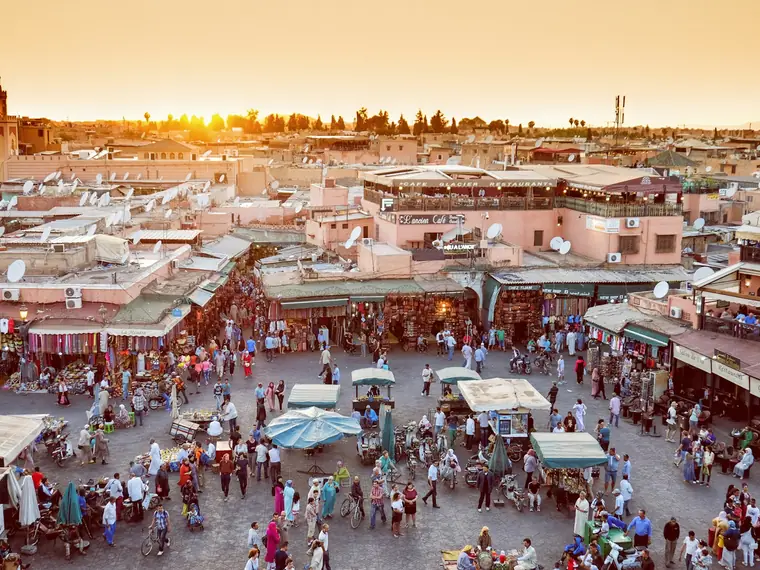 MarrakechTangia, mechoui and the evening food stalls of Jemaa el-Fna.
 FesPastilla, refined tagines and the best street-food walk in the country.
 The CoastGrilled sardines and seafood in Essaouira, Agadir and Asilah.
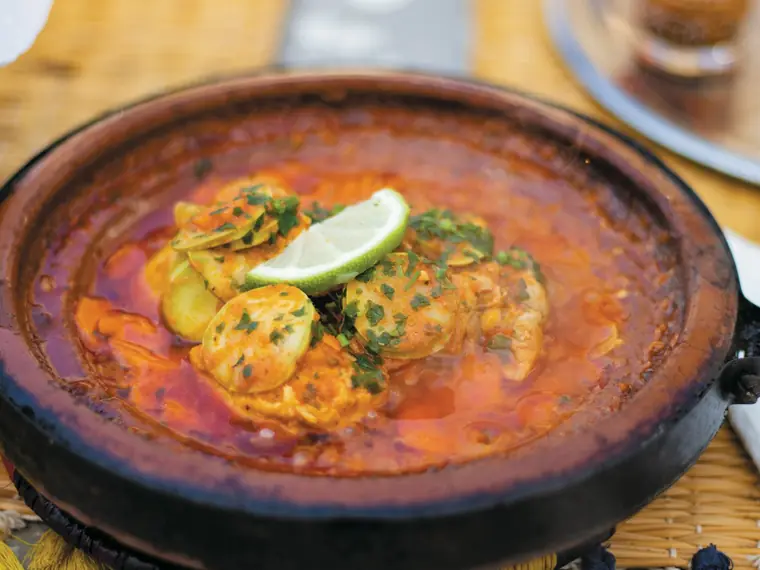 The SouthBerber tagines, dates and stuffed bread in the valleys and the desert.
07The Flavours Behind the Food
A handful of ingredients gives Moroccan food its character. Cumin, ginger, turmeric, paprika, cinnamon and black pepper are in daily use. Saffron, grown around Taliouine in the south, colours and perfumes festive dishes. Ras el hanout, literally “head of the shop”, is each spice merchant’s own blend of a dozen or more spices and is used sparingly for depth.
Then there are the preserved and fermented things: lemons cured in salt, olives of every colour, and smen, an aged butter with a strong flavour used in couscous and rfissa. Argan oil, pressed from the nuts of a tree that grows only in the south-west, is drizzled over salads and mixed with almonds and honey into amlou, a spread you will meet at breakfast. Fresh coriander and parsley finish almost everything.
Moroccan food is aromatic rather than hot. If you like chilli, ask for harissa, a red pepper paste served on the side.
08Practical Tips for Eating Well
A few habits will help you enjoy every meal:
- Follow the crowdA busy stall or restaurant full of local families is the best guarantee of fresh food.
- Order ahead for slow dishesPastilla, mechoui, tangia and proper couscous take hours. Riads usually ask you to order dinner in the morning.
- Vegetarian and vegan travellersVegetable tagine and couscous, lentils, white beans, bissara and the cooked salads are everywhere. Say clearly that you do not eat meat, as broth is often made with it.
- AllergiesAlmonds, sesame and wheat are widely used. Explain allergies to your guide or host, who can speak to the kitchen for you.
- Take a cooking classShopping in the souk with a cook and preparing your own tagine is one of the most enjoyable half days you can spend, and you take the recipes home.
09Food at Home, on the Road and in the Desert
The best Moroccan food is not found in restaurants. It is cooked at home, by women who learned from their mothers and measure nothing. That is why a dinner in a family-run riad or a village guesthouse is so often the meal travellers remember: the tagine has been on the charcoal since the afternoon, the bread was baked that morning, and the salads come from the garden behind the house.
On the road between cities, lunch is usually taken in a simple restaurant where tagines stand in a row over a line of braziers, each lid lifted for you to choose. In the south, look for places where the meat is bought from the butcher next door and grilled while you wait, served with tomato and onion salad and a pot of tea.
In a desert camp, dinner follows the same generous pattern: a soup or salads, a tagine or couscous, and fruit. In the morning there is bread or pancakes, eggs, jam, honey and olive oil. If the camp team are baking bread in the sand, ask to watch. A loaf is buried under hot embers and sand, dug out half an hour later, dusted off and broken open, and it tastes of woodsmoke and patience.
Wherever you are, accept the glass of tea when it is offered. It costs your host very little and means a great deal, and many of the best conversations of a journey begin with it.
10Moroccan Food: Frequently Asked Questions
Is Moroccan food spicy?
It is richly spiced but rarely hot. Chilli is served on the side as harissa, so you can add as much or as little as you like.
Is street food in Morocco safe?
Generally yes, if you choose busy stalls where food is cooked to order and served hot. Wash your hands and drink bottled water.
What do Moroccans eat for breakfast?
Bread with olive oil, honey, jam or amlou, pancakes such as msemen and baghrir, olives, eggs, and in winter a bowl of bissara, with mint tea or coffee.
Is pork or alcohol served in Morocco?
Pork is not part of Moroccan cooking and is rarely available. Alcohol is served in licensed hotels, riads and restaurants, mainly in cities and tourist areas.