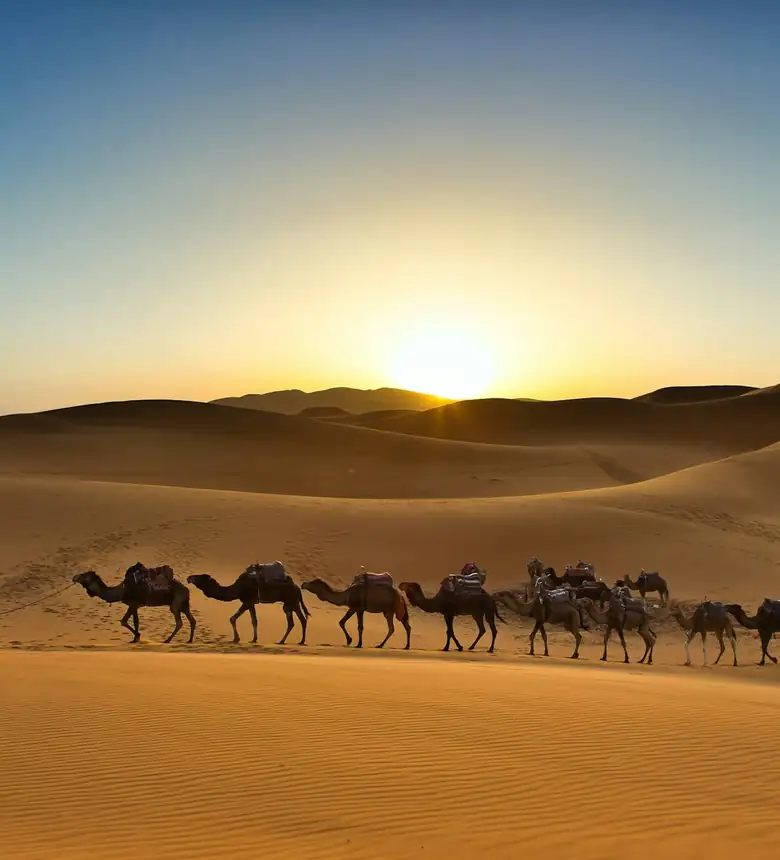
Morocco can be visited in every month of the year, but it is not the same country in January and in July. Within a day’s drive you can stand in snow on the High Atlas, in spring sunshine in Marrakech and in dry desert heat near the Algerian border. The best time to come depends on where you want to go and what you want to do. This guide takes you through the year month by month, then region by region, so you can match your dates to your plans. Here is how to choose the best time to visit Morocco for your own trip.
01The Short Answer
For a first trip that combines the imperial cities, the mountains and the Sahara, the best months are March, April, May, October and November. Days are warm without being hot, nights are comfortable, and the light is at its best. These are also the busiest months, so riads and desert camps should be booked well ahead.
Winter, from December to February, is excellent for the desert and the south, with clear blue days and cold nights. Summer, from June to August, is the season for the Atlantic coast and the high mountains, while Marrakech, Fes and the Sahara are very hot. With good planning, each season has its rewards.
02Winter: December, January and February
December
Days are short, bright and mild in Marrakech, usually between 18 and 21°C in the afternoon, and cold as soon as the sun goes down. Snow settles on the Atlas and makes a splendid backdrop to the city. The desert is sunny and still by day and close to freezing at night, which is exactly when the stars are sharpest. The last two weeks of the year are high season: Christmas and New Year in a desert camp are booked months ahead.
January
The coldest month. Fes, Chefchaouen and the north are cool and can be rainy; riads with heating matter here. The south is the place to be: the road of the kasbahs under a hard blue sky, almond trees beginning to flower in the valleys, and few other travellers. Occasionally heavy snow closes the Tichka pass for a few hours.
February
Almond blossom covers the valleys of the Anti-Atlas and the first green appears in the fields. Temperatures begin to rise, especially in the desert, where afternoons are pleasantly warm. It is a very good month for a Sahara tour at a quiet time, provided you pack warm layers for the night.
03Spring: March, April and May
March
Spring arrives. The plains north of Marrakech turn green and wildflowers line the roads. Days of 22 to 25°C are common in the cities and the desert, and the nights lose their bite. Rain is still possible in the north. Spring is also when winds occasionally raise sand in the desert, usually for a few hours.
April
For many people the best month of all. The valleys of the south are in full leaf beneath the snow of the high peaks, rivers are running, waterfalls such as Ouzoud are at their fullest, and it is warm enough to dine outside. Easter holidays bring many visitors, so book early.
May
Warm, settled and long-dayed. In the Dades region the roses are picked before dawn and the Valley of Roses celebrates its harvest with a festival in Kalaat M’Gouna. The desert is becoming hot in the middle of the day, but mornings and evenings are perfect. It is the last ideal month for the far south before the summer.
04Summer: June, July and August
June
The heat builds inland, with Marrakech regularly above 35°C. The coast stays fresh thanks to the Atlantic breeze, and the mountains are at their best for walking. Early June is still workable for a short desert trip with an air-conditioned camp; cherry orchards around Sefrou are harvested and Essaouira hosts its Gnaoua music festival.
July
The hottest month. In the Sahara the afternoon can pass 42°C, and in Marrakech and Fes the middle of the day is for the pool or a shaded riad. This is the month to choose Essaouira, Asilah, Tangier, Agadir or the cool heights of the Atlas. If the desert is essential, travel in the early morning, ride camels at sunset only and pick a camp with air conditioning.
August
Much the same as July, and Moroccan families are on holiday, so beach towns are lively. In the south some people bury themselves to the neck in hot sand around Merzouga, a traditional treatment for rheumatism. Late in the month the first dates ripen in the oases.
05Autumn: September, October and November
September
The heat eases week by week. The sea is at its warmest, the light softens, and by the second half of the month the desert is comfortable again in the evening. It is a good time for a grand tour starting on the coast or in the north and reaching the Sahara at the end.
October
The twin of April. Warm days, mild nights, and the date harvest in the Draa and Ziz valleys, when the souk of Erfoud is stacked with boxes of fruit. Skies are clear, the air is still and the dunes are a deep orange after any rain. It is one of the busiest months of the year.
November
Still fine in the south, with cooler nights and the first snow on the summits. The north becomes wetter. Saffron is gathered around Taliouine, and olive presses start turning. It is an excellent, slightly quieter month for the desert, the kasbahs and Marrakech.
06Region by Region
The same month can be ideal in one part of Morocco and difficult in another. As a quick guide:
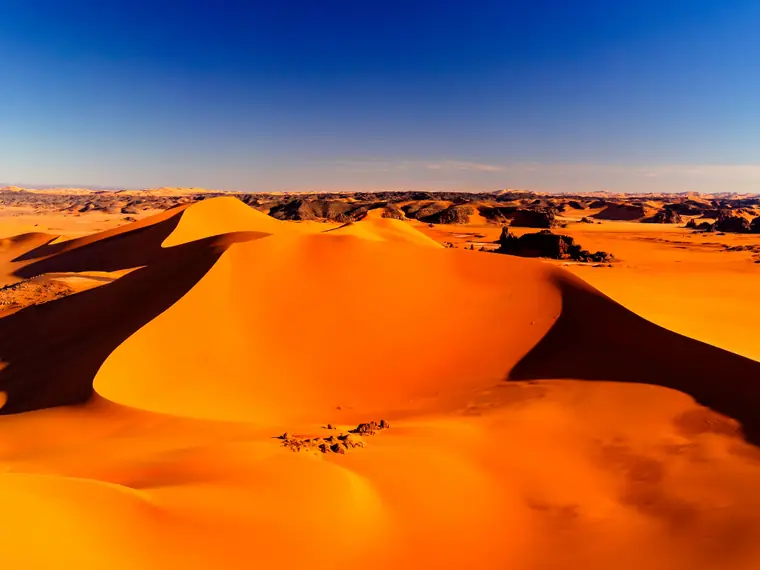 Sahara (Oct – Apr)Best from October to April. Cold nights in winter; very hot from June to August.
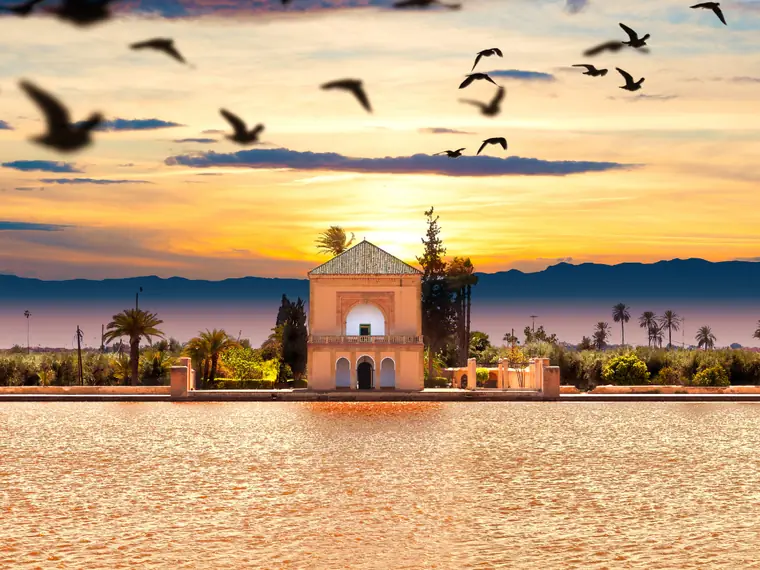 Cities (Mar – May, Sep – Nov)Marrakech and Fes are most pleasant in spring and autumn.
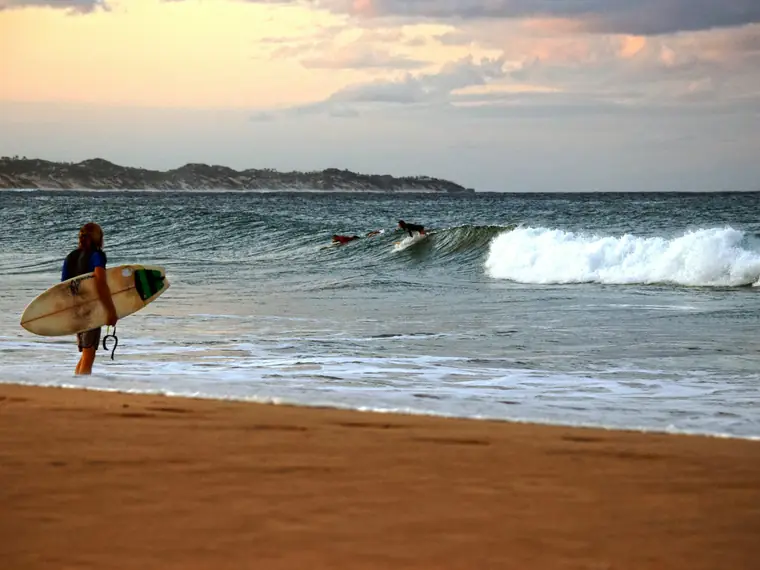 Coast (All year)Mild all year; the place to be in summer. Best surf from October to March.
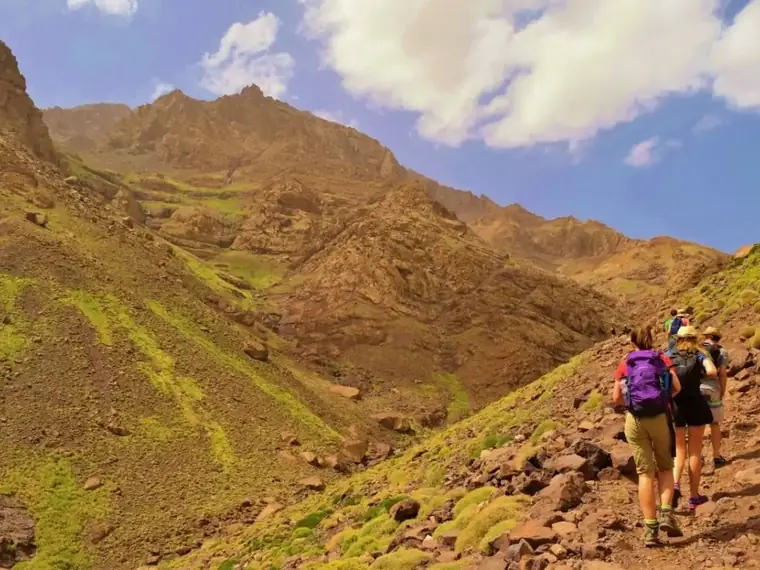 Atlas (Apr – Oct)Walking from spring to autumn; snow on the high passes in winter.
07Ramadan, Holidays and Festivals
Ramadan
During the holy month, Muslims fast from dawn to sunset. The dates follow the lunar calendar and move about eleven days earlier each year, so check them before you book. Travelling in Ramadan is entirely possible and often rewarding. Monuments stay open, sometimes with shorter hours; restaurants serving visitors keep working; and at sunset the streets empty, then fill again with a festive atmosphere that lasts late into the night. Your driver and guide will be fasting, so a little patience late in the afternoon is appreciated, as is eating and drinking discreetly in public.
Other dates worth knowing
Eid al-Fitr, at the end of Ramadan, and Eid al-Adha, about ten weeks later, are family holidays when many shops and workshops close for two or three days. The rose festival in May, the Gnaoua festival in Essaouira in early summer, the sacred music festival in Fes and the date festival in Erfoud in autumn are all good reasons to choose particular dates. Festival dates are confirmed each year, so ask us before planning around one.
08Which Season for Which Trip?
If you already know what kind of journey you want, start here:
- A first grand tourMarch to May or late September to November, when every region is comfortable.
- A desert escapeOctober to April. Choose winter for crisp skies and quiet dunes, spring or autumn for milder nights.
- A family holidayEaster and the October break work very well. In summer, combine the coast and the Atlas and keep desert stages short.
- A honeymoonApril, May, October and November give warm days and evenings made for dinner under the stars.
- PhotographyWinter and spring bring snow on the Atlas behind the kasbahs and the clearest air; autumn brings warm, low light.
- TrekkingApril to June and September to October in the High Atlas; winter for the Saghro and the desert on foot.
09Why the Weather Varies So Much
Three things shape the Moroccan climate: the Atlantic, the mountains and the Sahara. The ocean keeps the coast temperate all year, cool in summer and mild in winter, and sends rain to the north between November and March. The Atlas and the Rif catch that rain and snow, which is why the northern slopes are green and wooded.
South and east of the mountains you are in their rain shadow. The valleys of the Dades and the Draa, and the desert beyond, see very little rain and a great deal of sun: more than three hundred clear days a year around Merzouga. With dry air and open skies, the difference between day and night is large. A winter afternoon of 20°C in the dunes can be followed by a night near zero.
Altitude matters as much as latitude. Marrakech lies at about 450 metres, Ifrane in the Middle Atlas at 1,650 and the Tichka pass above 2,200. As a rule the temperature drops by roughly six degrees for every thousand metres you climb, which explains why you may need a jacket at lunchtime on the pass and short sleeves an hour later in Ouarzazate.
10Booking and Packing by Season
Once you have chosen your dates, a few practical points follow:
- Book high season earlyFor Easter, October, Christmas and New Year, the best riads and desert camps fill several months in advance.
- WinterA warm jacket, a hat and gloves for the desert night and the mountain passes, plus layers you can remove at midday. Choose accommodation with heating.
- Spring and autumnLight clothes for the day, a fleece or jumper for the evening, and a scarf for sun, wind and sand.
- SummerLoose cotton or linen, a wide hat, strong sunscreen, and accommodation with air conditioning or a pool. Plan visits before eleven and after five.
- Shoulder monthsEarly March, June, early September and late November often combine good weather with fewer visitors and more choice of rooms.
11Best Time to Visit Morocco: Frequently Asked Questions
What is the best month to visit Morocco?
April and October are the most balanced months, with warm days and mild nights across the country. March, May and November are close behind.
Is Morocco too hot in summer?
Inland cities and the desert are very hot from June to August. The Atlantic coast and the Atlas mountains remain pleasant, so a summer trip is best built around them.
Does it get cold in Morocco?
Yes. Winter nights are cold in the desert, the mountains and the old cities, where houses are built to stay cool. Bring warm layers from November to March.
Can I visit Morocco during Ramadan?
Yes. Sites, hotels and tourist restaurants remain open. Days are quieter, evenings are lively, and some opening hours are shorter.
When is the rainy season?
Most rain falls between November and March, mainly in the north and the mountains. The south and the desert receive very little rain at any time.
