
Marrakech has sunshine on about three hundred days of the year, which is why people come at every season. But the city changes a great deal between a January morning, when you can see your breath on a riad terrace and the Atlas is white with snow, and a July afternoon, when the streets are empty and the thermometer passes forty degrees. This guide describes what to expect in each season, so that you can choose your dates, or make the best of the dates you have. So when is the best time to visit Marrakech? It depends on what you want from the city.
01The Climate in Brief
Marrakech lies on a plain at about 450 metres above sea level, some 150 kilometres from the Atlantic and at the foot of the High Atlas. The mountains shield it from the Sahara to the south, and the distance from the sea means it has none of the coast’s moderating breeze. The result is a semi-arid climate with hot, dry summers, mild winters and large differences between day and night.
Rain is modest, around 250 millimetres a year, and falls almost entirely between November and April, usually in short spells of a day or two followed by brilliant weather. From June to September it hardly rains at all. Humidity is low, so heat is easier to bear than the numbers suggest, and shade makes an immediate difference. It also means that evenings cool quickly, and that winter nights are colder than visitors expect.
02The Four Seasons at a Glance
Typical daytime temperatures by season. Individual days can be warmer or cooler.
 Spring (Mar – May)Around 22 to 29°C. Gardens in flower, snow still on the Atlas. Ideal.
 Summer (Jun – Aug)Around 33 to 38°C, sometimes above 40. Quiet, good value, pool weather.
 Autumn (Sep – Nov)From about 33°C in September down to 22°C in November. Golden light.
 Winter (Dec – Feb)Around 18 to 20°C by day, 5 to 7°C at night. Clear skies, cold evenings.
03Spring: March, April and May
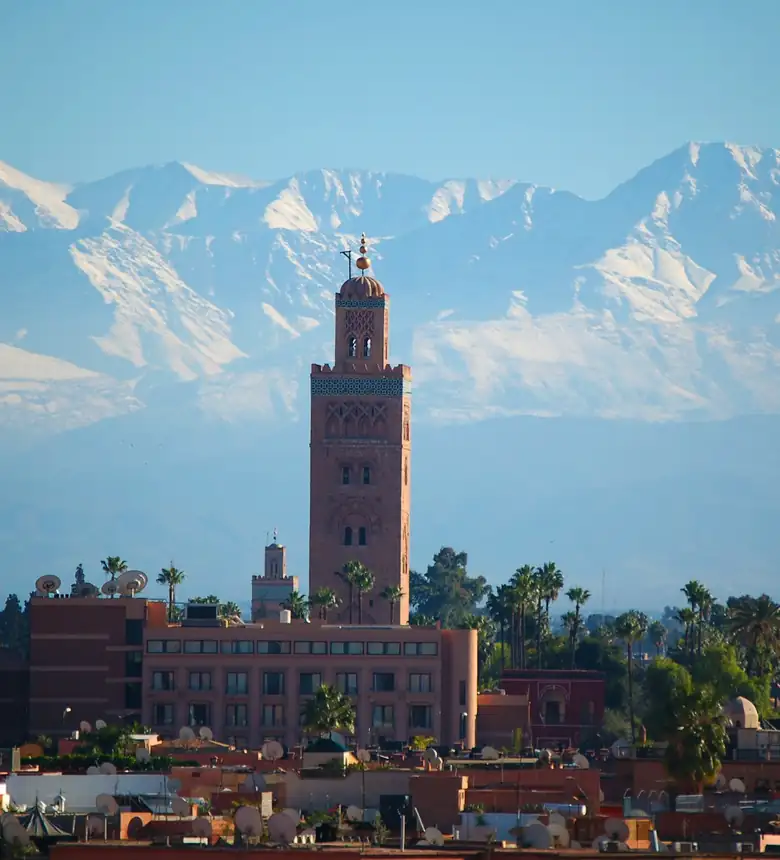
Spring is the season in which Marrakech is at its most beautiful. The orange trees that line the streets come into blossom in March and April and perfume whole districts. Roses and bougainvillea fill the riad courtyards and the public gardens, the plain outside the city is briefly green, and the High Atlas still carries its snow, forming a white wall behind the pink ramparts.
Days are warm enough for breakfast on the roof and dinner outdoors, and nights are cool enough to sleep well. Everything is possible: long walks in the medina, day trips to the Ourika Valley and Imlil, where the cherry and walnut trees are in leaf, and to the waterfalls of Ouzoud, which are at their fullest with snowmelt.
The only drawback is that everyone knows it. Easter and the weeks around it are among the busiest of the year. Book riads, restaurants, guides and popular sites such as the Majorelle Garden in advance, and start your days early. March can still bring the odd shower; by May the afternoons are properly hot, and a pool begins to be welcome.
04Summer: June, July and August
Summer is hot, and there is no point pretending otherwise. Afternoon temperatures between 35 and 40°C are normal in July and August, and when the chergui, a dry wind from the Sahara, blows across the mountains, they can climb several degrees higher for a few days.
Yet the city has lived with heat for nine hundred years and knows how to manage it. The secret is to follow the local rhythm. Go out at eight, when the air is fresh and the monuments are empty. Return to your riad by noon for lunch, the plunge pool and a siesta behind thick walls. Go out again after five, when the shadows lengthen, and stay out late: Jemaa el-Fna and the souks are at their liveliest on summer nights.
Summer has real advantages. There are fewer visitors, rooms are easier to find and often cheaper, and the light at dawn and dusk is magnificent. It is also the season to escape upwards. Within an hour you can be ten degrees cooler in the Ourika Valley, lunching with your feet almost in the river, or at Imlil, or beside the lake of Lalla Takerkoust. The Atlantic at Essaouira, about two and a half hours away, is cooler still. If you plan to continue to the Sahara, keep the desert stay short at this time of year and choose a camp with air conditioning.
05Autumn: September, October and November
September begins as a continuation of summer, but the nights grow longer and cooler, and by the last week the heat has lost its edge. October is the twin of April: warm days, soft evenings and steady weather. November is cooler and occasionally wet, with the first snow appearing on the high summits and the air washed clear after rain.
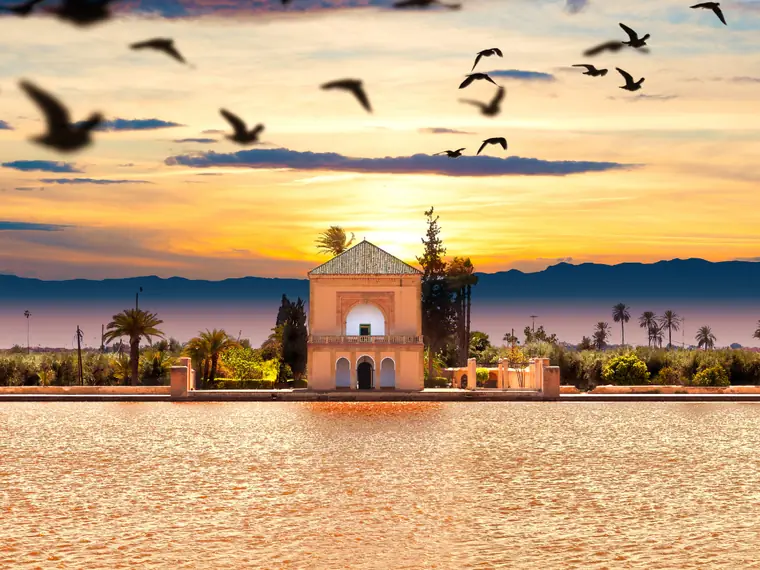
Autumn has a mellow quality that many people prefer to spring. The light is lower and warmer, the pomegranates and dates are in the markets, the olive harvest begins on the plain, and the city feels settled after the summer. It is an excellent time for photography, for walking in the mountains, and for combining Marrakech with a journey over the Atlas to the kasbahs and the desert, which is at its best from October onwards.
October is a busy month, with school holidays in several countries, so reserve early. November, apart from its first days, is quieter and good value.
06Winter: December, January and February
Winter in Marrakech is a surprise to those who expect Africa to be warm all year. The days are usually sunny and pleasant, often around 18 to 20°C in the early afternoon, perfect for sightseeing in a light jumper. But as soon as the sun goes down the temperature falls quickly, and nights of 4 to 6°C are common. Traditional houses, built to stay cool, can be chilly, so a riad with good heating, a fireplace and thick blankets is worth choosing with care.
In exchange you have some of the clearest air of the year. The Atlas stands out sharp and white behind the palms, the city is calm outside the holidays, and sitting in the sun on a roof terrace at midday with the mountains in view is one of the pleasures of the season. A hammam is never more welcome than on a winter evening. You can even ski, after a fashion, at Oukaïmeden, about an hour and a half away, the highest ski resort in Africa.
The exception to the calm is the period from Christmas to the first days of January, which is one of the busiest and most expensive of the year. Rain, when it comes, usually falls in short bursts between November and March. On the rare days when heavy snow closes the Tichka pass for a few hours, journeys south may be delayed.
07Ramadan and Events
Ramadan
The month of fasting moves through the calendar, beginning about eleven days earlier each year. In Marrakech, monuments, riads and restaurants for visitors remain open, sometimes with shorter hours. The city is quiet by day and comes alive at sunset, when the cannon sounds, families break the fast, and the square and the streets stay busy until late. It is a fascinating time to visit if you are flexible about timings and discreet about eating and drinking in public during the day.
Festivals and gatherings
Marrakech hosts cultural events through the year, among them a festival of popular arts, with folk troupes from all over Morocco, a well-known marathon in winter and an international film festival late in the year. Dates are set annually, and hotels fill when major events take place, so it is worth checking the calendar before fixing your trip.
08A Quick Month-by-Month Summary
January is cool, bright and quiet, with the most snow on the mountains. February brings almond blossom to the valleys of the Atlas and the first warm afternoons. March is green and fresh, with the occasional shower. April is the height of spring, fragrant with orange blossom and busy around Easter. May is warm and settled, the last month before the real heat.
June is hot but dry, with long evenings and fewer visitors. July and August are the months of early mornings, long siestas and late nights. September is still hot at first, then eases. October is superb. November is mild and can be rainy for a day or two. December is clear and cool, quiet until the holidays and festive at the end.
If your dates are fixed by school holidays or work, do not worry. There is no month in which Marrakech cannot be enjoyed. The difference lies in how you organise the day: in the cool months you are out from mid-morning to sunset and indoors by the fire in the evening; in the hot months you turn the day inside out and live in the morning and the night. Tell us when you are coming, and we will plan the visits, the excursions and the pace to suit the season.
09Which Season Is Right for You?
A quick way to decide:
- First visit, sightseeingMarch to May or October to mid-November.
- Pool, spa and relaxationMay, June and September, when it is hot enough to swim and not too hot to move.
- Best value and fewest crowdsJanuary and February outside holidays; July and August if you are comfortable with heat.
- PhotographyWinter and early spring for snow on the Atlas; autumn for warm light.
- Hiking in the AtlasApril to June and September to October.
- Marrakech and the SaharaOctober to April, when the desert is comfortable.
- FamiliesEaster, October half-term and Christmas all work well. In summer choose a hotel with a good pool and plan mountain and coast days.
10What to Pack by Season
Whatever the month, bring comfortable shoes, sunglasses and a hat. Then:
- Spring and autumnLight clothes for the day, a jumper or light jacket for the evening, and a scarf.
- SummerLoose cotton and linen in pale colours, a wide-brimmed hat, high-factor sunscreen and swimwear.
- WinterLayers: T-shirt, jumper and a warm jacket for evenings and early mornings. Warm sleepwear is no bad idea.
- All yearClothing that covers shoulders and knees for the medina, and a refillable water bottle.
11Best Time to Visit Marrakech: Frequently Asked Questions
What is the best month to visit Marrakech?
April, May and October offer the best combination of warm days, mild nights and clear skies.
Is Marrakech too hot in summer?
Afternoons are very hot in July and August, but mornings and evenings are pleasant. With a pool, air conditioning and a midday break, a summer stay is quite manageable.
Is Marrakech cold in winter?
Days are mild and sunny, but nights are cold, often around 5°C. Choose accommodation with heating and bring warm layers.
Does it rain in Marrakech?
Not often. Most rain falls in short spells between November and April; summers are almost completely dry.
When is Marrakech least crowded?
January and February apart from the New Year period, and the height of summer.