Night 1
Ouarzazate
Kasbah-style guesthouse
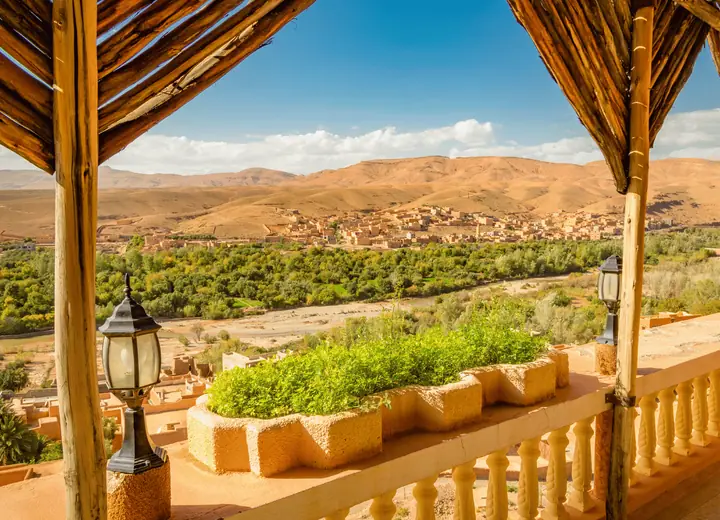
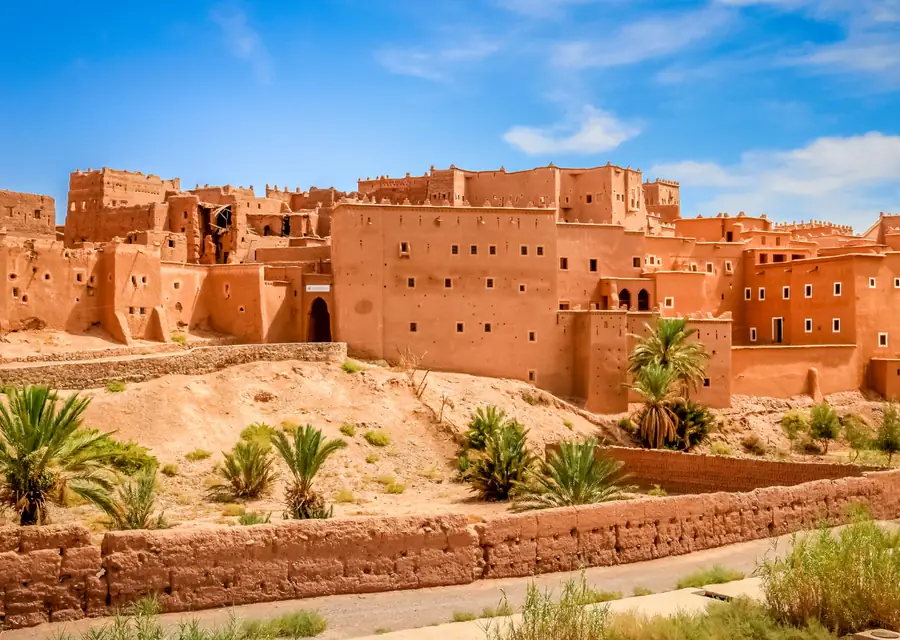
A family-run guesthouse or kasbah hotel built in the local earthen style, with en-suite rooms, a terrace over the valley and a home-cooked dinner.
An eight-day journey for fossil and mineral lovers, from Marrakech to Fes.

Tour overview
An eight-day journey for fossil and mineral lovers, from Marrakech to Fes. After the Anti-Atlas and a full field day around Alnif, you reach the dunes of Merzouga and the dinosaur beds of the Kem Kem, then head north through the Ziz Gorges to the old vanadinite mines of Midelt and the cedar forests of the Middle Atlas.
Our 8 Day Marrakech to Fes Fossil and Mineral Tour begins in Marrakech and ends in Fes, covering about 1,640 km by road over eight days. Along the way you will experience the Tizi n'Tichka pass over the High Atlas, the UNESCO-listed ksar of Ait Ben Haddou, a sunset camel trek in the dunes of Erg Chebbi, a night in a desert camp, the palm groves of the Draa Valley, the cedar forests and Barbary macaques of the Middle Atlas and the trilobite beds around Alnif in the Anti-Atlas. Each stop is a real visit on foot, with your driver-guide explaining what you are looking at and local people adding their own stories.
Accommodation is chosen for character and location rather than size: 7 nights in all, in kasbah-style guesthouses in the southern valleys, comfortable hotels where they suit the route better and one night in a desert camp in the dunes of Erg Chebbi. You travel in a private, air-conditioned vehicle, a 4x4 or a minibus depending on the size of your party, with an English-speaking driver-guide who knows these roads well. Spanish, Italian, French and Portuguese-speaking guides are available on request.
It is planned for travellers who are curious about geology and palaeontology, from serious collectors to families with a young fossil hunter: field stops are gentle walks on rocky ground, no experience is needed, and your guide adapts the time spent at each site to your interest. The longest day on the road is day 2, with 6.5–7 hours with field stops of driving; every other day is shorter, and all of them are broken up by visits and stops. Like all our tours it is fully private, so the plan below can be lengthened, shortened or rearranged to fit your dates.
Highlights
Detailed itinerary
We pick you up at your Marrakech riad early in the morning and drive east to Sidi Rahal, in the foothills of the High Atlas, where small mines produce quartz, agate, chalcedony and amethyst. A local miner shows you the workings and how a geode is cracked open to reveal its crystals.
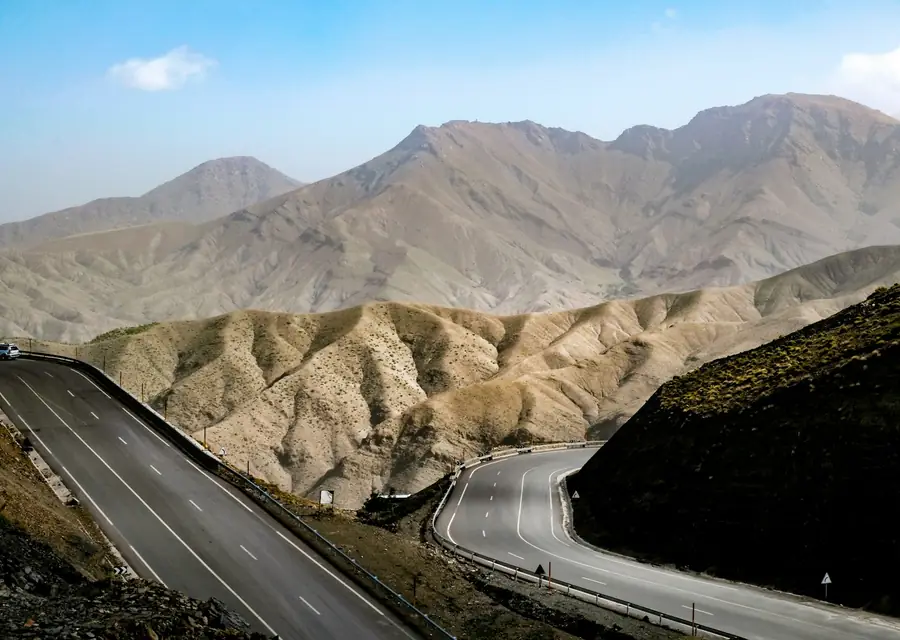
From Ait Ourir you climb to the Tizi n'Tichka pass. Roadside sellers display geodes and quartz points; your guide explains which are natural and which have been coloured. Below the pass, the Ounila Valley, its slopes banded in red, ochre and green clays, leads to Ait Ben Haddou, where you walk up through the ksar to the ruined granary on the summit.
Ouarzazate is your stop for the night, in a kasbah-style hotel. At dinner your guide sets out the plan for the days ahead, from the trilobite beds of Alnif to the mines of Midelt.
Heading south-east from Ouarzazate, you cross the Tizi n'Tinifift and drop into the Draa Valley at Agdz, then follow its palm groves south towards Zagora. All around you are the eroded ridges of the Anti-Atlas, made of seabed sediments from the Palaeozoic era.
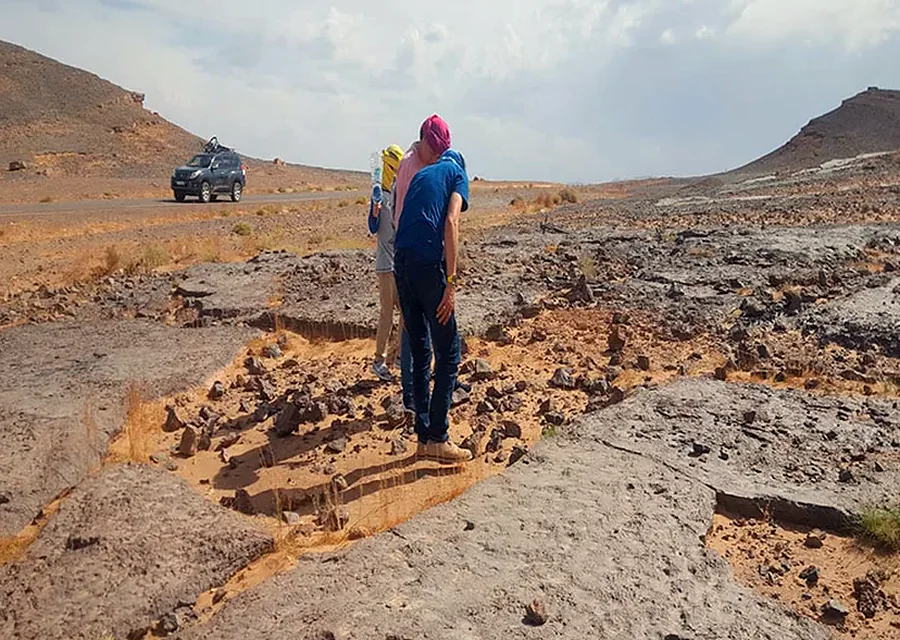
At Beni Zoli your guide takes you onto Ordovician shales where large trilobites are found, usually in pieces, and explains why the rocks of this area, including the nearby Fezouata beds, are so important to science.
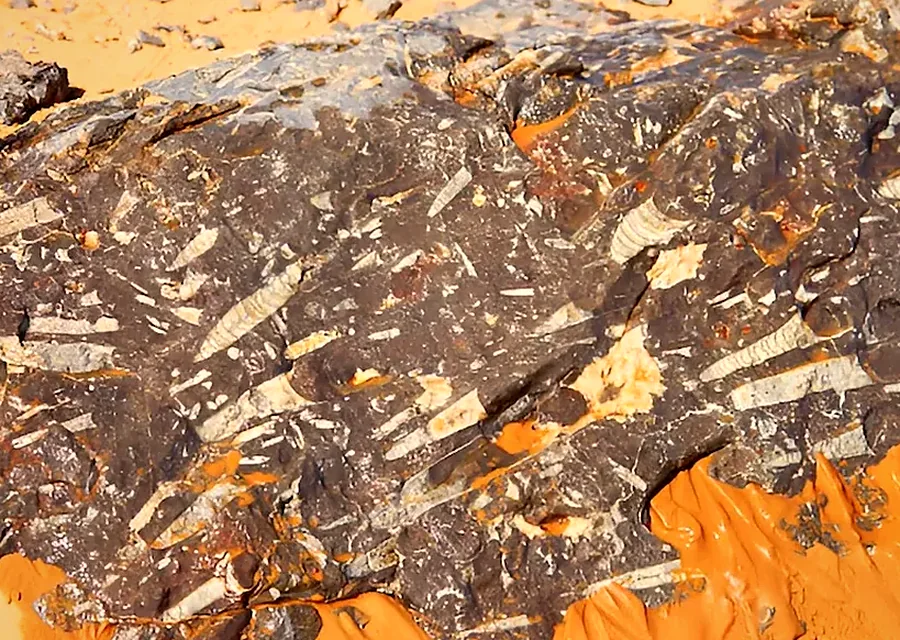
From there you head east by Tazzarine, stopping at a bed of dark limestone crowded with orthoceras, and reach Alnif in the evening. Before dinner at your guesthouse, there is time to walk along the main street, where workshops display trilobites in every stage of preparation.
A full day in the field around Alnif with a local fossil guide, travelling by 4x4 on tracks into the hills. The morning is spent on the Cambrian sites, the oldest rocks of the trip at more than 500 million years, where large yellowish trilobites such as paradoxidids lie in the shale. You search the loose slabs and see how the diggers follow a single fossil-bearing layer.
After a picnic lunch you move up the time scale to the Ordovician beds of Jbel Tiskaouine, known for calymenid and flexicalymenid trilobites, many of them rolled into a ball as they were when they died. Your guide explains how each layer is dated by the species it contains, and how to tell a real specimen from a composite or a carved fake.
Back in Alnif, you spend the late afternoon in a preparation workshop, watching a trilobite being freed from its stone with fine needles and air abrasion. Dinner and a second night are at your guesthouse.
You set off east from Alnif to Jbel Issoumour, where the Devonian limestone is dotted with family quarries. Walking the spoil heaps with your guide, you search for phacopid trilobites and see how a slab is split to expose a complete animal.
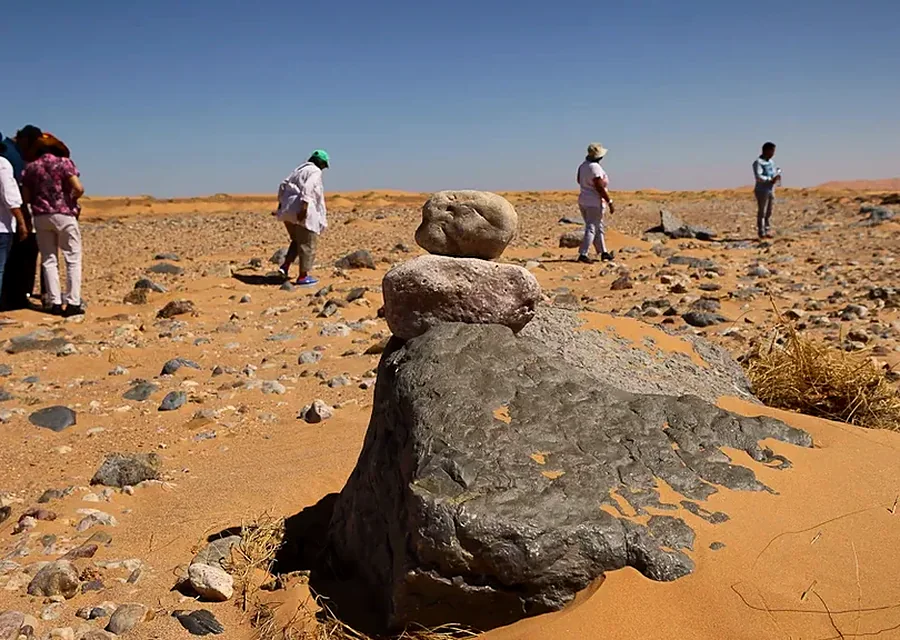
Next comes Latchana, a flat site where spiny trilobites such as Dicranurus have been dug from the Ihandar Formation. The road then reaches the oasis of the Tafilalet at Rissani, near the ruins of Sijilmassa, where you have lunch before driving on to Merzouga.
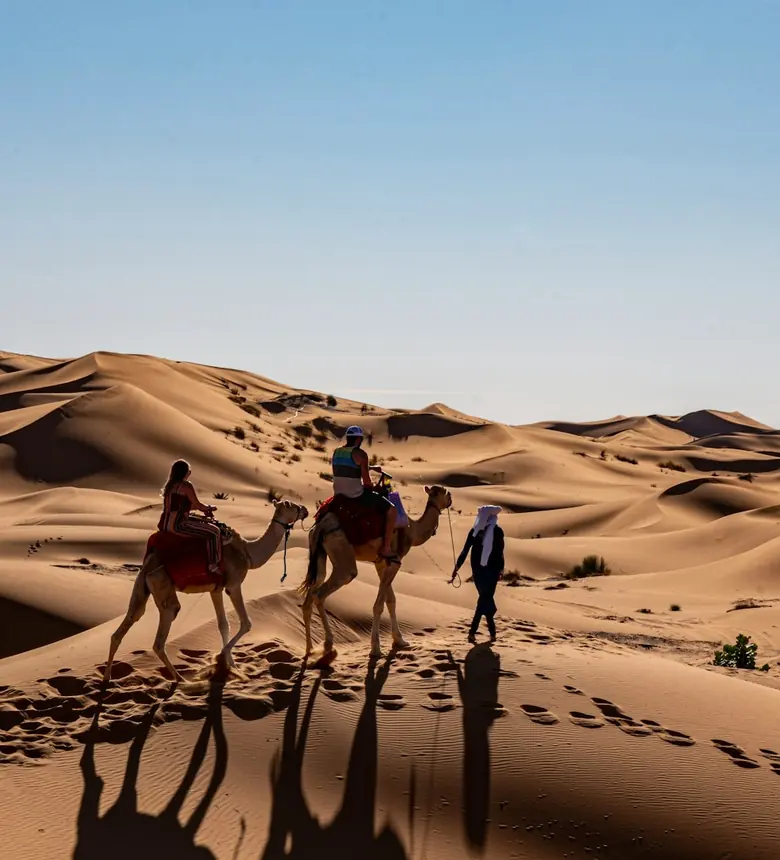
At the end of the afternoon you mount a camel and ride into the dunes for sunset, arriving at your mid-range luxury desert camp (luxury camp on request) for dinner and a night under the stars.
After watching the sun rise over the dunes, you leave camp by 4x4 for the far south of the Tafilalet. At the old Mifis mine, black hills of manganese and baryte, you search the spoil for crystals.
Near Taouz runs the Kem Kem escarpment, a cliff of red river sediments about 100 million years old and the source of many of the world's Spinosaurus and Carcharodontosaurus teeth. Your local guide takes you past the diggers' tunnels in the bone bed, and you look for fish remains and bone fragments; nearby are prehistoric engravings of animals.
Before heading back, you visit the vanadinite veins of Filon 12 and Filon 13, where miners have followed seams of red crystals, quartz and goethite. You return to Merzouga for dinner and the night at a hotel by the dunes.
Leaving the dunes, you stop in Erfoud to visit a fossil workshop, where black Devonian limestone packed with orthoceras is cut and polished, and to compare the pieces in the showrooms with what you found in the field.
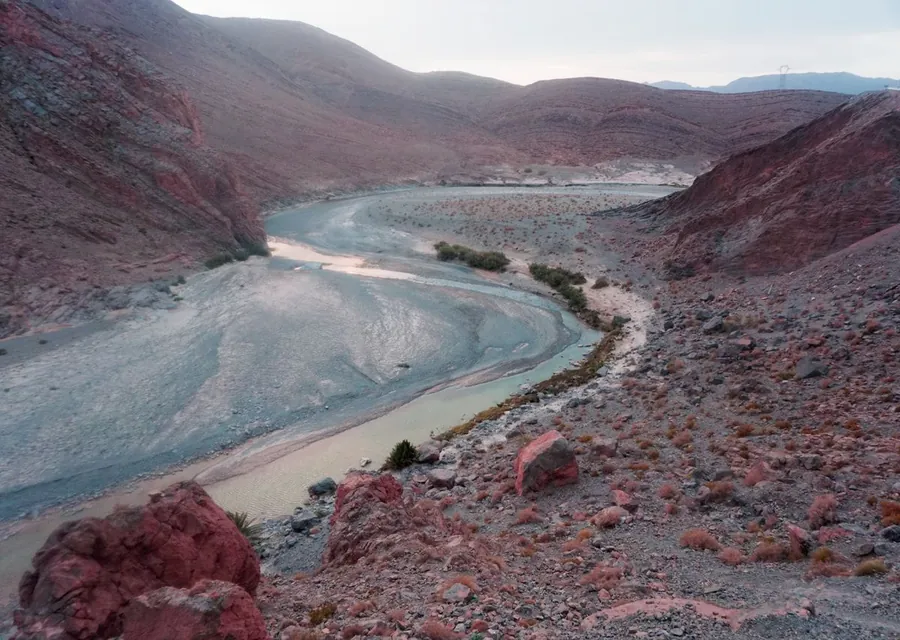
North of Errachidia the road follows the Ziz River through the Ziz Gorges, cutting across the folded Jurassic and Cretaceous limestones of the High Atlas. At the Legionnaires' Tunnel, dug in the 1920s, you can stop to look at the layers bent almost vertical, and at the palm gardens far below.
In the afternoon you climb onto the high plateau and reach Midelt, a mining town at the foot of Jbel Ayachi, one of the highest summits of the High Atlas. You check in to your hotel for two nights.
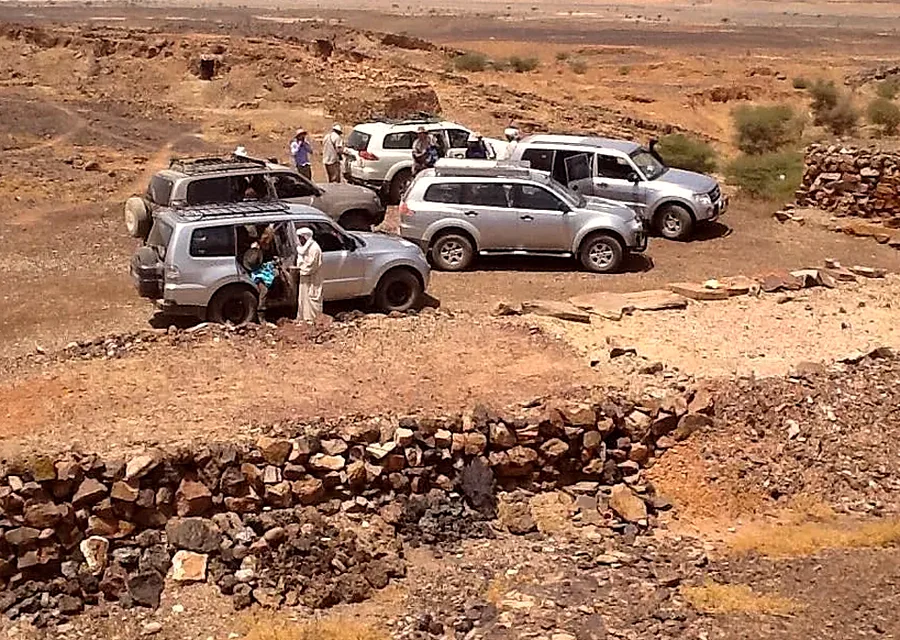
A day among the minerals. North-east of Midelt, the old lead mines of Mibladen were worked for most of the twentieth century and are known worldwide for vanadinite, bright red hexagonal crystals, along with cerussite and baryte. With a local guide you visit the old workings and the spoil heaps, where small specimens can still be found.
Further on, the road drops into the gorge of the Moulouya to Ahouli, a mining village abandoned when the mines closed, with its empty houses, workshops and galleries cut into the canyon walls.
On the way back you stop at Sidi Ayad, a mining area known for blue azurite, green malachite and fluorite, then visit the mineral dealers of Midelt, whose shops gather specimens from mines across Morocco. Dinner and the night are at your hotel.
Leaving Midelt, you cross the high plain of the Moulouya and climb into the Middle Atlas. Around Timahdite the plateau is dotted with small volcanic cones and dark basalt flows, the youngest rocks of the whole journey, only a few million years old.
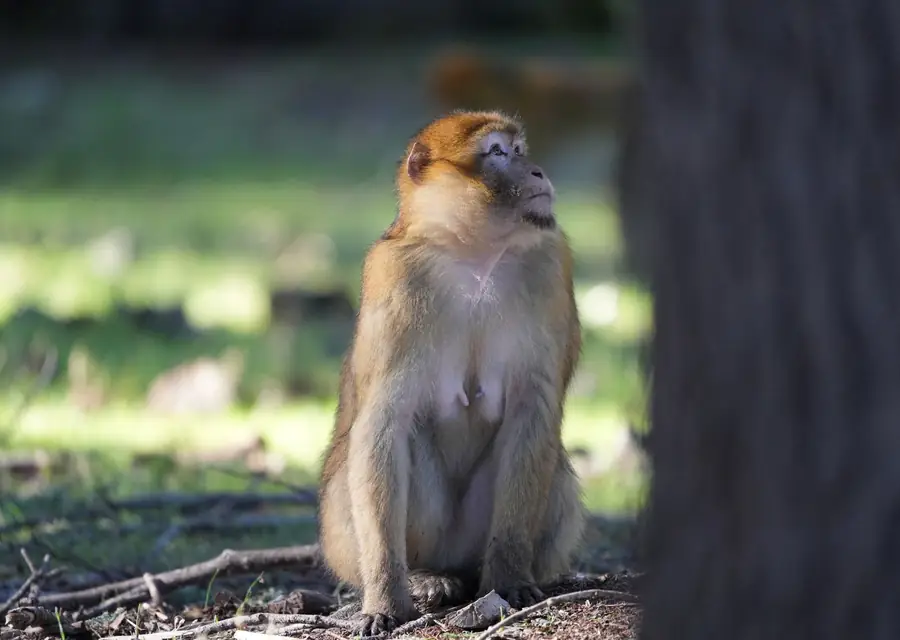
Near Azrou you walk in the cedar forest, home of the Barbary macaque, then pass through Ifrane, a mountain town of pitched roofs built in the 1930s.
In the afternoon you descend to Fes and check in to your riad in the medina.
Your private tour ends here in Fes, at the door of your hotel. Should your plans change, we can add a night or drive you to the airport.
Good to know
Before you go
We collect you from your riad or hotel in Marrakech, or from Menara Airport, at around 8:00 am. In the medina, where cars cannot reach every door, your driver meets you at the nearest gate and helps with luggage.
You are dropped at your riad or hotel in Fes, or at Fes-Saïss Airport. If the tour arrives in the evening, plan your flight for the next morning or later.
A different start or end point is rarely a problem. Because every tour is private, we can begin in one city and finish in another; tell us where you are staying and we will adapt the route and the quote.
Spring (March to May) and autumn (September to November) are the most comfortable seasons for this route. Days are warm and clear, nights are mild, and in April and May the valleys of the south are green and the roses of Kalaat M'Gouna are in bloom.
Winter is a good time for the desert if you bring warm clothes: skies are bright and the dunes are quiet, but temperatures after dark can fall to around freezing and the High Atlas passes occasionally close for a few hours after snow. In July and August the Sahara is very hot in the afternoon, so we shift the camel trek later, start driving earlier and can recommend a camp with air-cooled tents.
During Ramadan the tour runs as normal. Some restaurants close during the day in smaller towns, your driver-guide will know where to stop, and evenings are especially lively after sunset.
Questions and answers
Yes. You travel only with the people in your own party, in a private vehicle with your own driver-guide. That means you choose the departure date, set the pace and can stop wherever you like along the way.
It varies from day to day. The longest stretch is on day 2, with 6.5–7 hours with field stops on the road, and the other days are noticeably shorter. In total the tour covers about 1,640 km. All times are approximate and broken up by visits, lunch and photo stops.
Camps in Erg Chebbi have real beds with sheets and blankets, a dining tent and a fire circle. You choose between two options. Our mid-range luxury camp has private tents with en-suite bathrooms, hot showers and comfortable bedding. Our luxury camp has more spacious tents with air conditioning and heating, high-quality bedding and premium bathroom amenities. Dinner and breakfast are served at the camp.
No. The camel trek is included and most guests enjoy it, but if you prefer, we take you to the camp by 4x4. This is also what we suggest for very young children, pregnant travellers and anyone with back or knee problems.
Yes. The programme on this page is a starting point. We can add nights, swap stops, upgrade accommodation or finish somewhere other than Fes. Tell us what you have in mind and we will adjust the route and send a new quote.
Not at all. Your guide explains each site as you go, from how to recognise a fossil in the rock to how the age of a layer is worked out. Keen collectors can spend longer at the sites that interest them most.
Small invertebrate fossils and minerals found on loose ground, or bought from established shops with an invoice, are what most visitors take home. Dinosaur and other vertebrate fossils, and very valuable pieces, can need an export permit. Rules change, so please check the current Moroccan regulations and your own country's customs before buying, and keep every invoice.
Fakes and composites are common, especially trilobites and dinosaur teeth. Your guide shows you what to look for and takes you to workshops where you can see specimens being prepared. As a rule, very cheap complete trilobites and perfect large teeth deserve a second look.
March to May and September to November offer the most comfortable temperatures. Winter is clear and quiet but cold at night in the desert; in July and August the Sahara is very hot, and we adjust the timings accordingly.
Prices are always quoted on request: the price depends on the number of travellers, the season and the accommodation category, so we quote each request individually. Send us your dates and group size by WhatsApp or email and we will reply with a detailed quote. You can ask for as many changes as you need before confirming.
Accommodation
Carefully selected riads, guesthouses, hotels and desert camps. The exact properties are confirmed with your quote, in the category you choose.
Night 1
Kasbah-style guesthouse
A family-run guesthouse or kasbah hotel built in the local earthen style, with en-suite rooms, a terrace over the valley and a home-cooked dinner.
Nights 2 and 3
Kasbah-style guesthouse
A family-run guesthouse or kasbah hotel built in the local earthen style, with en-suite rooms, a terrace over the valley and a home-cooked dinner.
Night 4
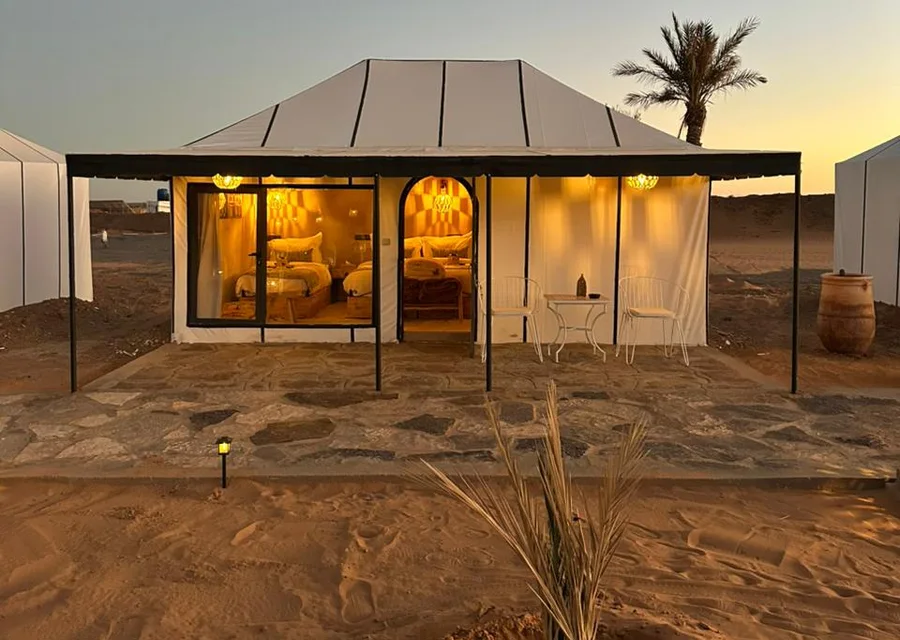
Desert camp in Erg Chebbi
A camp among the dunes with proper beds and bedding in each tent, a dining tent and a fire circle. We offer two options, both with private tents, en-suite bathrooms and hot showers: a mid-range luxury camp, and a luxury camp with more spacious tents, air conditioning and heating.
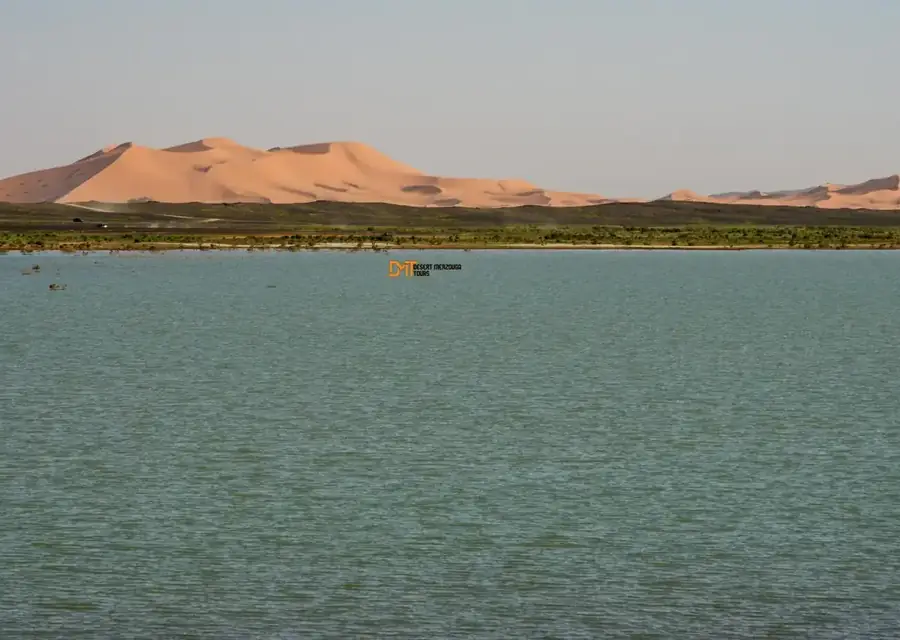
Night 5
Comfortable hotel
A well-located hotel with en-suite rooms, chosen for comfort and convenience after a day on the road.
Nights 6 and 7
Comfortable hotel
A well-located hotel with en-suite rooms, chosen for comfort and convenience after a day on the road.
Your night in the Sahara
We offer two camps in the dunes of Erg Chebbi. Tell us which one you prefer when you enquire.
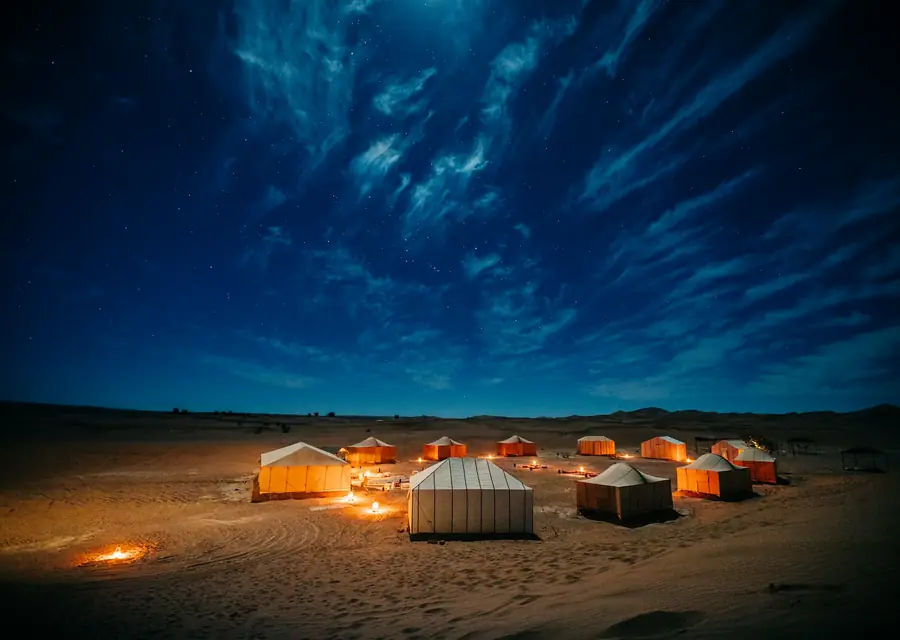 Included in this tour
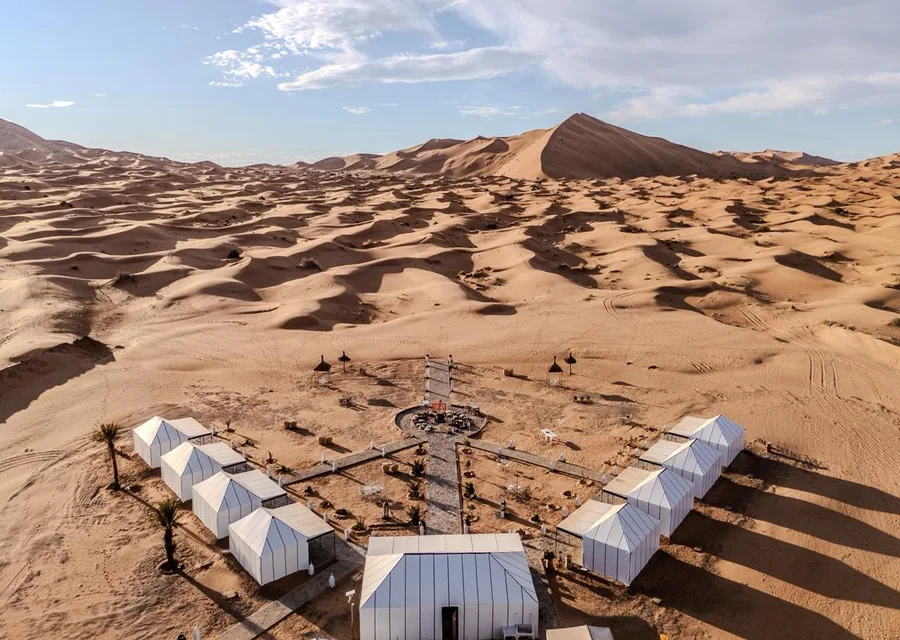 Upgrade on request
Gallery
The places you will stand in on this route, in the order you reach them.
Similar tours
Marrakech · Ait Ben Haddou · Dades Valley · Merzouga · Zagora · Marrakech
Marrakech · Oukaimeden · Dades Valley · Ait Ben Haddou · Agadir · Guelmim
Marrakech · Ait Ben Haddou · Dades Valley · Merzouga · Fes
Casablanca · Rabat · Fes · Merzouga · Dades Valley · Marrakech · Casablanca
Tell us your dates and group size, and we will send you this itinerary with a personal quote. You can change anything you like before confirming.
Quick answers for planning your 8 day Marrakech to Fes fossil and mineral tour with Magic Morocco Tours.
For trilobites, the key day is day 2: Ouarzazate – Agdz – Draa Valley – Beni Zoli – Tazzarine – Alnif. At Beni Zoli your guide takes you onto Ordovician shales where large trilobites are found, usually in pieces, and explains why the rocks of this area, including the nearby Fezouata beds, are so important to science.
For Kem Kem, the key day is day 5: Merzouga – Mifis – Kem Kem – Filon 12 & 13 – Merzouga. Near Taouz runs the Kem Kem escarpment, a cliff of red river sediments about 100 million years old and the source of many of the world's Spinosaurus and Carcharodontosaurus teeth.
For vanadinite, the key day is day 5: Merzouga – Mifis – Kem Kem – Filon 12 & 13 – Merzouga. Before heading back, you visit the vanadinite veins of Filon 12 and Filon 13, where miners have followed seams of red crystals, quartz and goethite.