Night 1
Tangier
Riad or boutique hotel
A traditional house built around a courtyard, in or beside the old town, with individually decorated rooms and breakfast served on the roof terrace or in the patio.
Seventeen days travelling clockwise from Tangier around the whole country.



Tour overview
Seventeen days travelling clockwise from Tangier around the whole country. The Rif, Fes and the Sahara come first; Marrakech, the High Atlas and Essaouira follow; and the tour ends with the Atlantic road to Casablanca and a day in Rabat.
Our 17 Day Tangier to Casablanca Tour begins in Tangier and ends in Casablanca, covering about 2,500 km by road over 17 days. Along the way you will experience the Tizi n'Tichka pass over the High Atlas, the UNESCO-listed ksar of Ait Ben Haddou, the Dades Valley and Todra Gorge, a sunset camel trek in the dunes of Erg Chebbi, a night in a desert camp, tea with nomad families and Gnawa music in Khamlia and the cedar forests and Barbary macaques of the Middle Atlas. Each stop is a real visit on foot, with your driver-guide explaining what you are looking at and local people adding their own stories.
Accommodation is chosen for character and location rather than size: 16 nights in all, in riads and boutique hotels in the medinas and old towns, kasbah-style guesthouses in the southern valleys, comfortable hotels where they suit the route better and one night in a desert camp in the dunes of Erg Chebbi. You travel in a private, air-conditioned vehicle, a 4x4 or a minibus depending on the size of your party, with an English-speaking driver-guide who knows these roads well. Spanish, Italian, French and Portuguese-speaking guides are available on request.
It suits travellers with time to spare who want to understand the country rather than tick it off: first-time visitors who want to see everything properly, and returning ones who want the regions they missed. The longest day on the road is day 6, with 7.5–8 hours of driving; every other day is shorter, and all of them are broken up by visits and stops. Like all our tours it is fully private, so the plan below can be lengthened, shortened or rearranged to fit your dates.
Highlights
Detailed itinerary
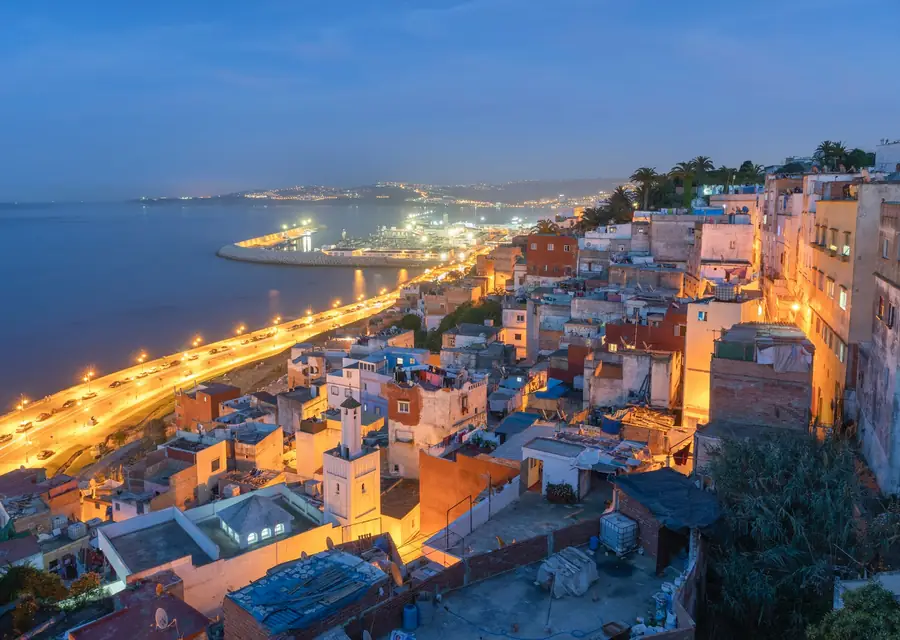
Your tour begins in Tangier, a city at the meeting point of two continents and two seas. Your driver meets you at the airport, port or station, depending on how you arrive.
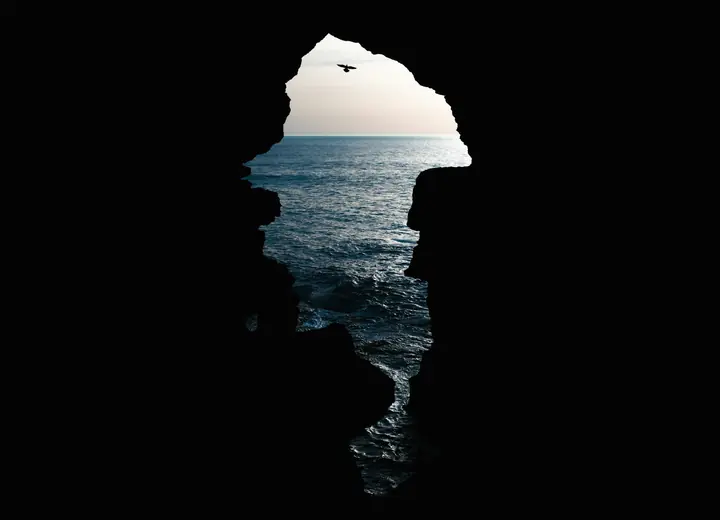
You drive out to Cap Spartel, where a lighthouse stands above the meeting of the Atlantic and the Mediterranean, and to the Caves of Hercules, whose opening to the sea has the outline of Africa. Back in town, you walk through the kasbah and down through the medina to the Petit Socco.
In the late afternoon, mint tea on the terraces of Café Hafa, looking across the Strait to Spain, is a Tangier tradition.
Your tour begins with a pick-up in Tangier and a drive east to Tetouan, a UNESCO-listed medina with a strong Spanish-Moorish character.
From Tetouan the road climbs south into the Rif, through forests of pine and cork oak.
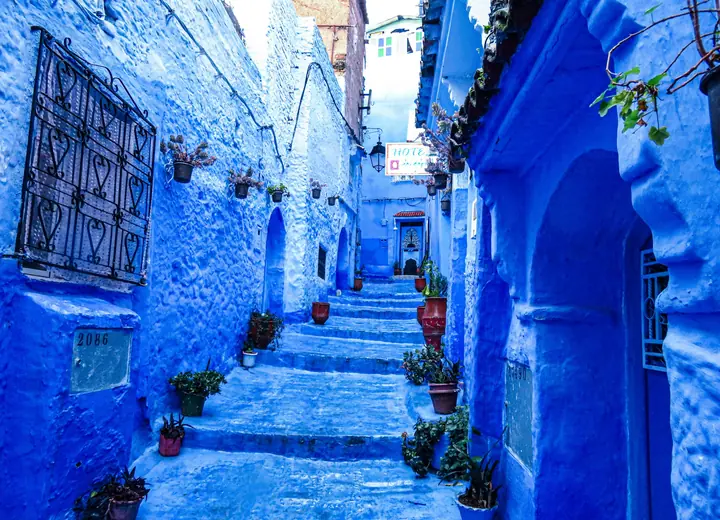
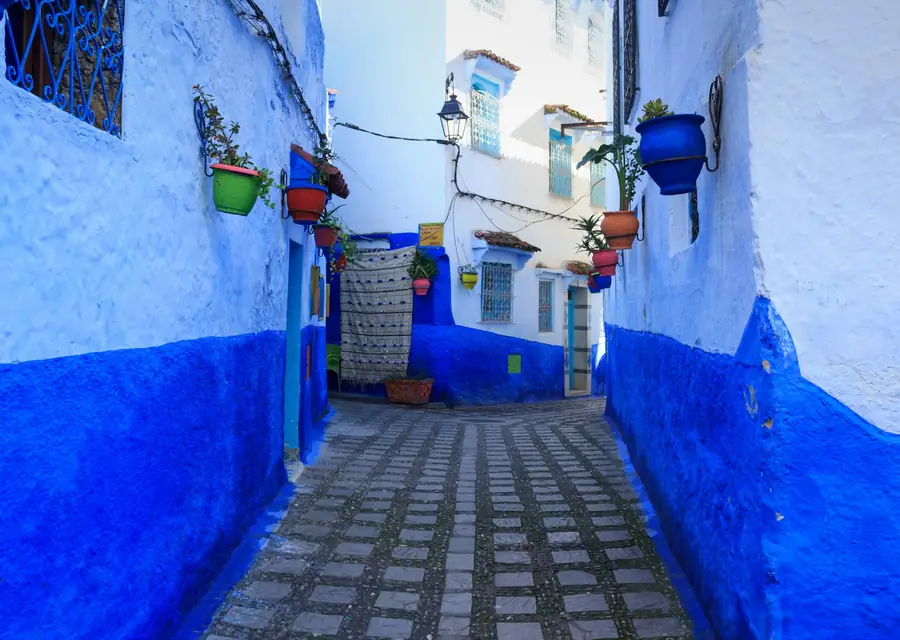
In the early afternoon Chefchaouen comes into view. After lunch you explore its blue lanes, the main square and the spring at Ras el Ma, ending at the Spanish Mosque at sunset.
A free day in Chefchaouen, the blue jewel of the Rif. Founded in the fifteenth century, it remained almost closed to outsiders until the twentieth.
Explore early, before the day visitors: the kasbah and its museum, the weavers' workshops and the spring of Ras el Ma, where carpets are still washed in the stream.
In the afternoon, relax on the square, shop for local crafts or hike up to the Spanish Mosque for the view.
After the blue lanes of Chefchaouen, the road descends to Volubilis, the Roman city whose mosaics and triumphal arch are among the finest in North Africa.
You pass the holy town of Moulay Idriss and continue to Meknes for lunch and the monumental gate of Bab Mansour.
Fes is an hour away, and you arrive in time for a quiet evening in your riad.
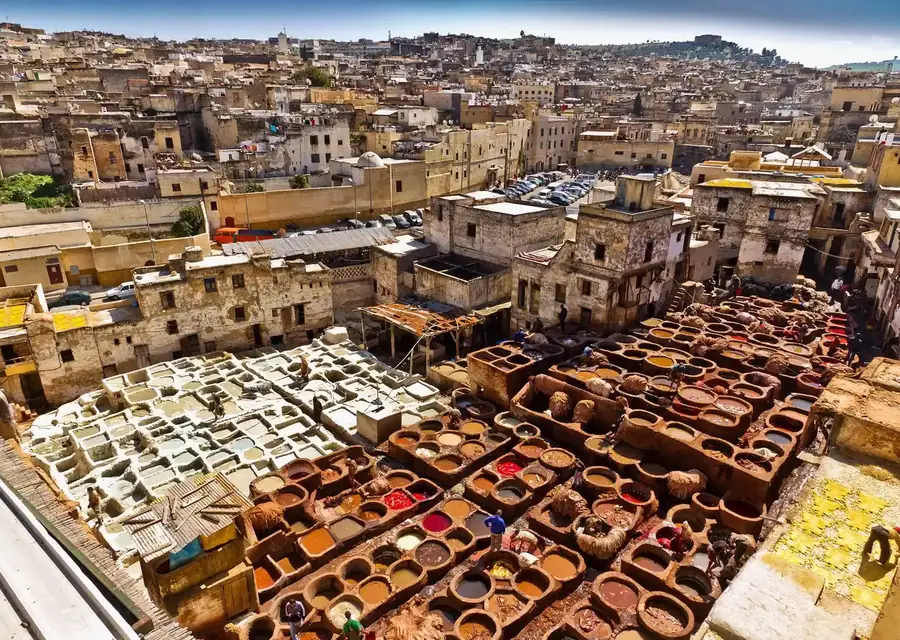
Fes el-Bali, the medieval medina, is the subject of today's guided visit. From Bab Boujloud your licensed guide takes you down lanes crowded with porters, donkeys and shoppers.
You visit a madrasa decorated with tile and carved cedar, see the doors of the Al-Qarawiyyin university, pass the coppersmiths of Seffarine and look over the dye vats of the Chouara tannery.
After lunch the tour continues by car to the Royal Palace, the Jewish quarter and a pottery cooperative, ending at a viewpoint. The afternoon is free before the drive south to the Sahara.
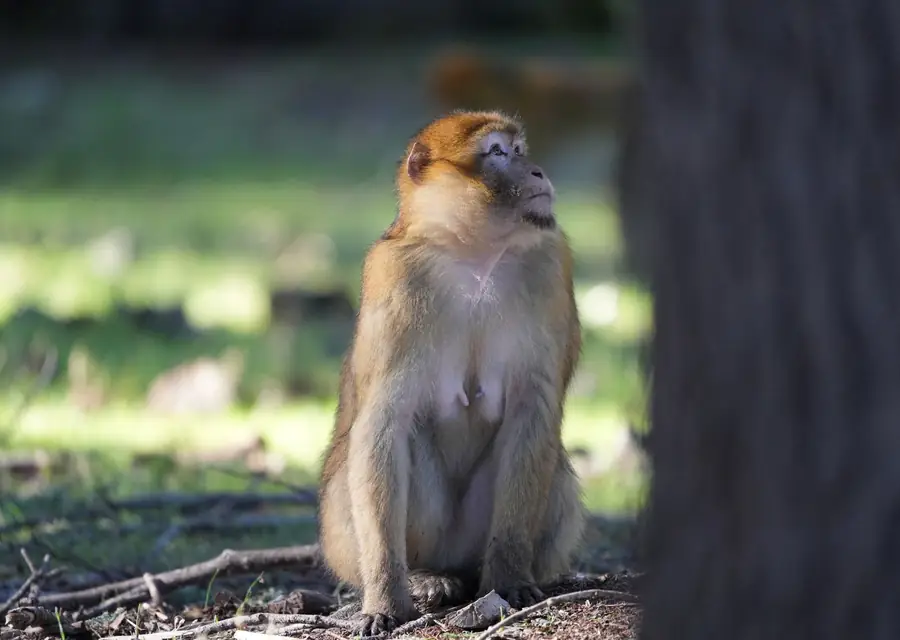
A long drive south from Fes. You climb to Ifrane and through the cedar forest of the Middle Atlas, where Barbary macaques gather near the road.
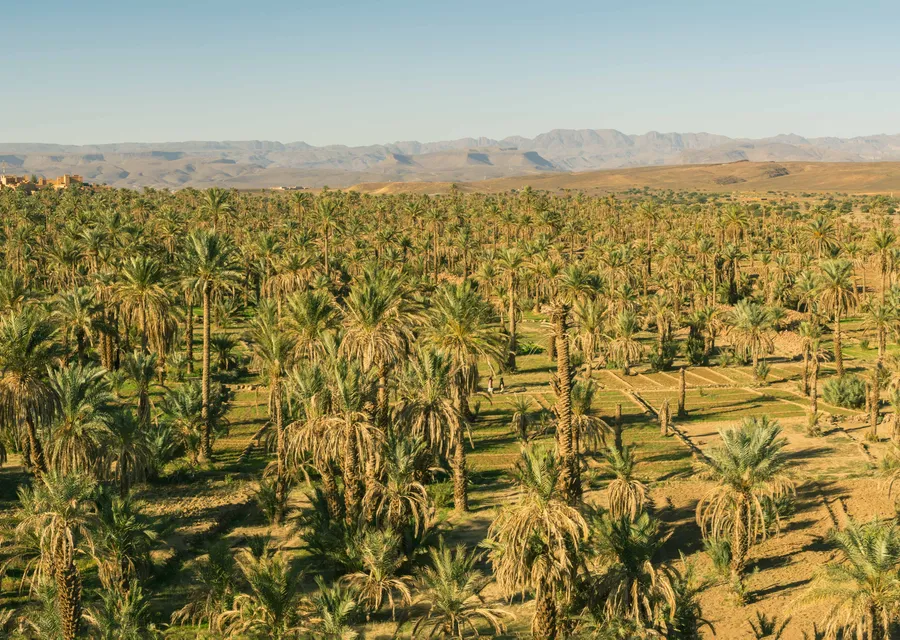
Lunch is in Midelt, after the Col du Zad. In the afternoon you follow the Ziz gorges and stop at a viewpoint over the palm-filled valley.
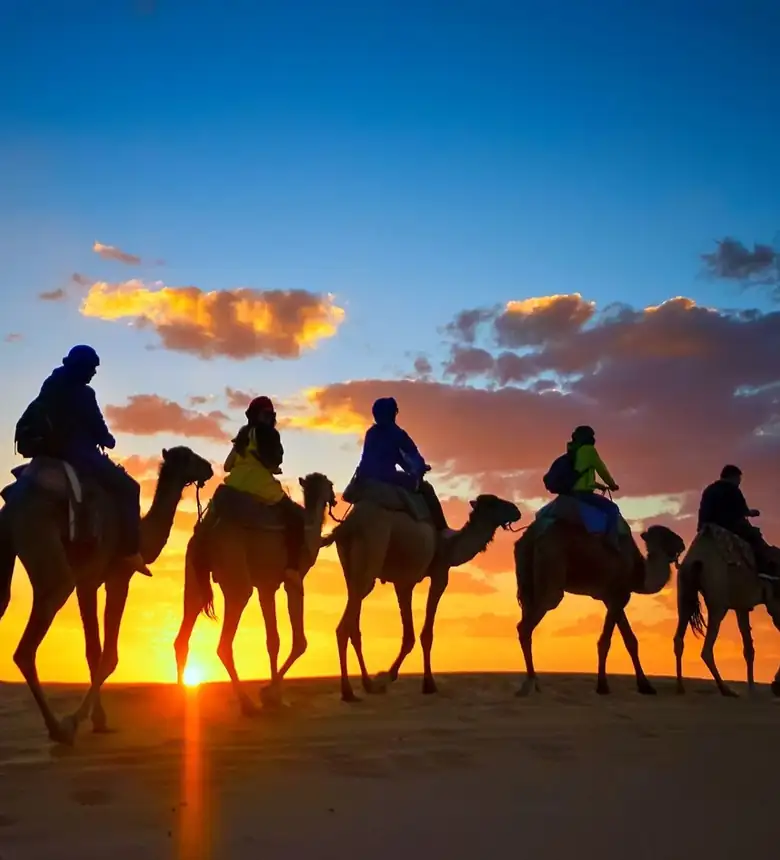
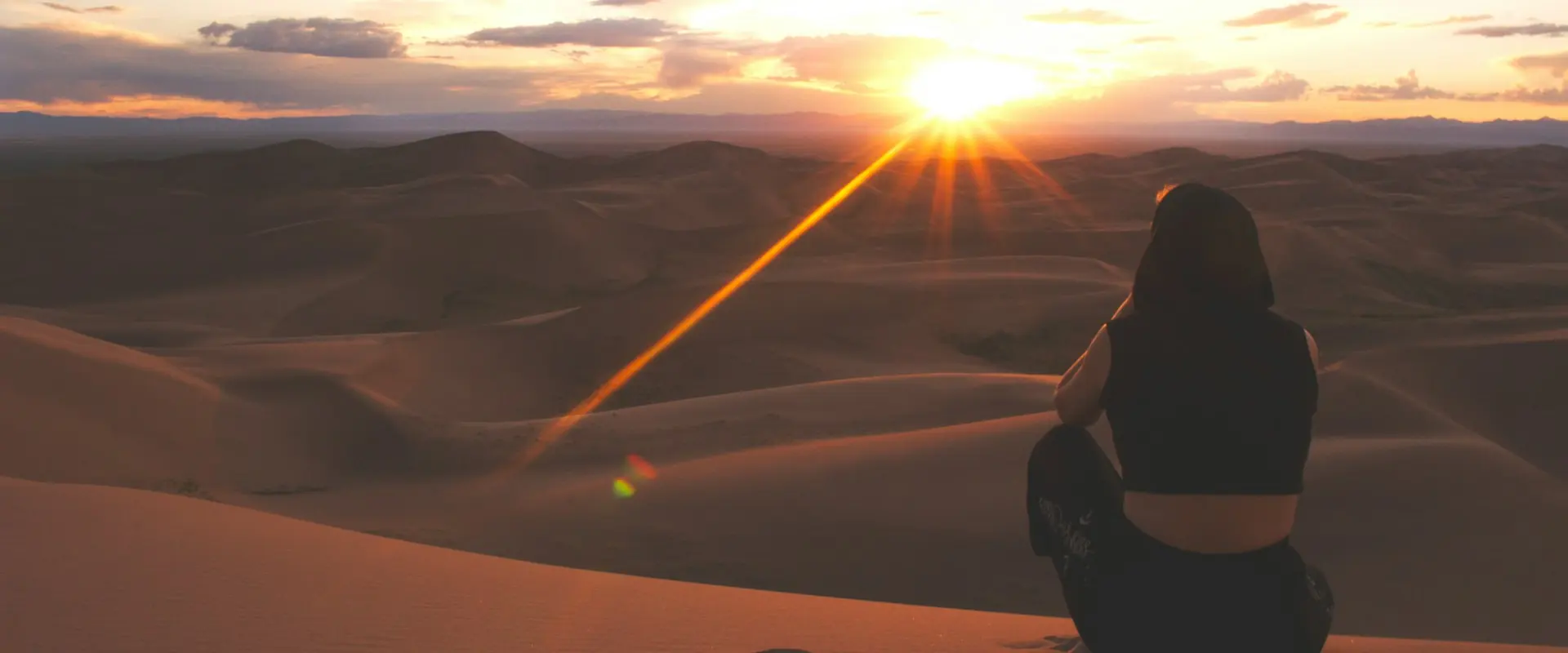
After Erfoud the dunes appear. In Merzouga you meet your camels and ride into Erg Chebbi at sunset, with the night spent in a desert camp.
The sun rising over Erg Chebbi is the first sight of the day, watched from a dune near camp. After breakfast you return to Merzouga.
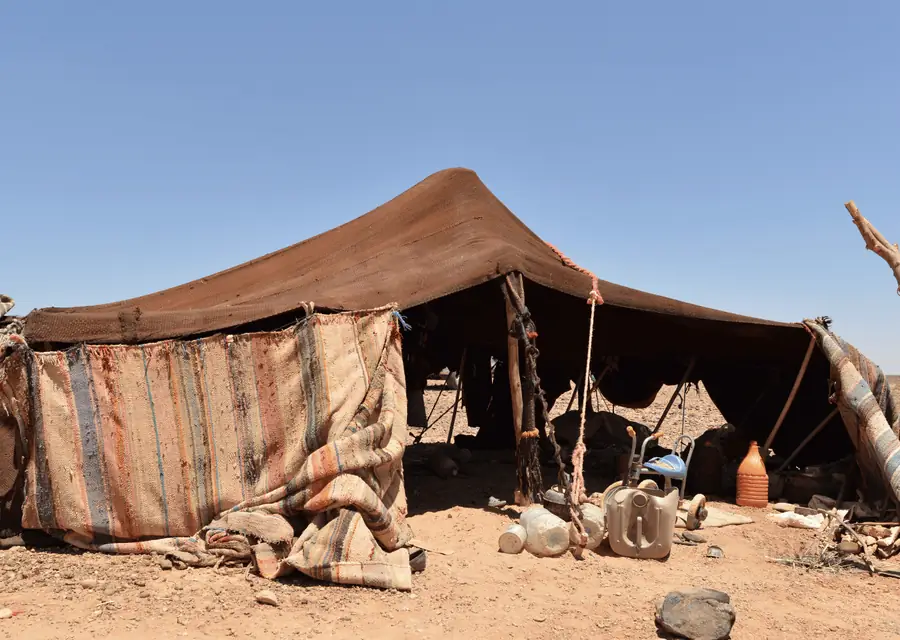
Then a 4x4 takes you to Khamlia to hear Gnawa music, past the old lead mines, and onto the black desert, where nomads still live in woven tents and welcome visitors for tea.
The afternoon is free, and the night is in a hotel at the edge of the dunes before the drive west through the gorges.
Wake early to watch the dunes light up at sunrise, then return to Merzouga for breakfast.
Leaving the desert, you drive through Rissani, birthplace of the Alaouite dynasty, where the souk is lively on Sundays, Tuesdays and Thursdays, and across a plain lined with the mounds of khettara wells.
In the afternoon you walk into Todra Gorge, its orange walls rising high above the stream, and continue to the Dades Valley for the night.
Today the road follows the Dades River downstream to the Valley of Roses, where you can visit a cooperative in Kalaat M'Gouna that turns the pink Damascus roses into rosewater and soaps.
In the oasis of Skoura you stop at Kasbah Amridil, a seventeenth-century earthen fortress still owned by the family who built it, and walk through its rooms and up to its towers.
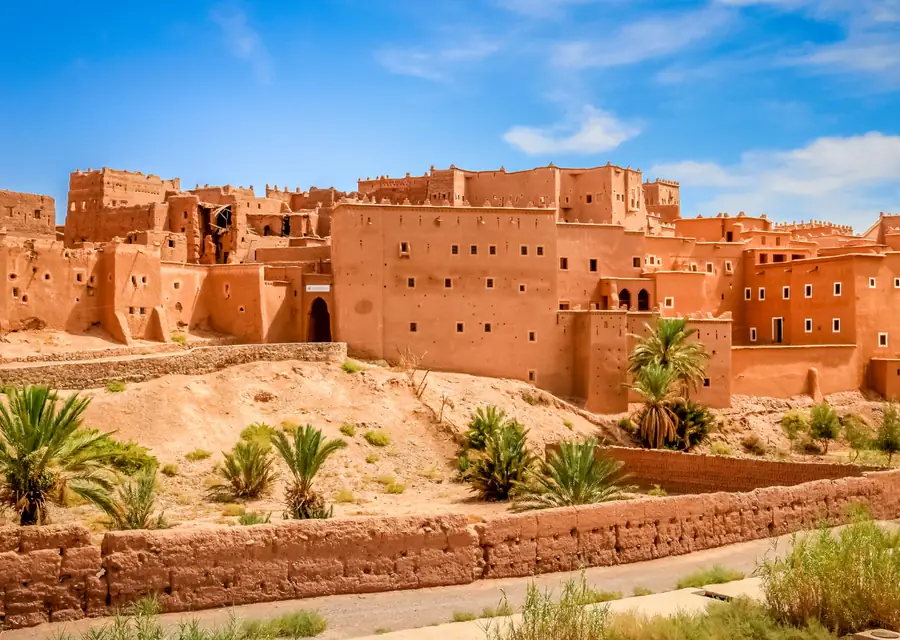
In Ouarzazate you have lunch, then visit Taourirt Kasbah or the Atlas Film Studios in the afternoon before spending the night at your hotel in town.
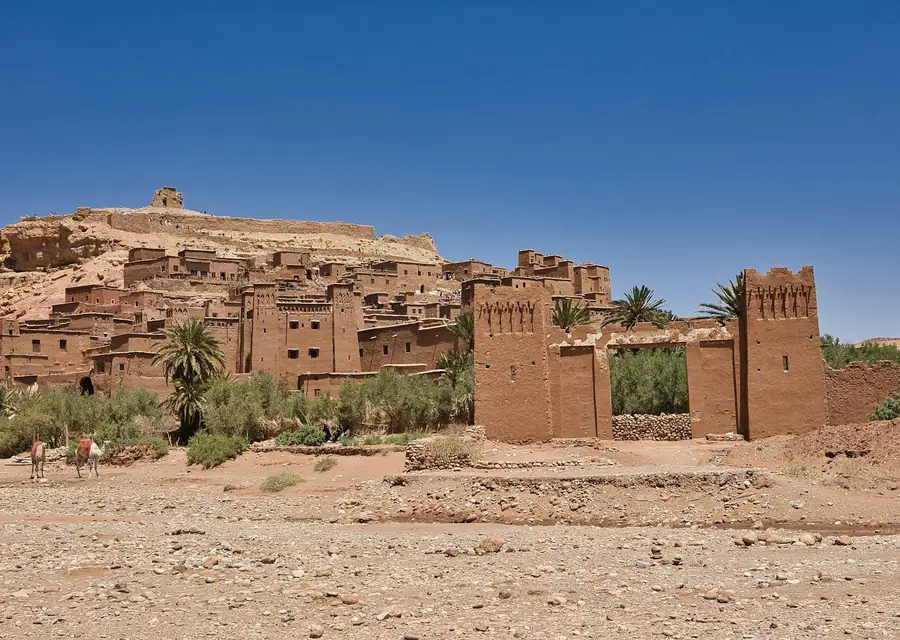
A day of visits rather than driving, starting with the half-hour drive from Ouarzazate to Ait Ben Haddou.
At Ait Ben Haddou you cross the river and climb through the ksar, a UNESCO site, to the granary at the top, with the valley and the snowy peaks of the Atlas in view.
In the afternoon you drive over the Tizi n'Tichka pass to Marrakech, arriving in time for an evening on Jemaa el-Fna.
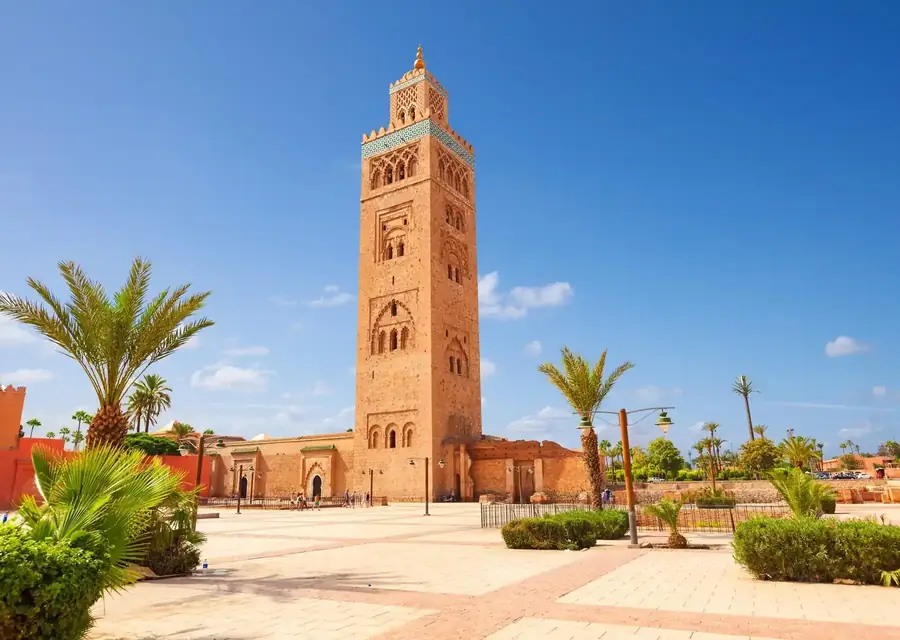
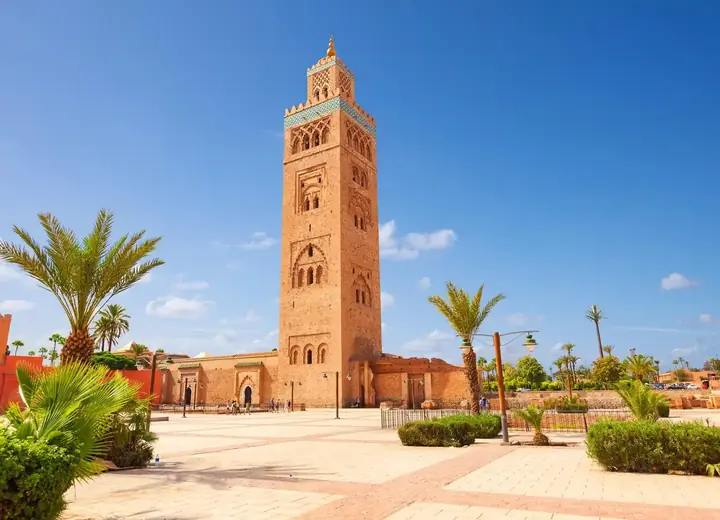
A guided day in the Red City. Your licensed guide shows you the Koutoubia, the Bahia Palace and the Saadian Tombs, rediscovered in 1917 after two centuries sealed away.
After the old Jewish quarter and lunch, you explore the souks with your guide, visiting the workshops of dyers, leatherworkers and woodturners.
You can also include the Ben Youssef Madrasa or the Majorelle Garden. The evening belongs to Jemaa el-Fna.
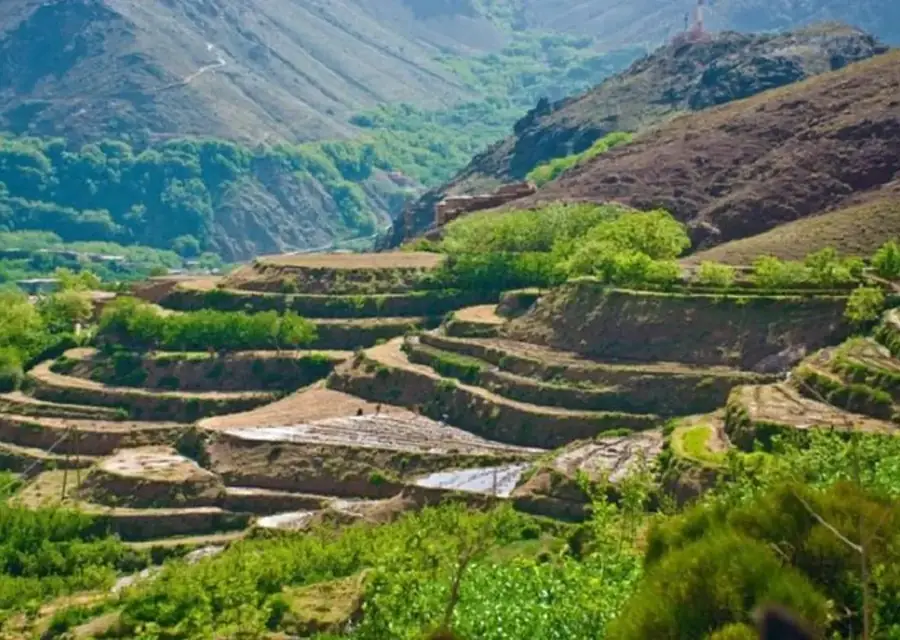
Today you escape the city for the High Atlas. An hour and a half from Marrakech, past the market town of Asni, the village of Imlil sits at 1,740 metres below Mount Toubkal.
With a local mountain guide you walk through terraced fields and stone villages, choosing an easy stroll to a waterfall or a longer loop. Lunch is a tagine on the terrace of a family house.
On the way back you can visit an argan oil cooperative, and you return to Marrakech in the late afternoon.
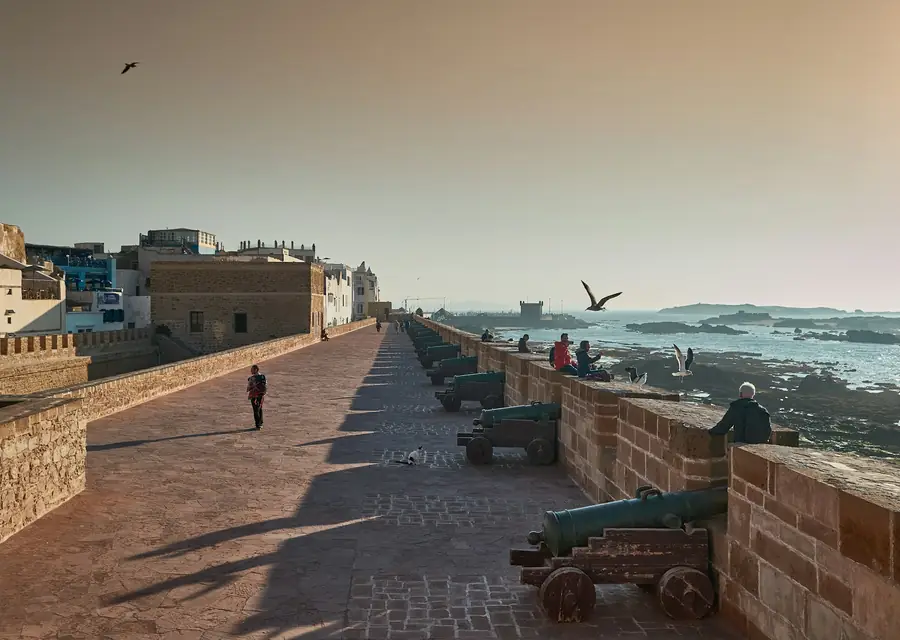
From Marrakech the road leads west through argan country to the sea. At a women's cooperative you see the nuts cracked and the oil pressed by hand.
In Essaouira, a fortified port of white walls and blue shutters, you walk the Skala ramparts and the medina's lanes.
The evening is free, perhaps for seafood at the harbour.
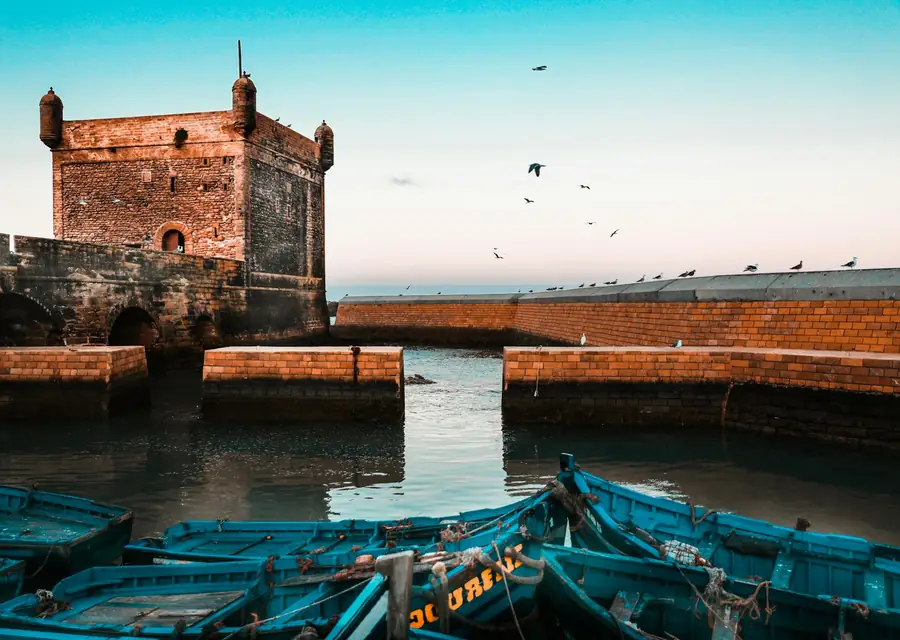
Today is free by the sea. Explore Essaouira's medina, with its white houses, blue doors and craftsmen working thuya wood, and walk the ramparts above the waves.
The long beach is popular with kitesurfers; you can also stroll along it or ride a camel towards the old fort in the sand.
Dinner of grilled fish in the harbour is a classic end to the day. We can arrange a cooking class or a surf lesson if you wish.
You leave Essaouira and drive north along cliffs and empty beaches to Safi, a port known for its ceramics, and Oualidia, a lagoon village with excellent oysters and seafood.
After lunch you visit El Jadida, where the Portuguese built a fortified town now listed by UNESCO, with a beautiful vaulted cistern.
In the early evening you arrive in Casablanca, where your tour ends tomorrow.
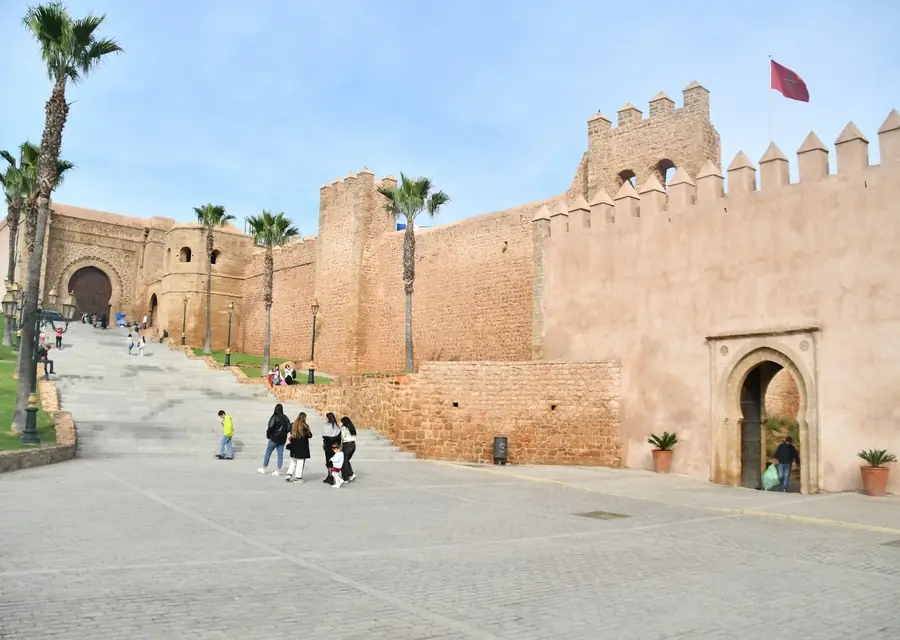
A day in the capital, an easy hour from Casablanca. Rabat is orderly, leafy and proud of its history, and its main sights sit close together.
You start at the Hassan Tower, the minaret of a twelfth-century mosque that was never completed, and the richly decorated Mausoleum of Mohammed V beside it. Then comes the Kasbah of the Udayas: a gate carved in golden stone, lanes painted blue and white, and a café terrace looking across the Bou Regreg river to Salé. If you enjoy quiet places, the walled ruins and gardens of Chellah, where storks nest on Roman and medieval walls, are a pleasure.
Lunch is in the medina or by the marina, and you return to Casablanca in the late afternoon.

On your last morning, if your flight leaves later in the day, you visit the Hassan II Mosque on a guided tour of about an hour, including the prayer hall, the ablution rooms and the hammam.
Afterwards there is time for a stroll in the Habous quarter, with its arcaded streets, bookshops and pastry shops, for some final souvenirs.
Your driver then takes you to Mohammed V Airport. For early flights, the transfer goes directly from your hotel.
Good to know
Before you go
We meet you at your hotel in Tangier, at Ibn Battouta Airport, at the Tangier Ville ferry port or at Tangier Med, whichever suits your arrival. Tell us your ferry or flight time when booking.
Drop-off is at your hotel in Casablanca or at Mohammed V Airport, timed to your flight.
A different start or end point is rarely a problem. Because every tour is private, we can begin in one city and finish in another; tell us where you are staying and we will adapt the route and the quote.
Spring (March to May) and autumn (September to November) are the most comfortable seasons for this route. Days are warm and clear, nights are mild, and in April and May the valleys of the south are green and the roses of Kalaat M'Gouna are in bloom.
Winter is a good time for the desert if you bring warm clothes: skies are bright and the dunes are quiet, but temperatures after dark can fall to around freezing and the High Atlas passes occasionally close for a few hours after snow. In July and August the Sahara is very hot in the afternoon, so we shift the camel trek later, start driving earlier and can recommend a camp with air-cooled tents.
The north is greener and wetter than the rest of the country. Chefchaouen and the Rif are at their best from April to June and in September and October; between November and February you should expect some rain there.
On the Atlantic coast, sea breezes keep Essaouira and Agadir mild all year, which makes them a welcome contrast after the heat of the interior in summer.
During Ramadan the tour runs as normal. Some restaurants close during the day in smaller towns, your driver-guide will know where to stop, and evenings are especially lively after sunset.
Questions and answers
Yes. You travel only with the people in your own party, in a private vehicle with your own driver-guide. That means you choose the departure date, set the pace and can stop wherever you like along the way.
It varies from day to day. The longest stretch is on day 6, with 7.5–8 hours on the road, and the other days are noticeably shorter. In total the tour covers about 2,500 km. All times are approximate and broken up by visits, lunch and photo stops.
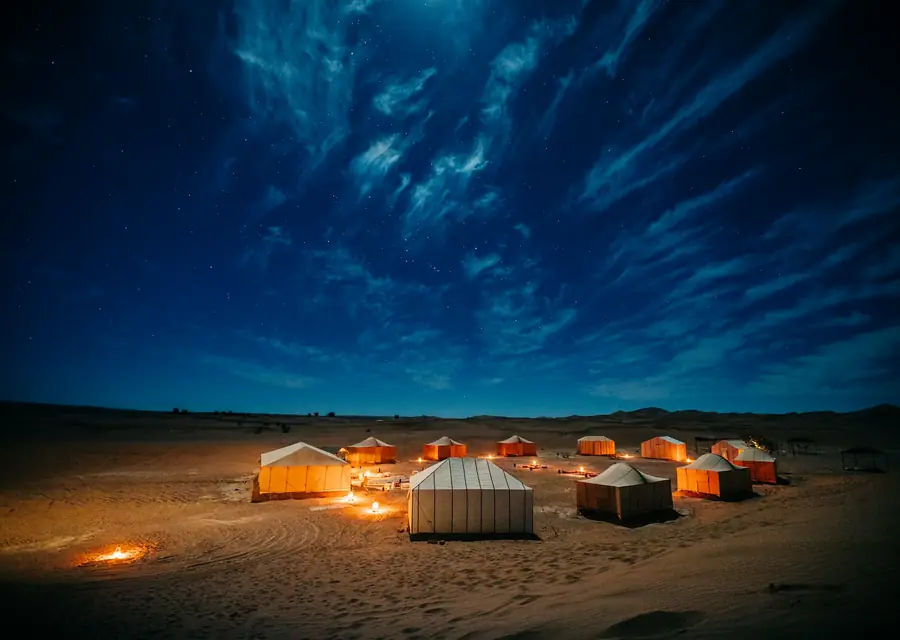
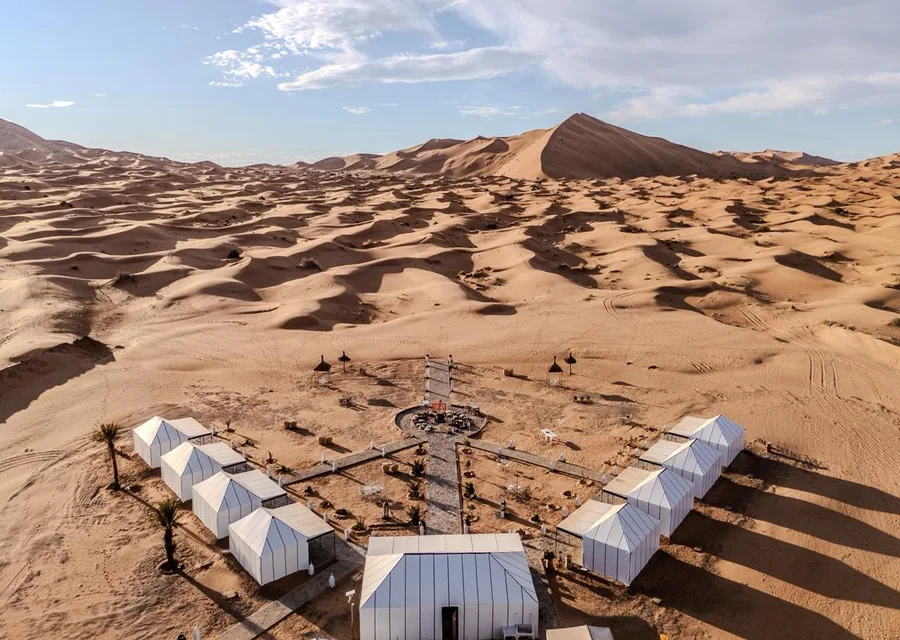
Camps in Erg Chebbi have real beds with sheets and blankets, a dining tent and a fire circle. You choose between two options. Our mid-range luxury camp has private tents with en-suite bathrooms, hot showers and comfortable bedding. Our luxury camp has more spacious tents with air conditioning and heating, high-quality bedding and premium bathroom amenities. Dinner and breakfast are served at the camp.
No. The camel trek is included and most guests enjoy it, but if you prefer, we take you to the camp by 4x4. This is also what we suggest for very young children, pregnant travellers and anyone with back or knee problems.
Yes. The programme on this page is a starting point. We can add nights, swap stops, upgrade accommodation or finish somewhere other than Casablanca. Tell us what you have in mind and we will adjust the route and send a new quote.
March to May and September to November offer the most comfortable temperatures. Winter is clear and quiet but cold at night in the desert; in July and August the Sahara is very hot, and we adjust the timings accordingly.
Prices are always quoted on request: the price depends on the number of travellers, the season and the accommodation category, so we quote each request individually. Send us your dates and group size by WhatsApp or email and we will reply with a detailed quote. You can ask for as many changes as you need before confirming.
Accommodation
Carefully selected riads, guesthouses, hotels and desert camps. The exact properties are confirmed with your quote, in the category you choose.
Night 1
Riad or boutique hotel
A traditional house built around a courtyard, in or beside the old town, with individually decorated rooms and breakfast served on the roof terrace or in the patio.
Nights 2 and 3
Riad or boutique hotel
A traditional house built around a courtyard, in or beside the old town, with individually decorated rooms and breakfast served on the roof terrace or in the patio.
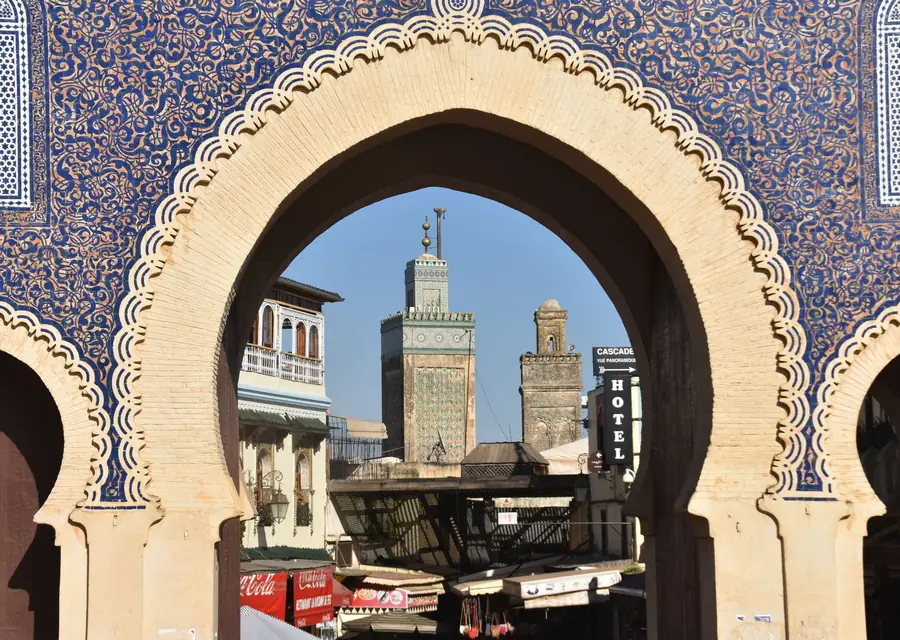
Nights 4 and 5
Riad or boutique hotel
A traditional house built around a courtyard, in or beside the old town, with individually decorated rooms and breakfast served on the roof terrace or in the patio.
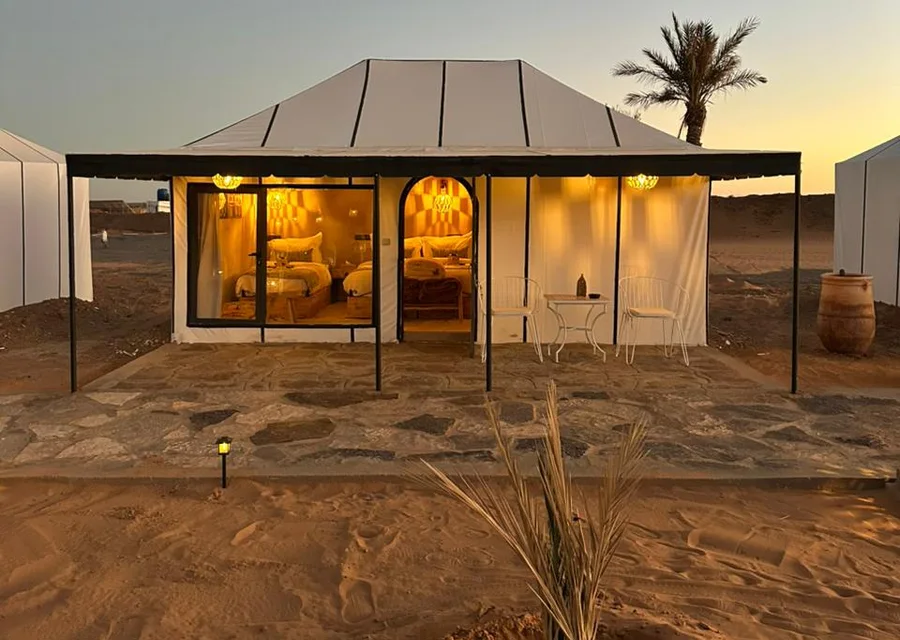
Night 6
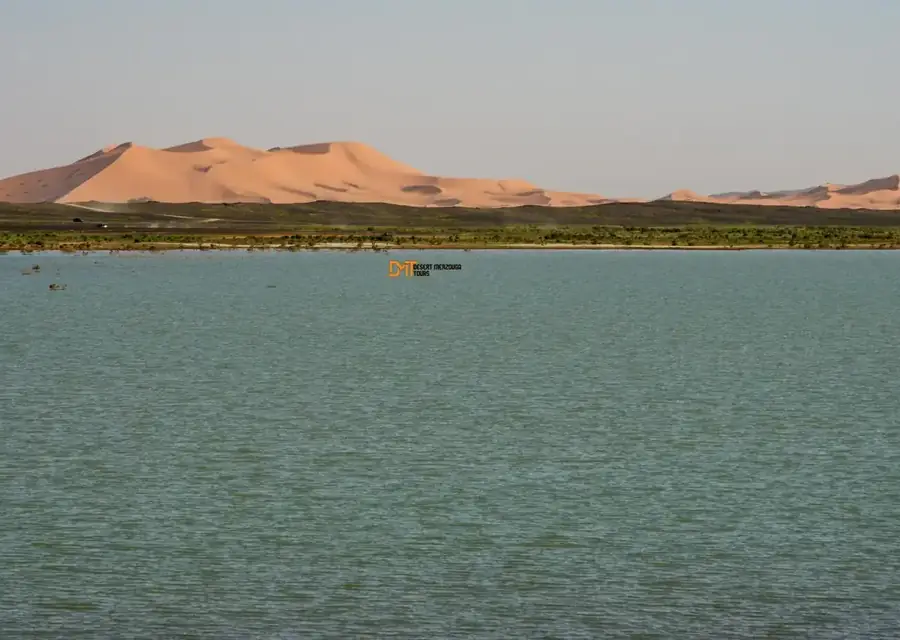
Desert camp in Erg Chebbi
A camp among the dunes with proper beds and bedding in each tent, a dining tent and a fire circle. We offer two options, both with private tents, en-suite bathrooms and hot showers: a mid-range luxury camp, and a luxury camp with more spacious tents, air conditioning and heating.
Night 7
Comfortable hotel
A well-located hotel with en-suite rooms, chosen for comfort and convenience after a day on the road.
Night 8
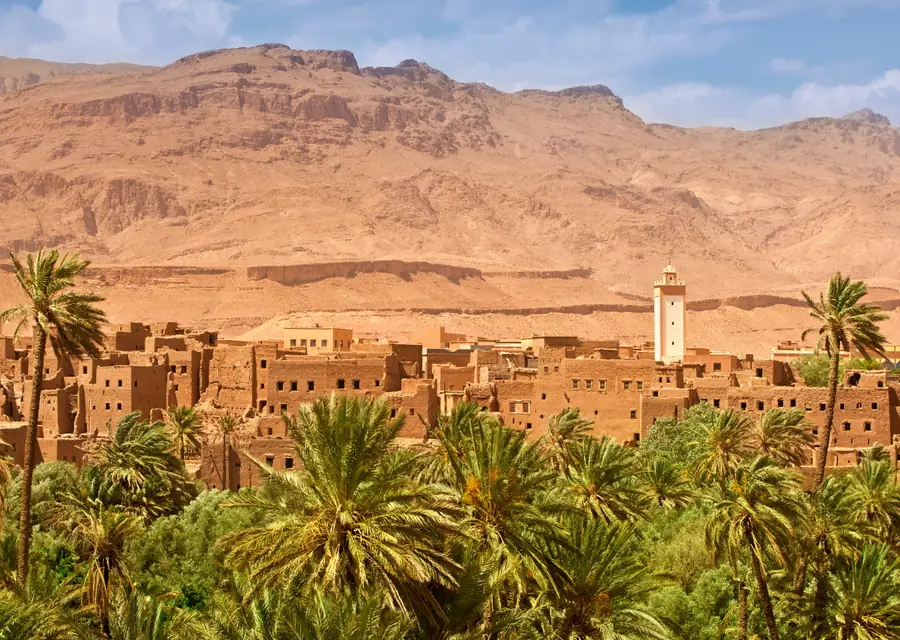
Kasbah-style guesthouse
A family-run guesthouse or kasbah hotel built in the local earthen style, with en-suite rooms, a terrace over the valley and a home-cooked dinner.
Night 9
Riad or boutique hotel
A traditional house built around a courtyard, in or beside the old town, with individually decorated rooms and breakfast served on the roof terrace or in the patio.
Nights 10, 11 and 12
Riad or boutique hotel
A traditional house built around a courtyard, in or beside the old town, with individually decorated rooms and breakfast served on the roof terrace or in the patio.
Nights 13 and 14
Riad or boutique hotel
A traditional house built around a courtyard, in or beside the old town, with individually decorated rooms and breakfast served on the roof terrace or in the patio.
Nights 15 and 16
Comfortable hotel
A well-located hotel with en-suite rooms, chosen for comfort and convenience after a day on the road.
Your night in the Sahara
We offer two camps in the dunes of Erg Chebbi. Tell us which one you prefer when you enquire.
 Included in this tour
 Upgrade on request
Gallery
The places you will stand in on this route, in the order you reach them.
Similar tours
Tangier · Chefchaouen · Fes · Merzouga · Dades Valley · Ait Ben Haddou · Agadir · Essaouira · Marrakech · Rabat · Casablanca
Tangier · Chefchaouen · Fes · Merzouga · Dades Valley · Marrakech
Casablanca · Rabat · Chefchaouen · Fes · Merzouga · Zagora · Ait Ben Haddou · Marrakech · Essaouira · Casablanca
Tell us your dates and group size, and we will send you this itinerary with a personal quote. You can change anything you like before confirming.