Nights 1 and 7
Marrakech
Riad or boutique hotel
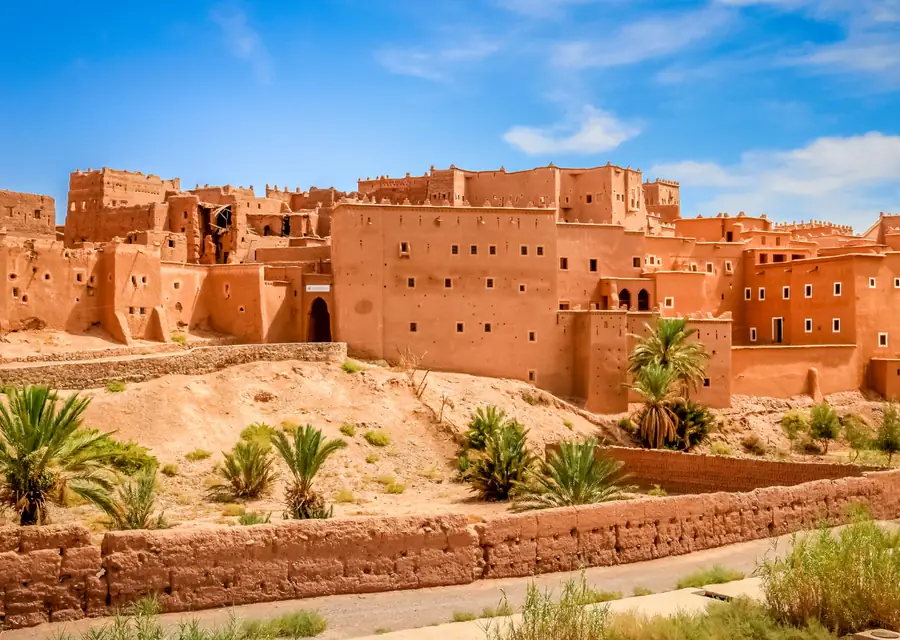
A traditional house built around a courtyard, in or beside the old town, with individually decorated rooms and breakfast served on the roof terrace or in the patio.

A family holiday in three parts: mountains, desert and sea.
Tour overview
A family holiday in three parts: mountains, desert and sea. After the week-long loop to the Sahara, the last days are spent in Essaouira, where the beach, the harbour and the car-free medina let children and parents alike wind down before flying home.
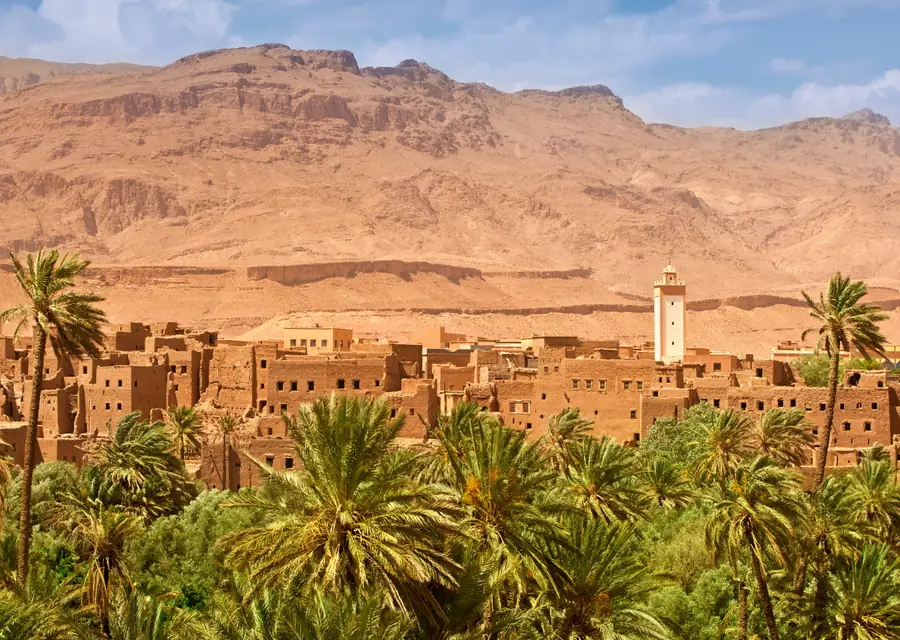
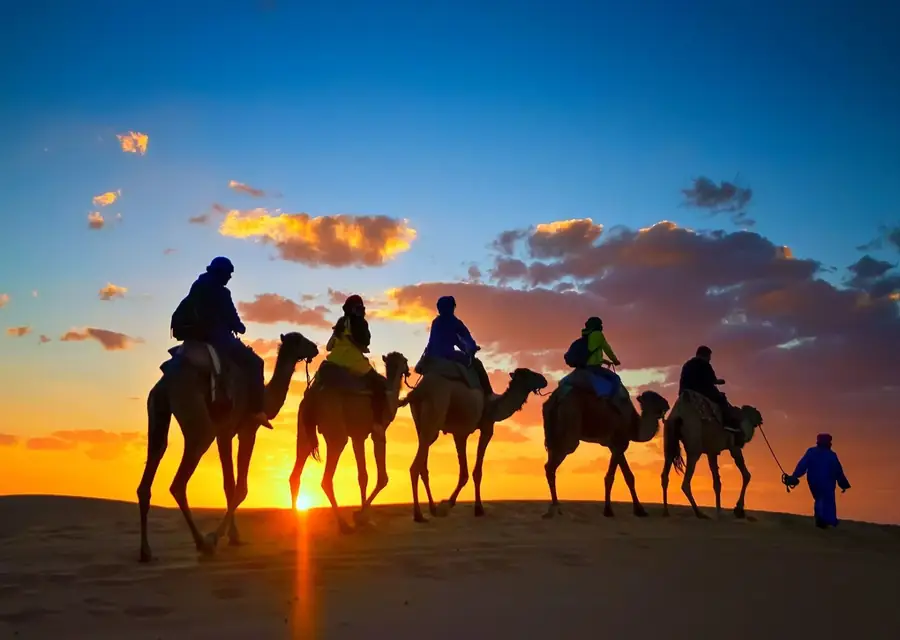
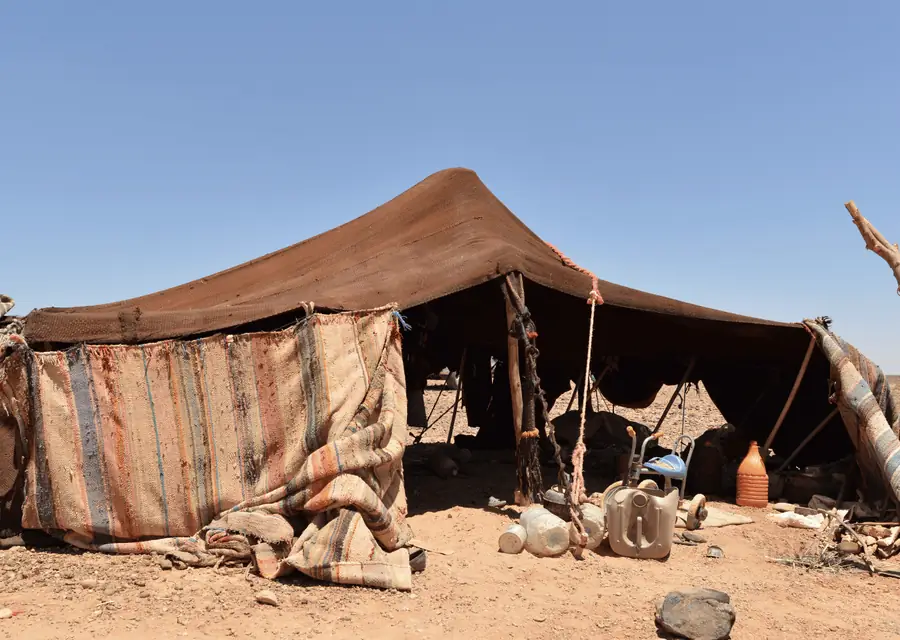
Our 10 Day Family Morocco Tour from Marrakech starts and finishes in Marrakech, covering about 1,740 km by road over ten days. Along the way you will experience the Tizi n'Tichka pass over the High Atlas, the UNESCO-listed ksar of Ait Ben Haddou, the Dades Valley and Todra Gorge, a sunset camel trek in the dunes of Erg Chebbi, a night in a desert camp, tea with nomad families and Gnawa music in Khamlia and the palm groves of the Draa Valley. Each stop is a real visit on foot, with your driver-guide explaining what you are looking at and local people adding their own stories.
Accommodation is chosen for character and location rather than size: 9 nights in all, in riads and boutique hotels in the medinas and old towns, kasbah-style guesthouses in the southern valleys, comfortable hotels where they suit the route better and one night in a desert camp in the dunes of Erg Chebbi. You travel in a private, air-conditioned vehicle, a 4x4 or a minibus depending on the size of your party, with an English-speaking driver-guide who knows these roads well. Spanish, Italian, French and Portuguese-speaking guides are available on request.
It suits families with children of almost any age. We keep the stages short, build in time to run about and can shorten or skip anything that does not work for your family on the day. The longest day on the road is day 7, with about 7.5 hours, with stops of driving; every other day is shorter, and all of them are broken up by visits and stops. Like all our tours it is fully private, so the plan below can be lengthened, shortened or rearranged to fit your dates.
Highlights
Detailed itinerary
The family is met at Marrakech Menara Airport by your driver-guide, with a name sign and help with the luggage, for the twenty-minute drive into the city.
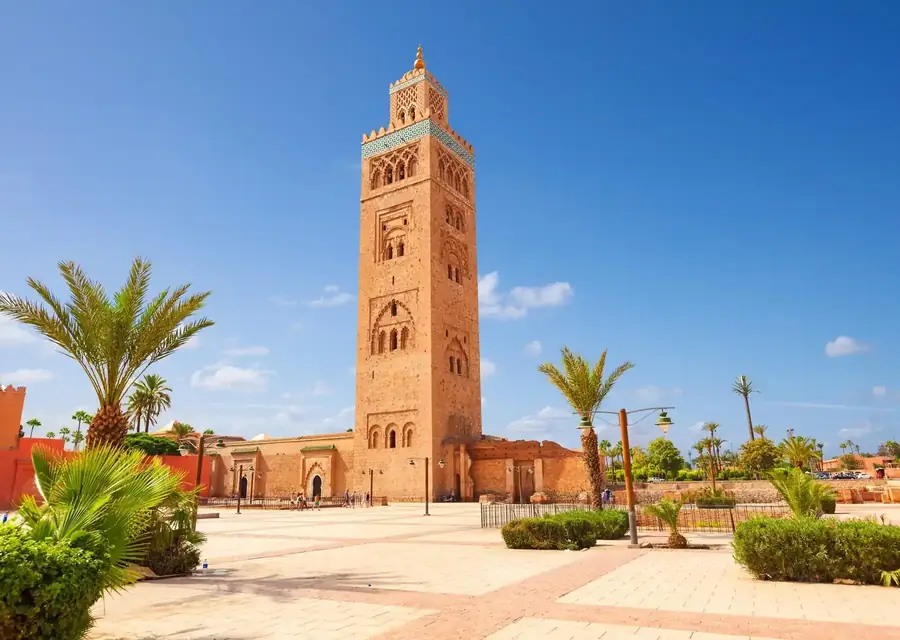
With a morning arrival, a professional local guide shows you Marrakech at a pace suited to children: the Koutoubia gardens, the Bahia Palace, the souks and the acrobats and musicians of Jemaa el-Fna, with a stop for fresh orange juice. Afterwards you are taken to your hotel or riad.
If you land later in the day, you go straight to your accommodation to rest. No plans tonight: the evening is yours.
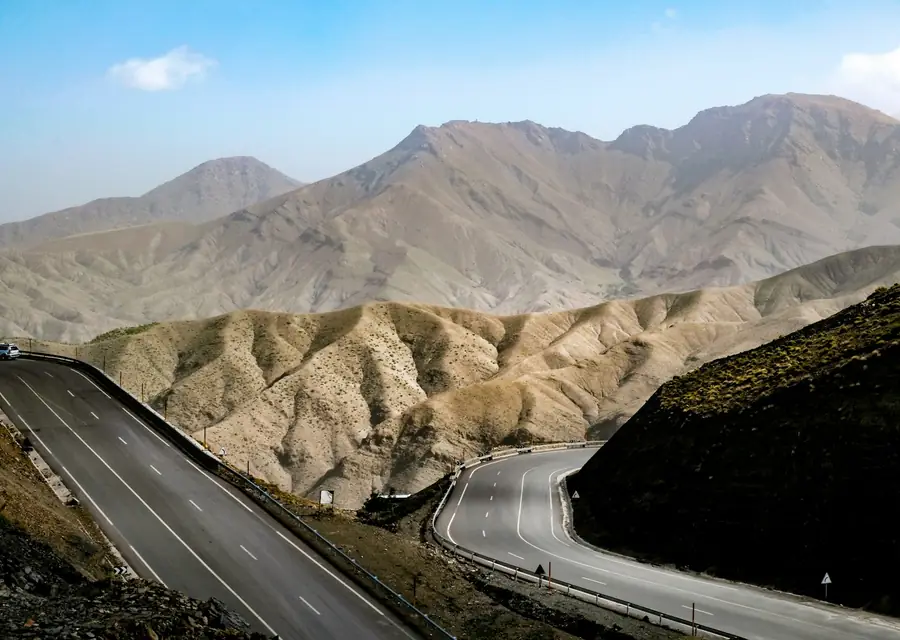
Today the family crosses the High Atlas at a relaxed pace, stopping often on the climb to the Tizi n'Tichka pass for views and mint tea.
After the pass you visit Telouet's old palace and follow the red canyon of the Ounila Valley down to Ait Ben Haddou.
In the late afternoon the ksar is quieter, perfect for children to explore its lanes and climb to the top. You spend the night nearby or in Ouarzazate.
Today is a short driving day for the family. In Skoura you walk through a palm oasis to Kasbah Amridil, where children can climb to the rooftop terraces of a real fortress.
In the Valley of Roses everyone can smell fresh rosewater at a cooperative in Kalaat M'Gouna.
In the afternoon the Dades Gorge reveals rocks shaped like giant fingers and a river to walk beside, before dinner at your guesthouse.
The family begins with a short drive up the Dades Gorge to spot the Monkey Fingers, then heads east to Tinghir.
Todra Gorge is a children's favourite: cool, shady and with a stream to paddle in, beneath cliffs that tower overhead. You have lunch close by.
In the afternoon the first dunes appear after Erfoud. In Merzouga everyone rides a camel into Erg Chebbi to watch the sunset, followed by dinner, drums around the fire and a night in a desert tent.
This is a day without long drives, which children appreciate. It begins with sunrise on the dunes, a little sand-sliding and breakfast in camp, then a ride back to Merzouga.
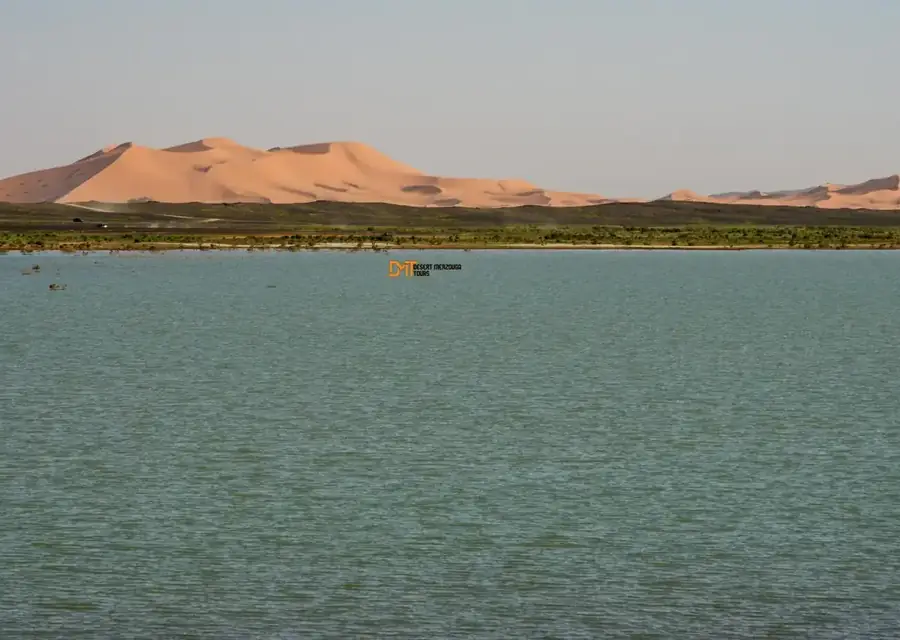
Later the family explores by 4x4: drumming with the Gnawa musicians of Khamlia, visiting a nomad family whose children often come out to say hello, and searching for fossils on the black stony plain. In wet years, flamingos wade in the lake near the village.
The afternoon is free for the pool or sandboarding, and the night is spent in a family-friendly hotel at the foot of the dunes.
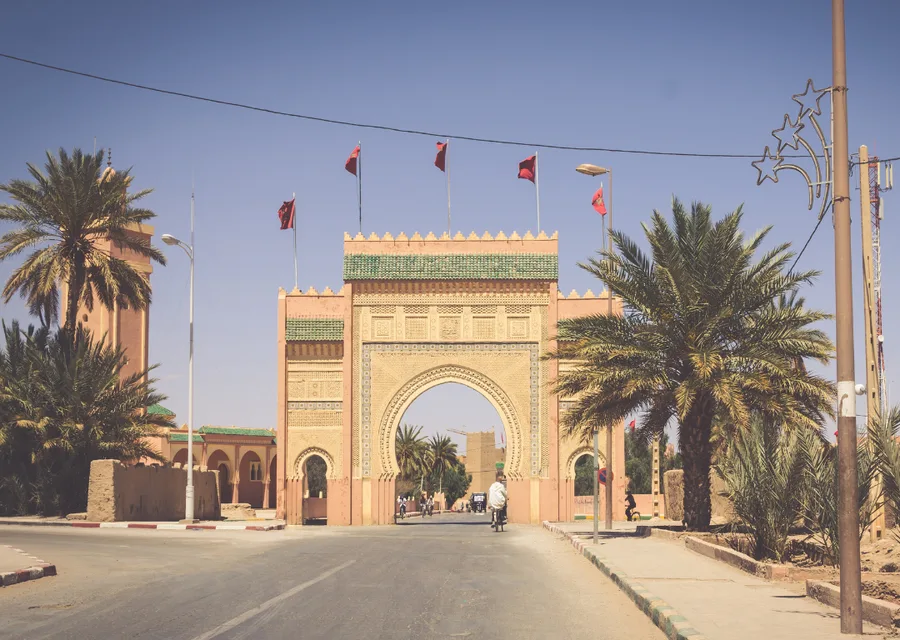
After a last sunrise on the dunes, the family heads south to Zagora. In Rissani children enjoy the busy market and its donkey park on souk days.
In Alnif they can hunt for trilobite fossils in the black rock, and lunch is in Nkob, a village of earthen kasbahs that look like castles.
In the afternoon you follow the Draa Valley, a long green ribbon of palm trees, to Zagora, where you spend the night in a family-friendly riad in the palm grove.
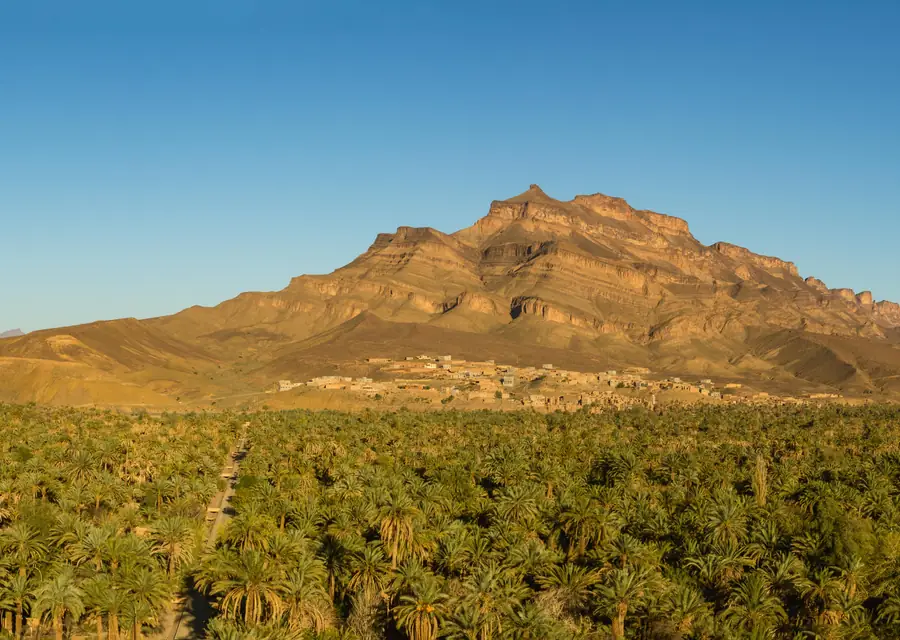
After an early breakfast you drive a few kilometres south of Zagora to Tamegroute. Its old religious school keeps a library of manuscripts, some written on gazelle skin, and in the village workshops potters shape and fire the famous green-glazed bowls and tiles in underground kilns. Children love watching the clay take shape on the wheel.
The road then turns north along the Draa Valley, nearly a hundred kilometres of palm groves, kasbahs and earthen villages beside the river, with the flat-topped Jbel Kissane above Agdz. You can stop to walk in a palm grove or stretch your legs at the kasbah of Tamnougalt.
From Agdz the road climbs the Tizi n'Tinififft pass to Ouarzazate, a good place for lunch, then crosses the High Atlas over the Tizi n'Tichka. It is the longest drive of the tour, so we take it at an easy pace with plenty of breaks, and you reach Marrakech in the early evening for a night at your riad or hotel.
The road west crosses a plain that gradually fills with argan trees, a species that grows almost nowhere else. You will probably see goats that have climbed into the branches to eat the fruit, and you can visit a cooperative where women crack the nuts by hand and press the oil.
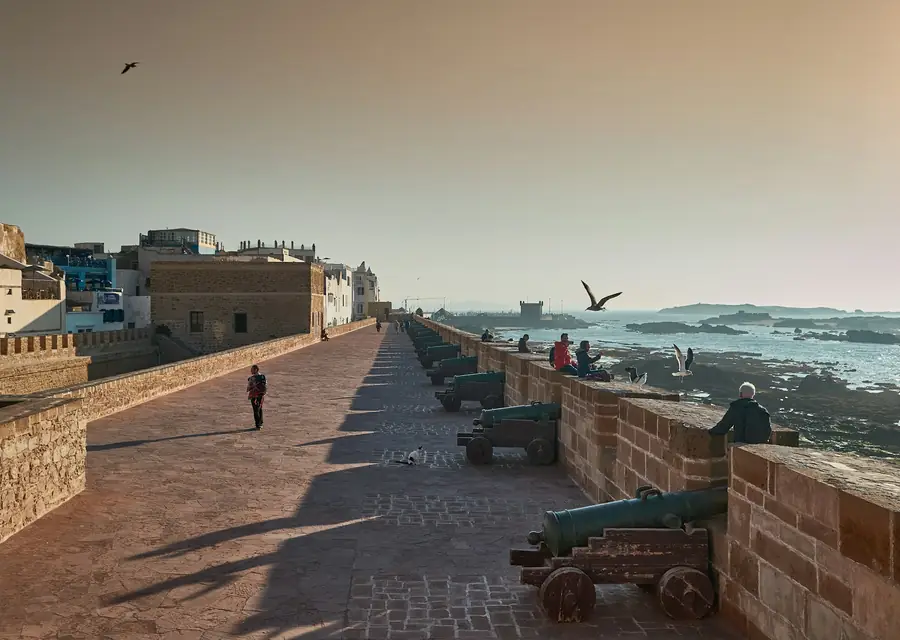
Essaouira arrives with a change of air: cooler, salty and windy. The town was laid out in the eighteenth century by a French engineer for Sultan Mohammed III, which explains its straight streets inside thick sea walls. You walk the Skala, the rampart lined with bronze cannons facing the ocean, and through the woodworkers' workshops built into its arches.
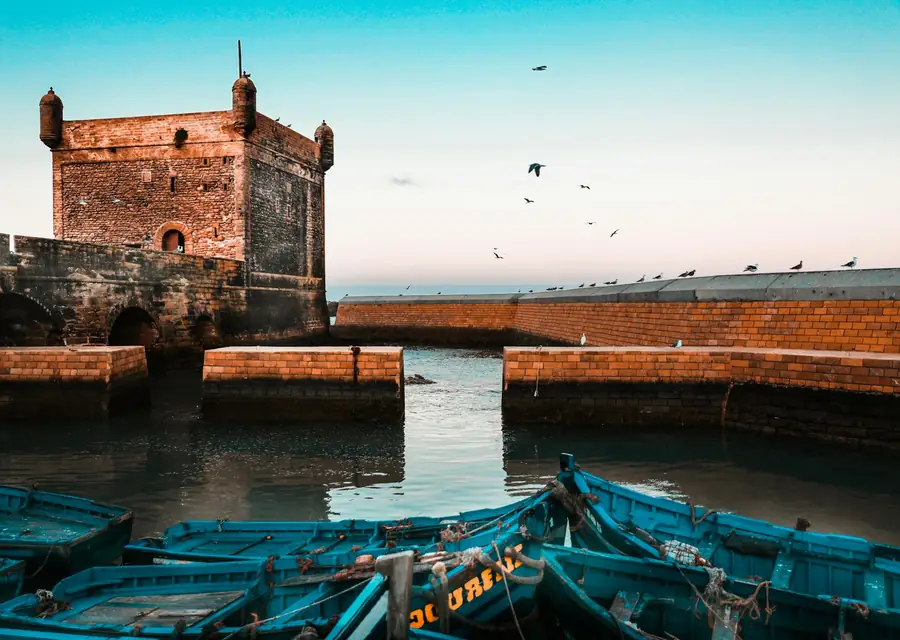
The harbour is at its busiest when the blue boats come in and the catch is sold on the quay; you can choose your fish and have it grilled on the spot. The evening is free in the medina.
A free day by the sea. Essaouira is small enough to explore without a map and relaxed enough that nobody hurries you. The medina's main streets are lined with galleries, spice stalls and shops selling boxes and tables inlaid in thuya wood, a local speciality.
The long beach south of the town is popular with windsurfers and kitesurfers thanks to the constant trade winds, and you can walk, ride a horse or a camel along it towards the ruined fort half-buried in the sand.
Music lovers will know the town for its Gnawa festival each June; at other times you may still hear musicians in the squares at night. If you would like an activity, we can arrange a cooking class, a surf lesson or a visit to a nearby winery.
There is no rush this morning. You can take a last walk on the ramparts or along the beach, and look for anything you had your eye on in the medina, before leaving around midday.
The drive back to Marrakech crosses the argan country again, with a stop for coffee on the way and a visit to a cooperative if you missed it on the way out.
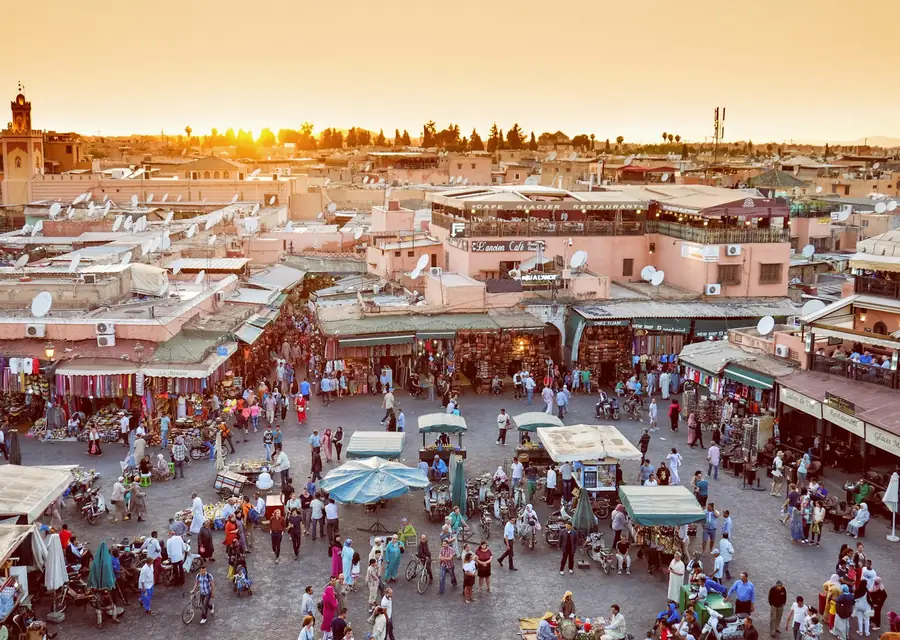
You arrive in Marrakech in the afternoon. If this is your last evening, Jemaa el-Fna is the natural place to spend it: the square is at its liveliest after dark, when the food stalls set up and the smoke of the grills drifts across the crowd. On a final day, your driver can take you to the airport instead.
Here in Marrakech the itinerary ends, with a drop-off at your hotel. If you need it, we can book a further night or the transfer to your flight.
Good to know
Before you go
We collect you from your riad or hotel in Marrakech, or from Menara Airport, at around 8:00 am. In the medina, where cars cannot reach every door, your driver meets you at the nearest gate and helps with luggage.
The tour ends at your accommodation in Marrakech or at Menara Airport. On tours that arrive in the evening, we recommend booking a flight for the following day.
A different start or end point is rarely a problem. Because every tour is private, we can begin in one city and finish in another; tell us where you are staying and we will adapt the route and the quote.
Spring (March to May) and autumn (September to November) are the most comfortable seasons for this route. Days are warm and clear, nights are mild, and in April and May the valleys of the south are green and the roses of Kalaat M'Gouna are in bloom.
Winter is a good time for the desert if you bring warm clothes: skies are bright and the dunes are quiet, but temperatures after dark can fall to around freezing and the High Atlas passes occasionally close for a few hours after snow. In July and August the Sahara is very hot in the afternoon, so we shift the camel trek later, start driving earlier and can recommend a camp with air-cooled tents.
On the Atlantic coast, sea breezes keep Essaouira and Agadir mild all year, which makes them a welcome contrast after the heat of the interior in summer.
During Ramadan the tour runs as normal. Some restaurants close during the day in smaller towns, your driver-guide will know where to stop, and evenings are especially lively after sunset.
Questions and answers
Yes. You travel only with the people in your own party, in a private vehicle with your own driver-guide. That means you choose the departure date, set the pace and can stop wherever you like along the way.
It varies from day to day. The longest stretch is on day 7, with about 7.5 hours, with stops on the road, and the other days are noticeably shorter. In total the tour covers about 1,740 km. All times are approximate and broken up by visits, lunch and photo stops.
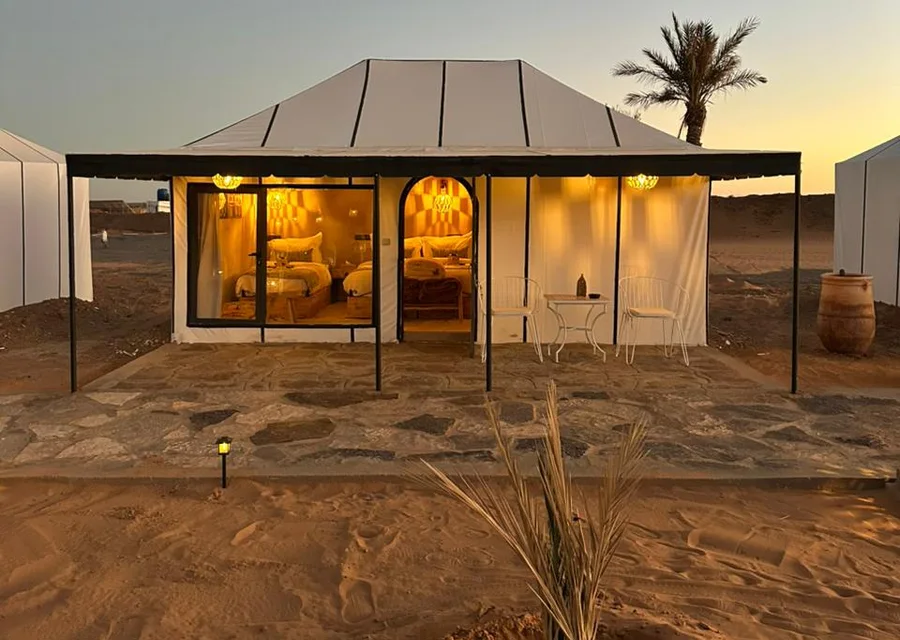
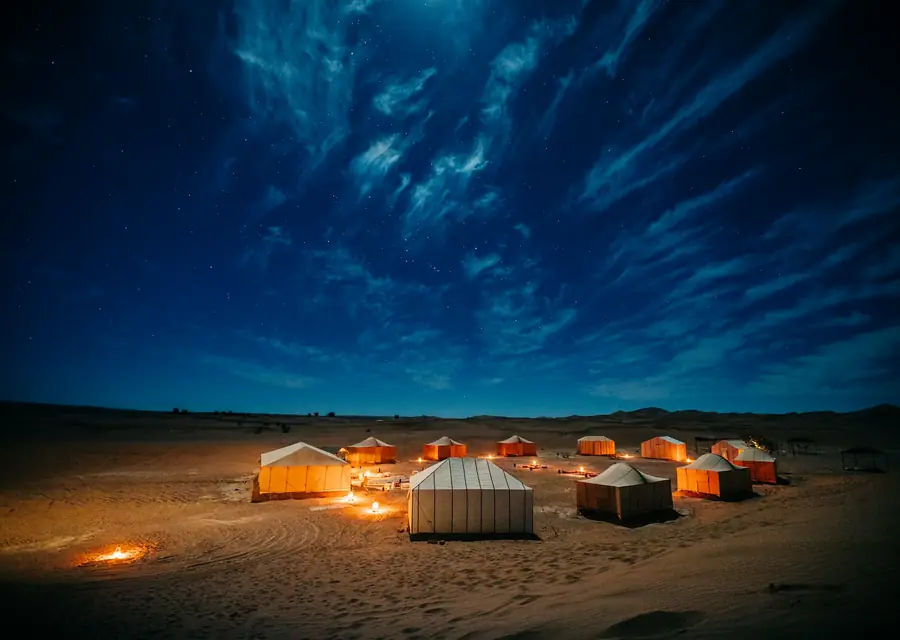
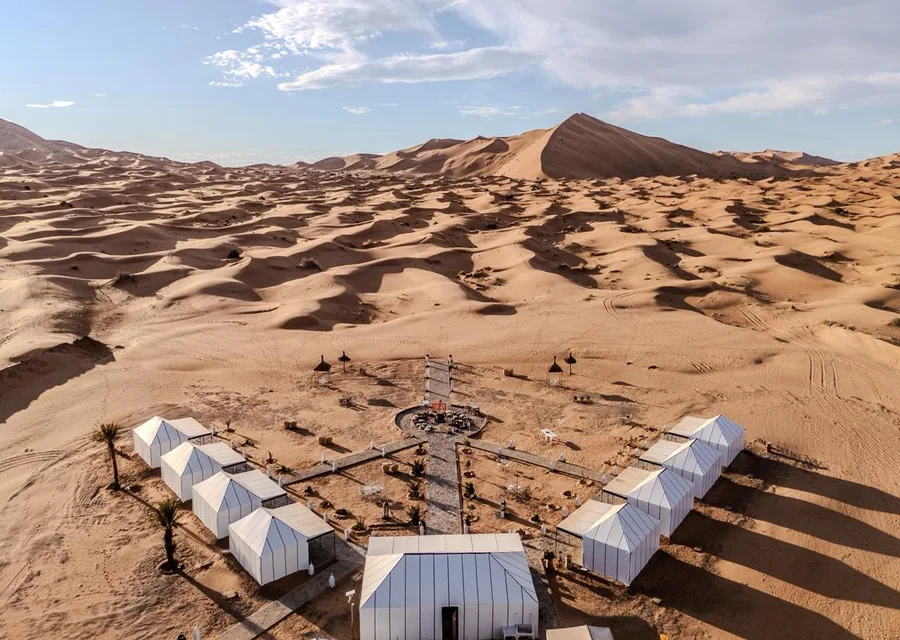
Camps in Erg Chebbi have real beds with sheets and blankets, a dining tent and a fire circle. You choose between two options. Our mid-range luxury camp has private tents with en-suite bathrooms, hot showers and comfortable bedding. Our luxury camp has more spacious tents with air conditioning and heating, high-quality bedding and premium bathroom amenities. Dinner and breakfast are served at the camp.
No. The camel trek is included and most guests enjoy it, but if you prefer, we take you to the camp by 4x4. This is also what we suggest for very young children, pregnant travellers and anyone with back or knee problems.
Yes. The programme on this page is a starting point. We can add nights, swap stops, upgrade accommodation or end the tour in another city instead of returning to Marrakech. Tell us what you have in mind and we will adjust the route and send a new quote.
Yes, it was planned with children in mind. Driving days are kept short, there are frequent stops, the camel ride can be shortened or replaced by a 4x4 transfer, and we book family or connecting rooms where they exist. Child seats are provided on request.
March to May and September to November offer the most comfortable temperatures. Winter is clear and quiet but cold at night in the desert; in July and August the Sahara is very hot, and we adjust the timings accordingly.
Prices are always quoted on request: the price depends on the number of travellers, the season and the accommodation category, so we quote each request individually. Send us your dates and group size by WhatsApp or email and we will reply with a detailed quote. You can ask for as many changes as you need before confirming.
Accommodation
Carefully selected riads, guesthouses, hotels and desert camps. The exact properties are confirmed with your quote, in the category you choose.
Nights 1 and 7
Riad or boutique hotel
A traditional house built around a courtyard, in or beside the old town, with individually decorated rooms and breakfast served on the roof terrace or in the patio.
Night 2
Riad or boutique hotel
A traditional house built around a courtyard, in or beside the old town, with individually decorated rooms and breakfast served on the roof terrace or in the patio.
Night 3
Kasbah-style guesthouse
A family-run guesthouse or kasbah hotel built in the local earthen style, with en-suite rooms, a terrace over the valley and a home-cooked dinner.
Night 4
Desert camp in Erg Chebbi
A camp among the dunes with proper beds and bedding in each tent, a dining tent and a fire circle. We offer two options, both with private tents, en-suite bathrooms and hot showers: a mid-range luxury camp, and a luxury camp with more spacious tents, air conditioning and heating.
Night 5
Comfortable hotel
A well-located hotel with en-suite rooms, chosen for comfort and convenience after a day on the road.
Night 6
Riad or boutique hotel
A traditional house built around a courtyard, in or beside the old town, with individually decorated rooms and breakfast served on the roof terrace or in the patio.
Nights 8 and 9
Riad or boutique hotel
A traditional house built around a courtyard, in or beside the old town, with individually decorated rooms and breakfast served on the roof terrace or in the patio.
Your night in the Sahara
We offer two camps in the dunes of Erg Chebbi. Tell us which one you prefer when you enquire.
 Included in this tour
 Upgrade on request
Gallery
The places you will stand in on this route, in the order you reach them.
Similar tours
Marrakech · Dades Valley · Merzouga · Ait Ben Haddou · Marrakech
Fes · Merzouga · Dades Valley · Ait Ben Haddou · Marrakech
Marrakech · Dades Valley · Merzouga · Fes · Chefchaouen · Rabat · Casablanca
Marrakech · Ait Ben Haddou · Alnif · Merzouga · Erfoud · Dades Valley · Marrakech
Tell us your dates and group size, and we will send you this itinerary with a personal quote. You can change anything you like before confirming.