
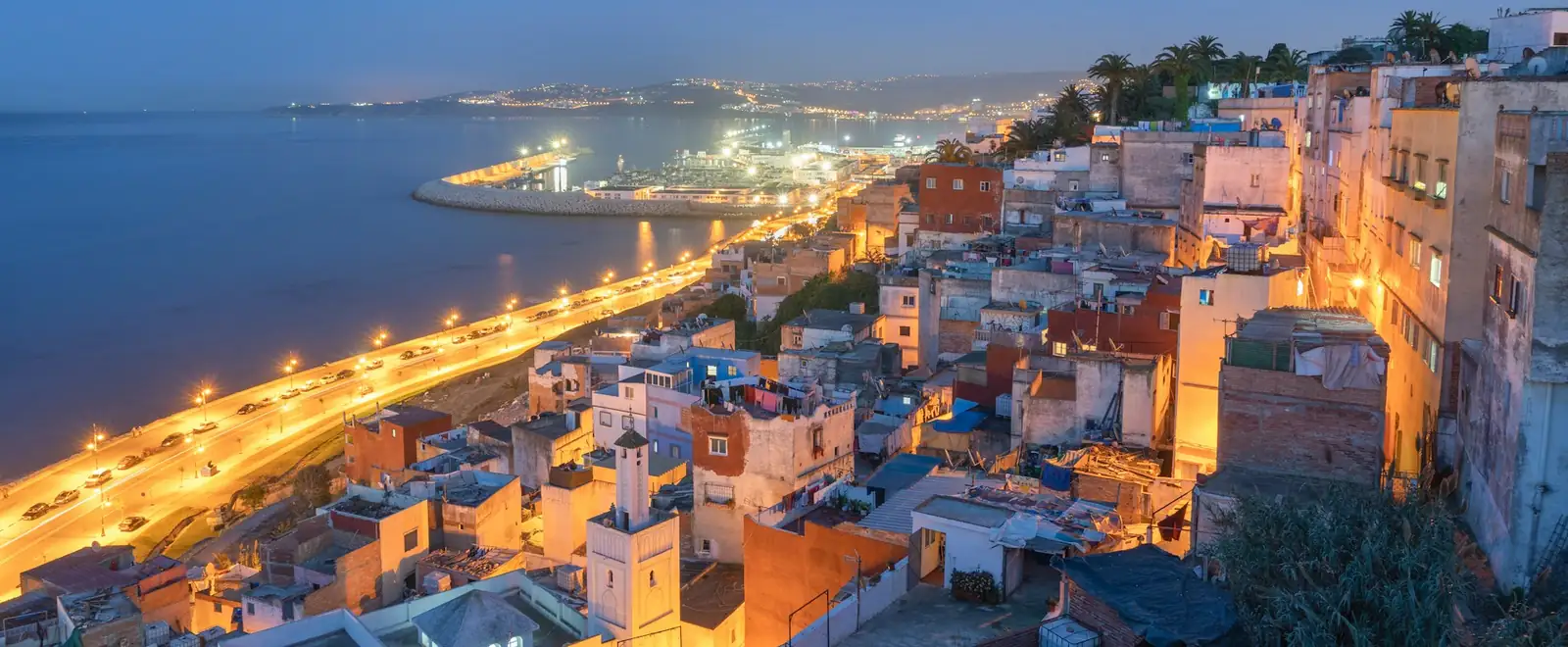
Destinations
Asilah The White Town South of Tangier
- Oct 10, 2026
- 9 min read
- By Magic Morocco Tours
Ramparts, murals and sea air…
Share
Forty-five minutes south of Tangier, the Atlantic road reaches a small town enclosed in stone ramparts that rise straight from the rocks. Inside the walls everything is white: white houses, white lanes, white steps, trimmed with doors and shutters in blue and green and, here and there, a wall covered in a painting. Asilah is one of the prettiest towns on the Moroccan coast and one of the most peaceful. It has no great monuments and needs none. People come to walk, to look at the sea, to eat fish and to slow down. This guide tells you what to expect.
01A Long History for a Small Town
Asilah’s calm is deceptive. Few towns in Morocco have changed hands so often. The Phoenicians had a trading post on this coast, known to the Romans as Zilis. The Arabs rebuilt it, the Normans of Sicily raided it, and in 1471 a Portuguese fleet captured it. It was the Portuguese who gave the town its shape, surrounding it with the ramparts and bastions you see today.
In 1578 the young King Sebastian of Portugal landed here with an army, intending to conquer Morocco. A few weeks later he was killed, with two rival Moroccan sultans, at the Battle of the Three Kings near Ksar el-Kebir. The disaster cost Portugal its independence for sixty years, and Asilah passed to Spain. At the end of the seventeenth century Sultan Moulay Ismail recovered it for Morocco.
In the early 1900s the town was the base of Ahmed al-Raisuli, a mountain chief who was by turns bandit, rebel and governor, famous for kidnapping foreigners for ransom. He built himself a palace on the sea wall. From 1912 to 1956 Asilah was part of the Spanish protectorate, which is why Spanish is still widely spoken and the working day still pauses for a long lunch.
02The Ramparts and the Sea
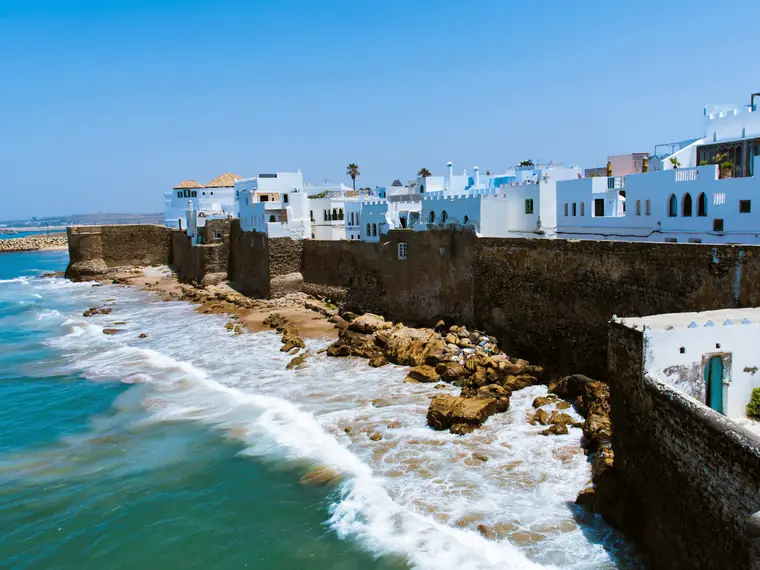
The walls are the first thing you notice and the best way to understand the town. They enclose the medina on all sides, golden-brown stone below the white houses, and on the western side they plunge directly into the surf. Two main gates lead in: Bab el-Kasaba, near the Great Mosque and the square tower of El Kamra, where King Sebastian is said to have lodged, and Bab Homar on the landward side.
You cannot walk the whole circuit along the top, but two bastions are open. The more famous is the one at the south-western corner, a narrow stone platform jutting out over the sea that locals call the Krikia. It is the gathering place of the town at sunset. From it you look back along the sea wall, with waves breaking at its foot, and down on a small cemetery of tiled graves beside the white-domed tomb of a local saint.
Below the walls on the northern side, the fishing harbour shelters behind a long breakwater, and beyond it the town beach runs north in a wide curve.
At the Krikia bastion, the whole town turns out to watch the sun go down. It is the best free show on the coast.
Stone against the Atlantic…
03The White Medina and Its Murals
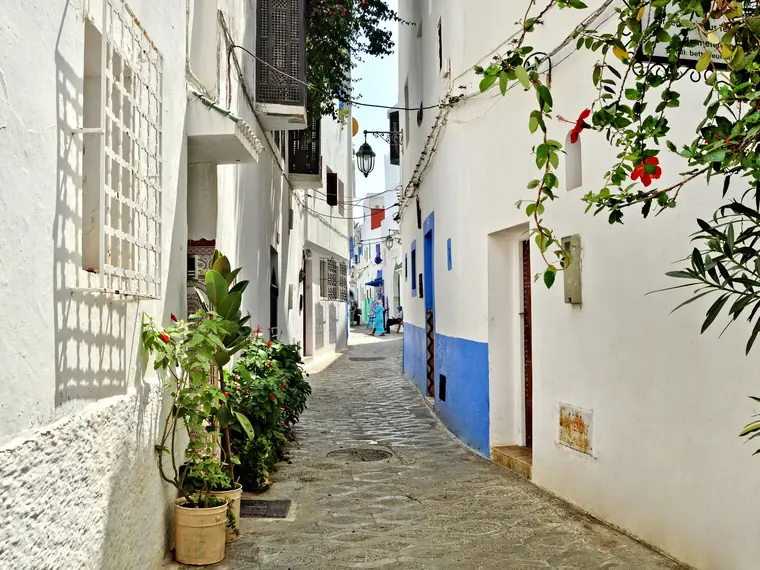
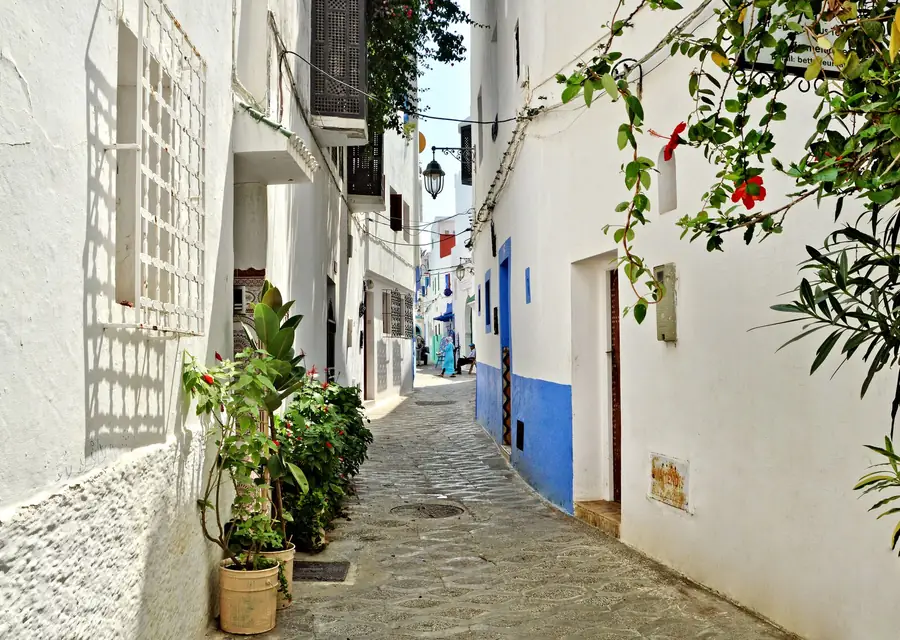
Within the walls, Asilah is small enough to cross in ten minutes and pleasant enough to fill a morning. The lanes are paved, clean and almost silent. Houses are limewashed brilliant white, with the lower metre of the wall, the doors, the window grilles and the shutters painted in blue, turquoise or green. Many have the wooden balconies and wrought iron of Andalusia. Bougainvillea climbs to the roofs, and you hear the sea at the end of every street.
What sets Asilah apart is its painting. Every summer since 1978, during the town’s cultural festival, artists from Morocco and abroad have been invited to paint murals directly on the walls of the medina. Some are abstract, some figurative, some playful; they cover whole façades, wrap around corners and frame doorways. Each year many are whitewashed over and replaced with new work, so the town is never quite the same twice.
Wandering in search of them is the main activity of a visit. Along the way you pass small galleries and artists’ studios, craft shops selling ceramics, woven goods and paintings, and the Raisuli Palace, built in 1909, which is used for festival events and is not always open. The Hassan II Centre for International Encounters, near the main gate, hosts exhibitions through the year.
An open-air gallery…
04The Festival That Remade a Town
In the 1970s Asilah was a neglected fishing town with crumbling walls and poor services. Two men who had grown up there, the politician and diplomat Mohamed Benaïssa and the painter Mohamed Melehi, had an idea: to use culture as the engine of renewal. In 1978 they invited a group of artists to spend the summer painting the walls and working with the town’s children.
The experiment became the International Cultural Moussem of Asilah, held every summer, traditionally in July and August. It brings painters, sculptors, musicians, writers and thinkers from across Africa, the Arab world and beyond for exhibitions, concerts, workshops and debates. The festival helped to pay for the restoration of the ramparts, the paving of the streets and the repair of historic buildings, and the rehabilitation of the medina later received an international architecture award.
Asilah is often cited as an example of how art can change a place. The visitor benefits in a simple way: this is one of the best-kept old towns in Morocco.
05The Beaches
Asilah is a summer resort for Moroccan and Spanish families, and the reason is the sand. The town beach, just north of the harbour, is long and wide, with cafés along the road behind it. It is convenient and lively in July and August.
The beach people talk about, though, lies a few kilometres to the south. Paradise Beach, or Rmilate, is a broad bay of fine sand below green hills, with a handful of seasonal huts serving grilled fish and tagines. Part of the fun is getting there: by a rough track in a taxi, or in one of the horse-drawn carts that wait near the walls. There are other, emptier beaches further along.
This is the open Atlantic. The water is cooler than the Mediterranean, and waves and currents can be strong, so swim where others are swimming and take local advice. Out of season the beaches are magnificent for walking.
06Eating in Asilah
Lunch is the high point of many day trips. The fishing boats come in each morning, and the restaurants around the walls and along the seafront serve what they bring: sardines, sole, sea bream, red mullet, prawns, squid and swordfish, grilled or fried in the Spanish manner and brought to the table with salad, bread and lemon. A mixed fried-fish platter to share is the classic order. Several restaurants have a distinctly Spanish character, with paella and tapas on the menu.
On Thursdays a country market is held just outside town, when farmers from the surrounding hills, the women in straw hats and striped cloths, bring fruit, vegetables, cheese and chickens to sell. For tea, find a café table under the ramparts or in the small square inside Bab el-Kasaba and watch the town go by.
07When to Go
Asilah has a mild ocean climate. The choice of season is really a choice of atmosphere.
“Lively in summer, dreamy the rest of the year.”
- Spring (Mar – May)Fresh, green and quiet. Ideal for walking and photography.
- Summer (Jun – Aug)Beach season and festival time. Busy, festive, rooms fill early.
- Autumn (Sep – Oct)Warm sea, golden light and the crowds gone. Perhaps the best time.
- Winter (Nov – Feb)Cool, sometimes wet and windy, and almost empty. Many places close.
08A Day Trip from Tangier
Asilah is about forty-five kilometres south of Tangier, forty-five minutes by the coastal road or the motorway. It makes an easy half day and a very pleasant full one. Leave Tangier mid-morning, perhaps stopping at Cap Spartel and the Caves of Hercules on the way down the coast. Arrive in Asilah around noon, walk the ramparts and the medina, have a long fish lunch, then continue to Paradise Beach or simply sit with a coffee until the light turns gold. Be at the Krikia for sunset and back in Tangier for dinner.
Asilah also lies on the way south. If you are travelling from Tangier towards Rabat and Casablanca, it is the natural lunch stop, and a little further on, near Larache, are the hilltop ruins of ancient Lixus, where legend placed the garden of the golden apples. Those with time to spare should consider a night in one of the small guesthouses inside the walls: after the day visitors leave, the town belongs to its residents and to you.
09Asilah After the Day Visitors Leave
Stay the night and you see another town. By six the coaches and day-trippers have gone. The light softens on the white walls, swallows dive over the ramparts, and families come out to walk along the sea wall and sit on the low parapets. Children play football in the square by the gate, and old men take up their places on the benches.
After sunset the lanes are lit by a few lamps and the only sound is the surf. Dinner is fish again, and nobody minds. In the morning, before the shops open, you can have the murals entirely to yourself, with the sun coming over the roofs and the smell of bread from the oven. For travellers who have just arrived from Europe by ferry, or who are at the end of a long tour, a quiet night in Asilah is a gentle beginning or a restful close.
10Practical Tips
Good to know:
- Getting thereA private car is the simplest way. Trains on the Tangier–Rabat line stop at Asilah, but the station is a couple of kilometres from the walls.
- On footThe medina is flat, compact and closed to cars. Comfortable shoes are all you need.
- PhotographyThe murals may be photographed freely. Ask before taking pictures of residents.
- Respect the wallsPeople live behind those white façades. Keep voices down and do not touch the paintings.
- WindThe Atlantic breeze is constant. Bring a layer, even on a sunny day.
- Festival datesThe summer festival dates change each year. If you want to see artists at work, ask us before you plan.
- CashThere are bank machines in the new town, just outside the walls.
11Asilah: Frequently Asked Questions
How far is Asilah from Tangier?
About forty-five kilometres, roughly forty-five minutes by road.
Is Asilah worth visiting?
Yes. Its ramparts, white medina, murals and seafood make it one of the most charming stops on the Atlantic coast.
How much time do I need in Asilah?
Three to four hours for the medina and lunch; a full day if you add the beach and stay for sunset.
When is the Asilah arts festival?
In summer, traditionally in July and August. Exact dates are announced each year.
Can I swim at Asilah?
Yes, in summer, at the town beach or Paradise Beach. The Atlantic can be rough, so take care and follow local advice.
About the Author

We travel these roads all year and love sharing real stories, hidden gems and practical advice with you.
Visit Asilah on a Private Day Trip
- Coastal road from Tangier
- Ramparts and painted medina
- Seafood lunch by the ocean
- Private vehicle and driver
Related Articles
Explore more
Continue Your Journey
Turn what you have read into a real itinerary. Our local team will shape a private route around your dates, your interests and your pace.
Planning your trip? For official information about Morocco, visit Visit Morocco, the website of the Moroccan National Tourist Office.