
Night 1
Casablanca
Comfortable hotel
A well-located hotel with en-suite rooms, chosen for comfort and convenience after a day on the road.
Eleven days give the classic Casablanca to Marrakech route room to breathe.


Tour overview
Eleven days give the classic Casablanca to Marrakech route room to breathe. There are two nights in Fes, two in Merzouga and two in Marrakech, which means three days with no long drive, including a guided day in the red city at the end.
Our 11 Day Casablanca to Marrakech Tour begins in Casablanca and ends in Marrakech, covering about 1,820 km by road over 11 days. Along the way you will experience the Tizi n'Tichka pass over the High Atlas, the UNESCO-listed ksar of Ait Ben Haddou, the Dades Valley and Todra Gorge, a sunset camel trek in the dunes of Erg Chebbi, a night in a desert camp, tea with nomad families and Gnawa music in Khamlia and the cedar forests and Barbary macaques of the Middle Atlas. Each stop is a real visit on foot, with your driver-guide explaining what you are looking at and local people adding their own stories.
Accommodation is chosen for character and location rather than size: 10 nights in all, in riads and boutique hotels in the medinas and old towns, kasbah-style guesthouses in the southern valleys, comfortable hotels where they suit the route better and one night in a desert camp in the dunes of Erg Chebbi. You travel in a private, air-conditioned vehicle, a 4x4 or a minibus depending on the size of your party, with an English-speaking driver-guide who knows these roads well. Spanish, Italian, French and Portuguese-speaking guides are available on request.
It suits travellers with time to spare who want to understand the country rather than tick it off: first-time visitors who want to see everything properly, and returning ones who want the regions they missed. The longest day on the road is day 6, with 7.5–8 hours of driving; every other day is shorter, and all of them are broken up by visits and stops. Like all our tours it is fully private, so the plan below can be lengthened, shortened or rearranged to fit your dates.
Highlights
Detailed itinerary
Your driver-guide meets you in the arrivals hall of Mohammed V Airport, holding a sign with your name, and drives you into Casablanca. What you see today depends on your flight.
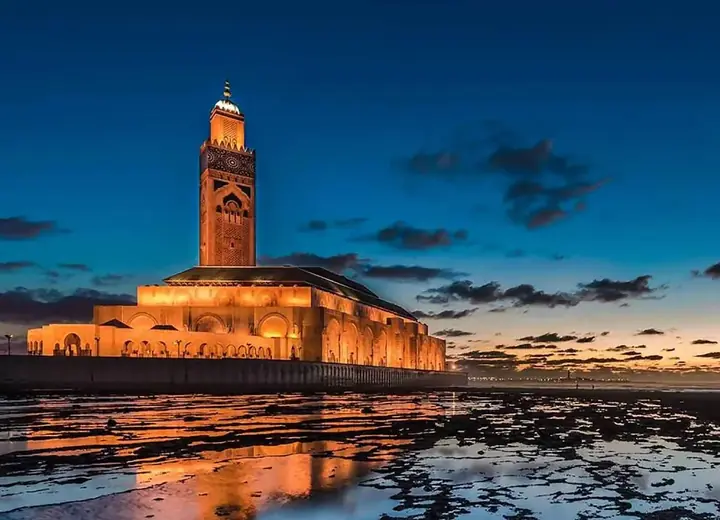
If you land in the morning or early afternoon, you visit the Hassan II Mosque, built over the Atlantic with a 210-metre minaret and open to non-Muslims on guided tours. Then you can drive along the Corniche and through the Art Deco centre.
The evening is free to rest. Your guide can recommend a restaurant for fresh fish or your first tagine.
After your first night in Casablanca, the motorway takes you an hour north along the coast to Rabat, the capital, a city of gardens and wide avenues.
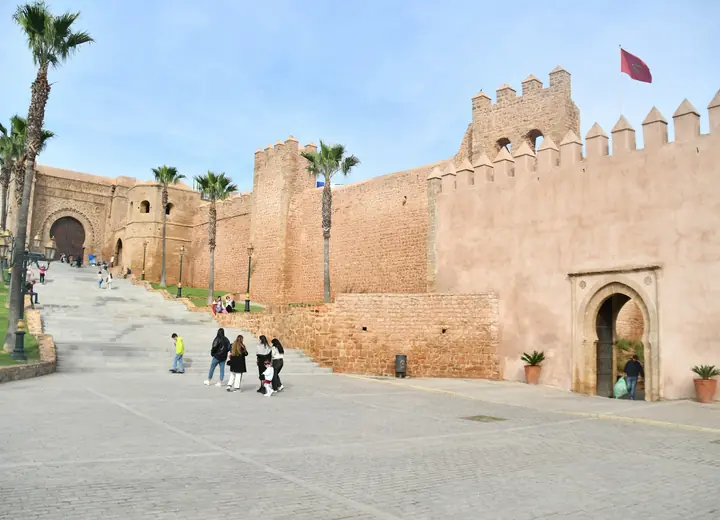
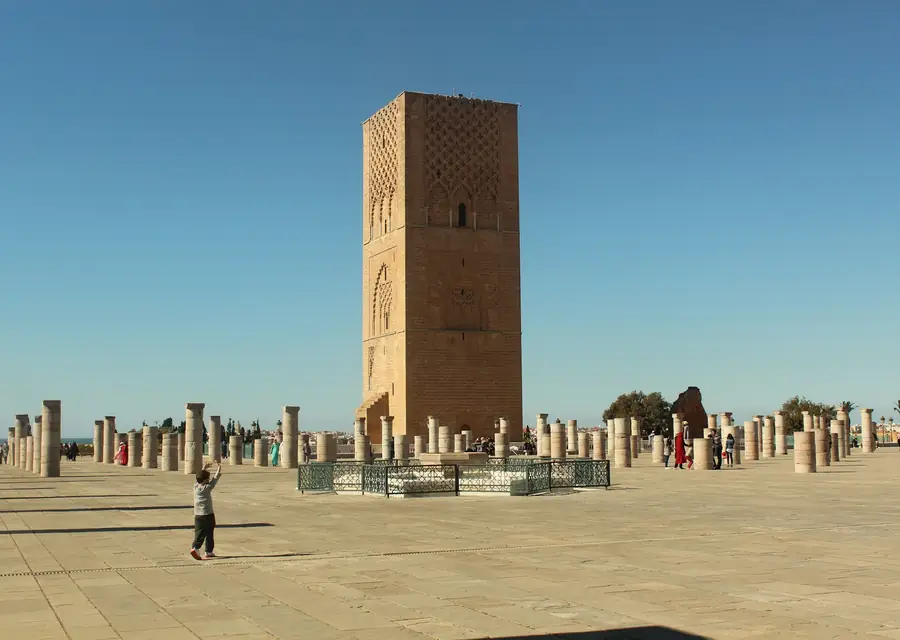
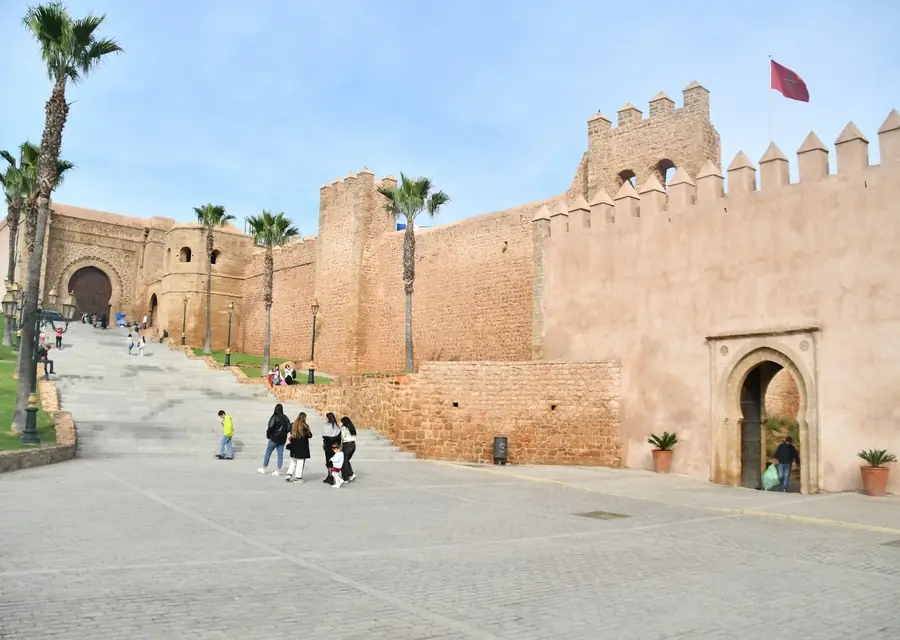
You walk among the columns around the Hassan Tower, visit the white marble Mausoleum of Mohammed V with its guards on horseback, and climb through the blue-and-white Kasbah of the Udayas to the terrace above the river mouth.
Later there is time for the medina, small and easy-going, before dinner and the night in a riad in Rabat.
Today you head north from Rabat across farmland and into the Rif foothills, where Ouazzane is surrounded by olive groves.
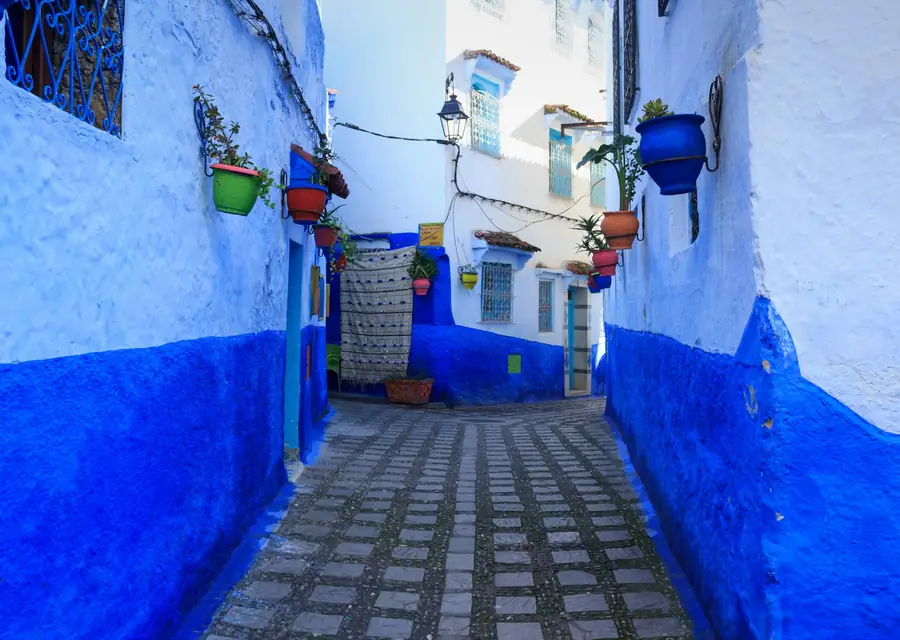
The last hour winds through the mountains to Chefchaouen, the blue town. After checking in, you wander the painted lanes with their flowerpots and sleeping cats.
Visit the kasbah on the main square and the spring of Ras el Ma, and walk to the Spanish Mosque to watch the sunset over the town.
After leaving the blue town, the road leads down through the hills to Volubilis, where Roman columns, an arch and mosaic floors rise from the olive groves.
You pass Moulay Idriss, sacred town of Morocco's first ruler, and stop in Meknes for lunch, the imperial gate of Bab Mansour and the granaries of Sultan Moulay Ismail.
Fes is an hour away; you arrive in the late afternoon and check in to your riad.
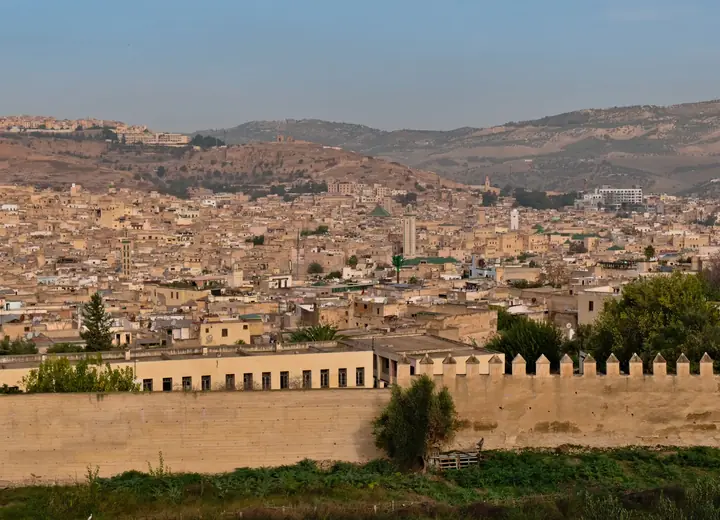
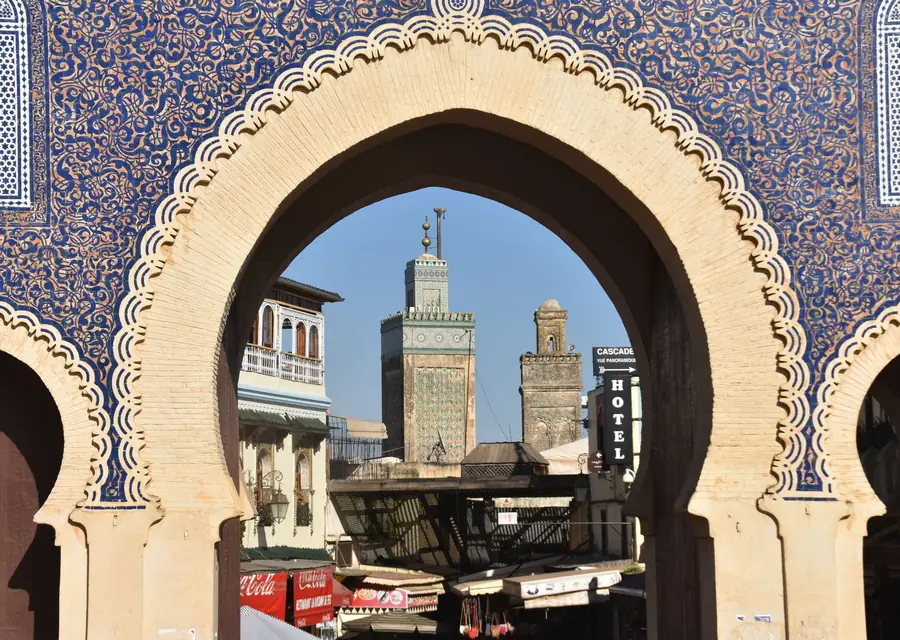
Today a licensed local guide shows you Fes el-Bali, the old medina, entering through Bab Boujloud. The lanes are too narrow for cars, so the city sounds of hammers, voices and hooves rather than engines.
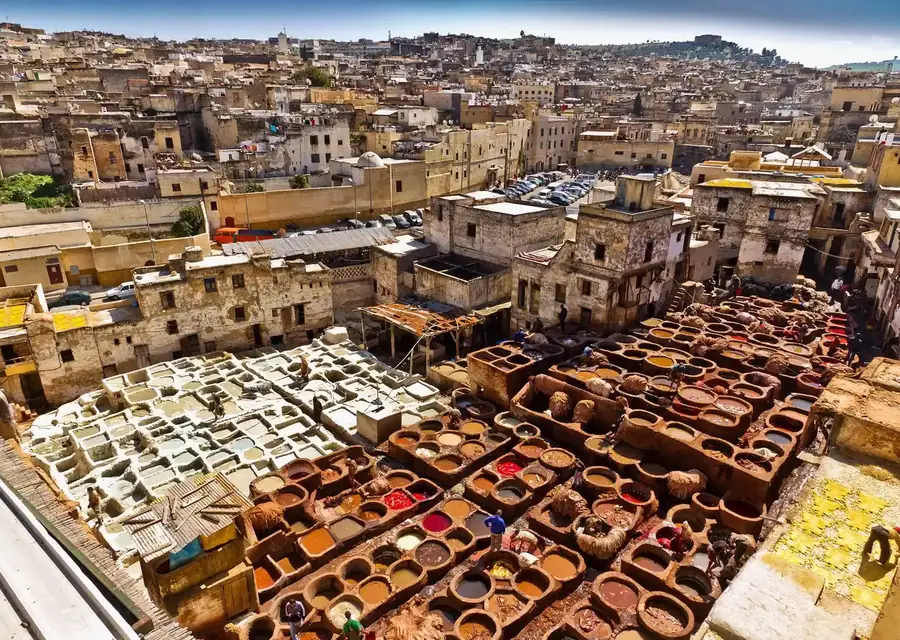
You visit a madrasa of carved plaster and cedar, see the Al-Qarawiyyin, founded in 859, through its great doors, pass through the coppersmiths' square of Seffarine and watch the tanners at Chouara from above.
After lunch you drive to the Royal Palace gates, the Mellah and a pottery cooperative, finishing with a view over the medina. Later in the day you are free to explore on your own or rest at the riad.
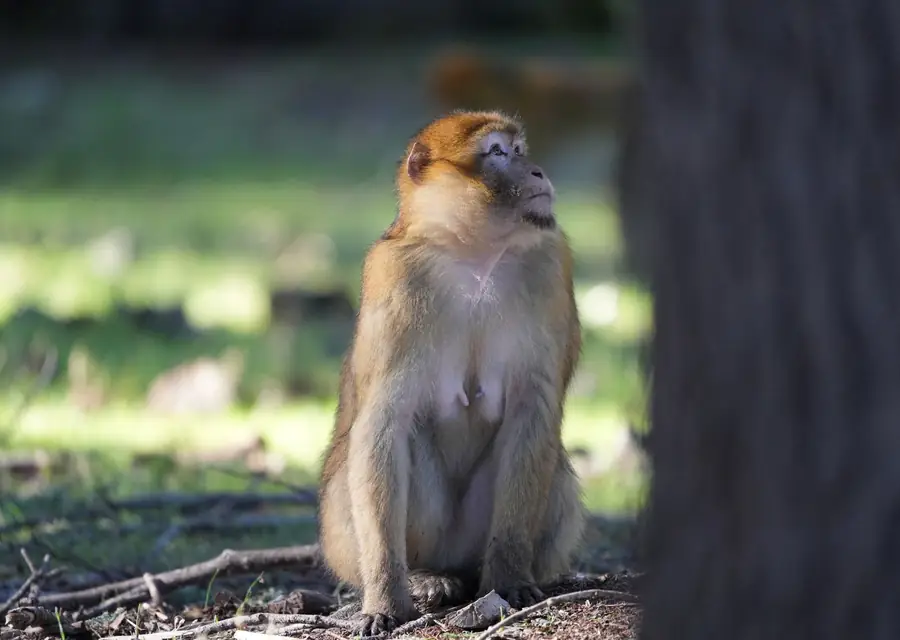
A long day from Fes to the Sahara. You start early, climbing to Ifrane and through the cedar forest of the Middle Atlas, where Barbary macaques are a common sight.
After the high pastures, lunch is in Midelt. The afternoon brings the Ziz gorges and a viewpoint over the green Ziz Valley.
Past Erfoud the dunes of Erg Chebbi glow on the horizon. In Merzouga you ride a camel into the sand for sunset and spend the night at a desert camp.
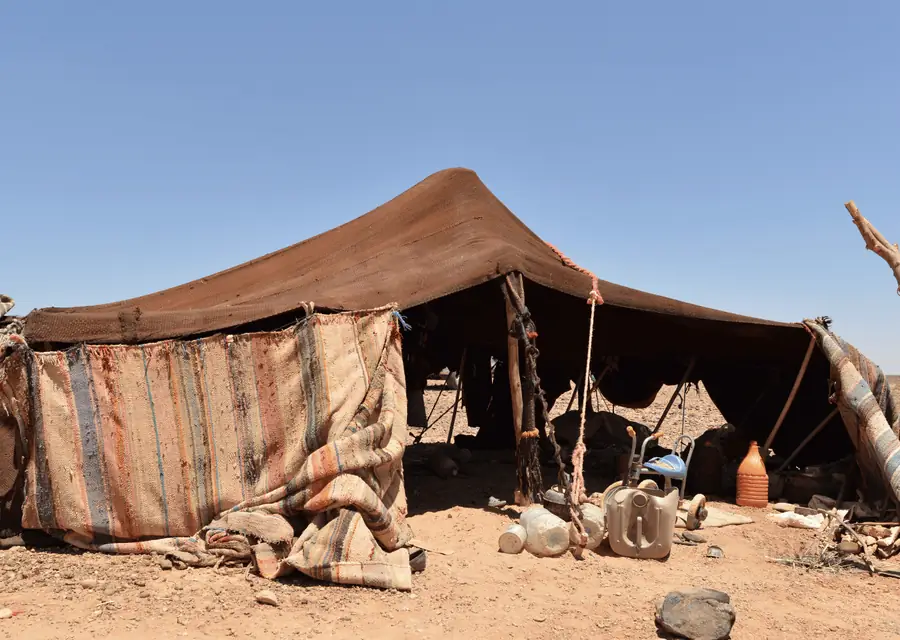
The morning light on Erg Chebbi is reason enough to get up early: watch it from a high dune, then have breakfast at the camp and return to the village.
A 4x4 then takes you around the dunes to meet the people who live here: Gnawa musicians in Khamlia and a nomad family in the black desert, who share tea and talk about their herds and their moves. Fossil beds and old mine shafts are stops along the way.
Spend the afternoon at leisure and the night in a hotel at the foot of the dunes.
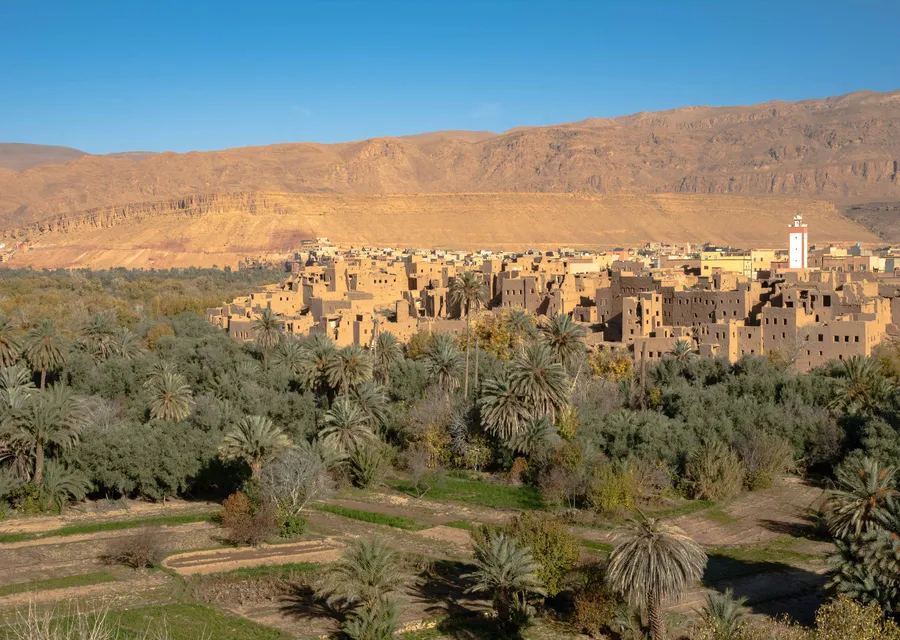
After two nights in Merzouga, watch the sunrise one more time from the dunes, then return to the village for breakfast.
The drive west passes Rissani, near the ruins of Sijilmassa, where the souk is busiest on Sundays, Tuesdays and Thursdays, and crosses a plateau lined with khettara mounds.
Todra Gorge is the afternoon's walk, between sheer limestone walls, and the Dades Valley is your stop for the night.
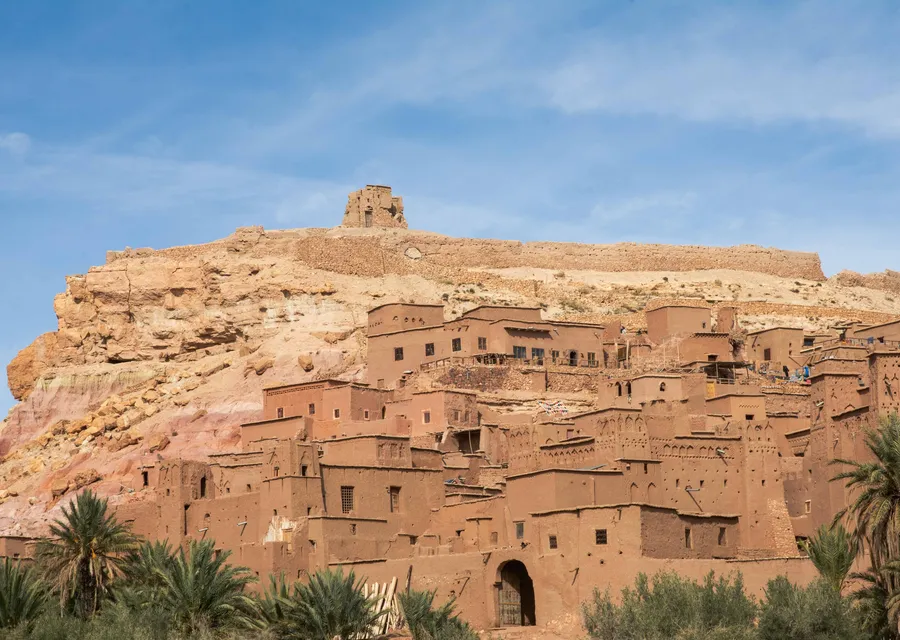
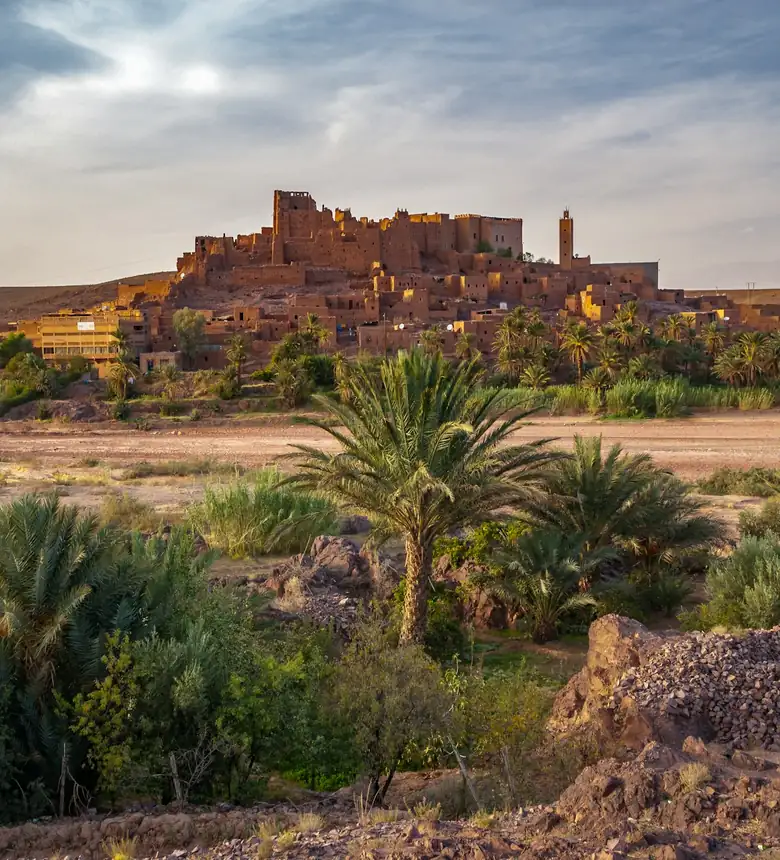
Today you follow the Road of a Thousand Kasbahs west through the Valley of Roses and the oasis of Skoura.
After Ouarzazate, you visit Ait Ben Haddou, climbing through its lanes, and have lunch with a view of the ksar.
The road then climbs to the Tizi n'Tichka, the highest pass of the High Atlas, and drops down to Marrakech by early evening.
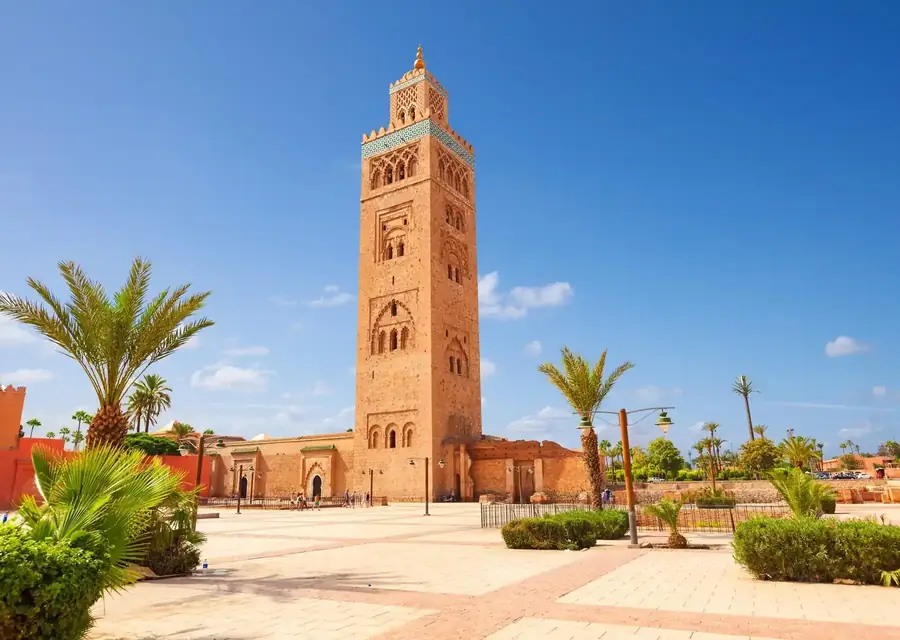
After crossing the Atlas yesterday, today you stay in Marrakech and discover it with a licensed local guide. You start at the Koutoubia, whose minaret has watched over the city since the twelfth century, then visit the Bahia Palace and its painted courtyards.
The Saadian Tombs and the spice stalls of the old Jewish quarter come before lunch. In the afternoon your guide leads you through the souks, from the slipper makers to the dyers and the lantern workshops.
If you still have energy, add the Ben Youssef Madrasa. In the evening, Jemaa el-Fna fills with grills, storytellers and Gnawa drummers.
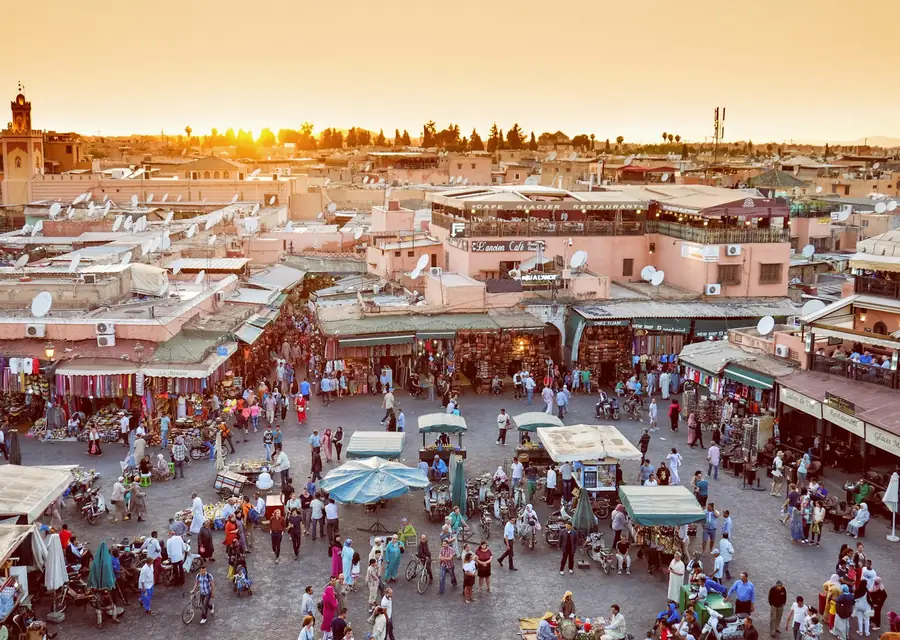
The final morning is yours to enjoy Marrakech. Visit the Majorelle Garden early, before the crowds, or explore the Ben Youssef Madrasa and the Secret Garden in the medina.
You may want to do some last shopping in the souks, now with a good eye for quality.
Your driver collects you from your riad for the transfer to Marrakech Menara Airport, the train station or your next hotel.
Good to know
Before you go
Your driver-guide meets you at Mohammed V Airport when your flight lands, or at your hotel in Casablanca if you have arrived earlier. Send us your flight number and we will track any delay.
The tour ends at your accommodation in Marrakech or at Menara Airport. On tours that arrive in the evening, we recommend booking a flight for the following day.
A different start or end point is rarely a problem. Because every tour is private, we can begin in one city and finish in another; tell us where you are staying and we will adapt the route and the quote.
Spring (March to May) and autumn (September to November) are the most comfortable seasons for this route. Days are warm and clear, nights are mild, and in April and May the valleys of the south are green and the roses of Kalaat M'Gouna are in bloom.
Winter is a good time for the desert if you bring warm clothes: skies are bright and the dunes are quiet, but temperatures after dark can fall to around freezing and the High Atlas passes occasionally close for a few hours after snow. In July and August the Sahara is very hot in the afternoon, so we shift the camel trek later, start driving earlier and can recommend a camp with air-cooled tents.
The north is greener and wetter than the rest of the country. Chefchaouen and the Rif are at their best from April to June and in September and October; between November and February you should expect some rain there.
During Ramadan the tour runs as normal. Some restaurants close during the day in smaller towns, your driver-guide will know where to stop, and evenings are especially lively after sunset.
Questions and answers
Yes. You travel only with the people in your own party, in a private vehicle with your own driver-guide. That means you choose the departure date, set the pace and can stop wherever you like along the way.
It varies from day to day. The longest stretch is on day 6, with 7.5–8 hours on the road, and the other days are noticeably shorter. In total the tour covers about 1,820 km. All times are approximate and broken up by visits, lunch and photo stops.
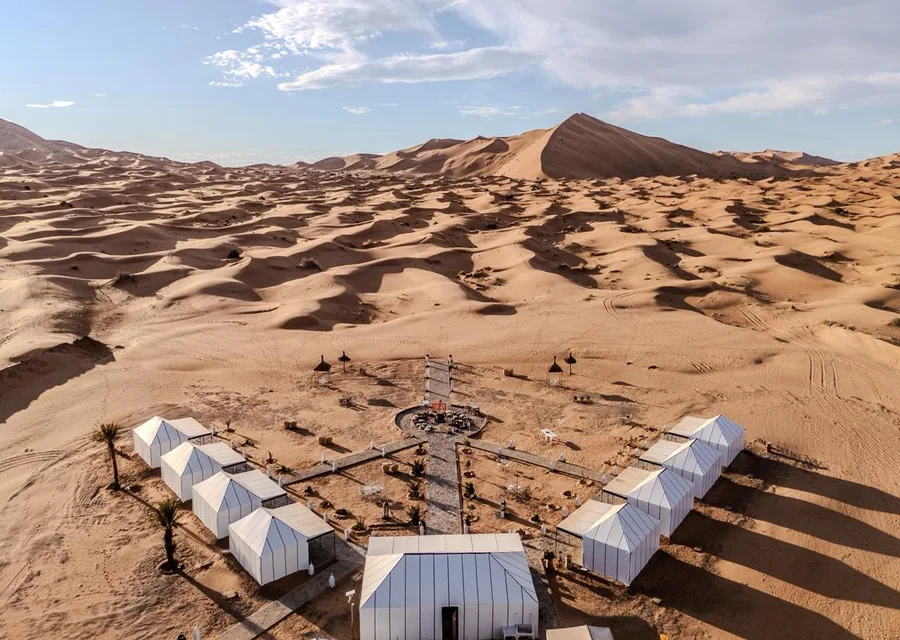
Camps in Erg Chebbi have real beds with sheets and blankets, a dining tent and a fire circle. You choose between two options. Our mid-range luxury camp has private tents with en-suite bathrooms, hot showers and comfortable bedding. Our luxury camp has more spacious tents with air conditioning and heating, high-quality bedding and premium bathroom amenities. Dinner and breakfast are served at the camp.
No. The camel trek is included and most guests enjoy it, but if you prefer, we take you to the camp by 4x4. This is also what we suggest for very young children, pregnant travellers and anyone with back or knee problems.
Yes. The programme on this page is a starting point. We can add nights, swap stops, upgrade accommodation or finish somewhere other than Marrakech. Tell us what you have in mind and we will adjust the route and send a new quote.
March to May and September to November offer the most comfortable temperatures. Winter is clear and quiet but cold at night in the desert; in July and August the Sahara is very hot, and we adjust the timings accordingly.
Prices are always quoted on request: the price depends on the number of travellers, the season and the accommodation category, so we quote each request individually. Send us your dates and group size by WhatsApp or email and we will reply with a detailed quote. You can ask for as many changes as you need before confirming.
Accommodation
Carefully selected riads, guesthouses, hotels and desert camps. The exact properties are confirmed with your quote, in the category you choose.
Night 1
Comfortable hotel
A well-located hotel with en-suite rooms, chosen for comfort and convenience after a day on the road.
Night 2
Riad or boutique hotel
A traditional house built around a courtyard, in or beside the old town, with individually decorated rooms and breakfast served on the roof terrace or in the patio.
Night 3
Riad or boutique hotel
A traditional house built around a courtyard, in or beside the old town, with individually decorated rooms and breakfast served on the roof terrace or in the patio.
Nights 4 and 5
Riad or boutique hotel
A traditional house built around a courtyard, in or beside the old town, with individually decorated rooms and breakfast served on the roof terrace or in the patio.
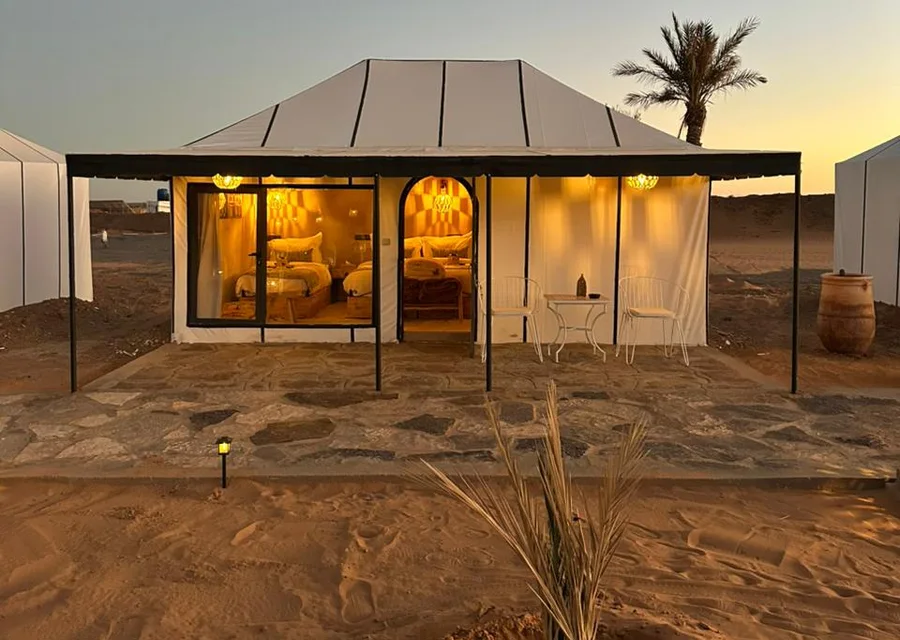
Night 6
Desert camp in Erg Chebbi
A camp among the dunes with proper beds and bedding in each tent, a dining tent and a fire circle. We offer two options, both with private tents, en-suite bathrooms and hot showers: a mid-range luxury camp, and a luxury camp with more spacious tents, air conditioning and heating.
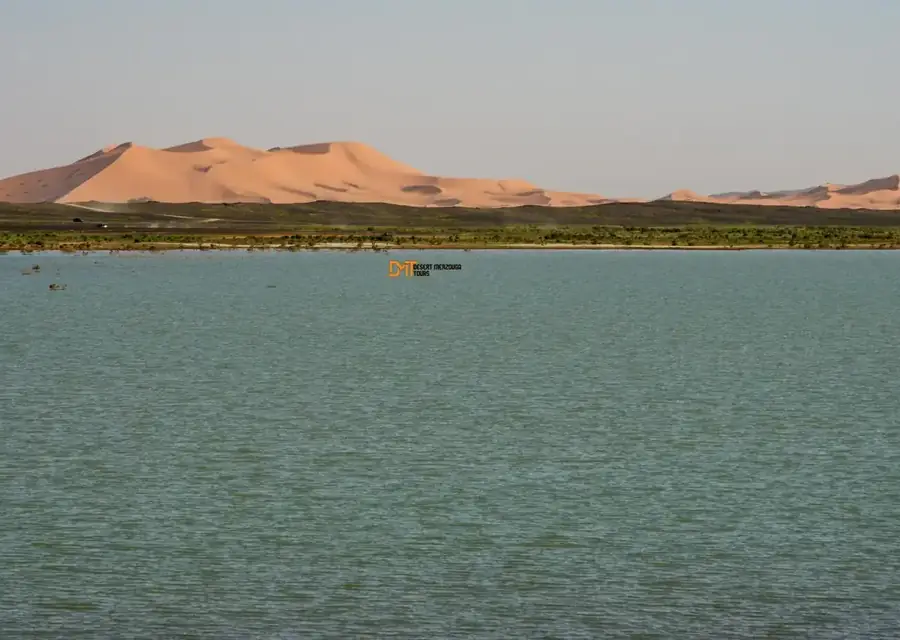
Night 7
Comfortable hotel
A well-located hotel with en-suite rooms, chosen for comfort and convenience after a day on the road.
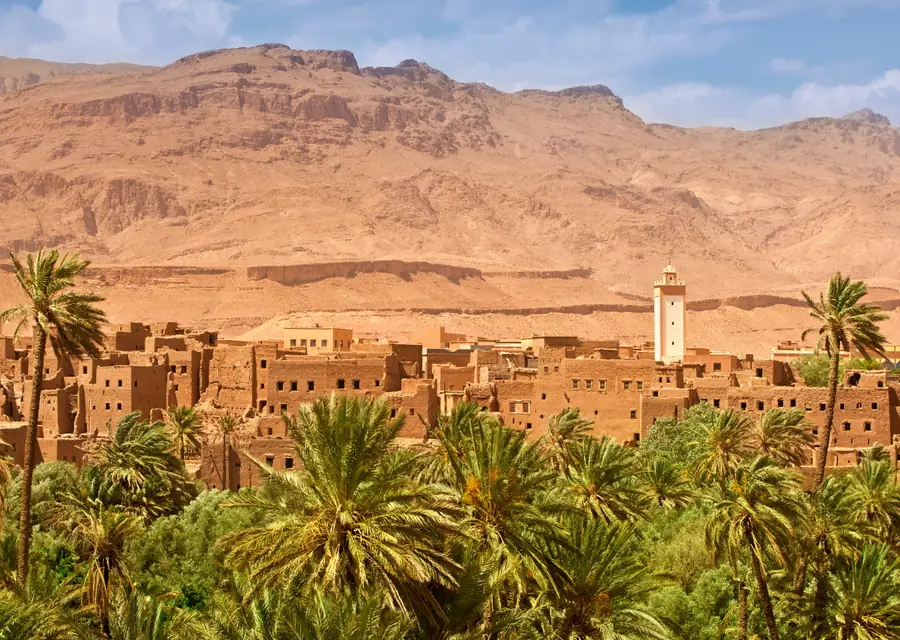
Night 8
Kasbah-style guesthouse
A family-run guesthouse or kasbah hotel built in the local earthen style, with en-suite rooms, a terrace over the valley and a home-cooked dinner.
Nights 9 and 10
Riad or boutique hotel
A traditional house built around a courtyard, in or beside the old town, with individually decorated rooms and breakfast served on the roof terrace or in the patio.
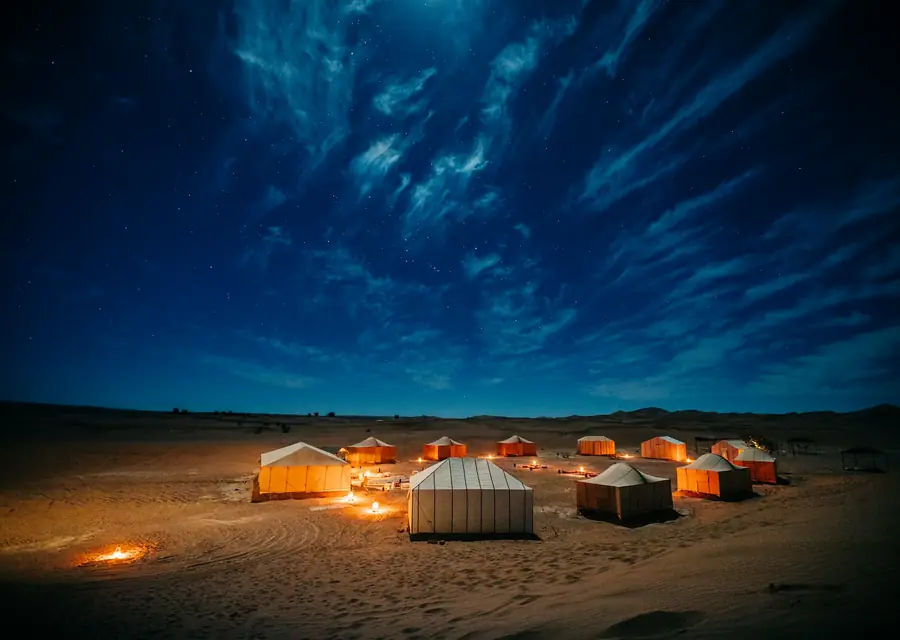
Your night in the Sahara
We offer two camps in the dunes of Erg Chebbi. Tell us which one you prefer when you enquire.
 Included in this tour
 Upgrade on request
Gallery
The places you will stand in on this route, in the order you reach them.
Similar tours
Casablanca · Rabat · Azrou · Merzouga · Dades Valley · Oukaimeden · Marrakech
Casablanca · Rabat · Chefchaouen · Fes · Merzouga · Dades Valley · Marrakech · Casablanca
Casablanca · Tangier · Chefchaouen · Fes · Merzouga · Dades Valley · Marrakech
Fes · Chefchaouen · Midelt · Merzouga · Dades Valley · Marrakech
Tell us your dates and group size, and we will send you this itinerary with a personal quote. You can change anything you like before confirming.
Quick answers for planning your 11 day Casablanca to Marrakech tour with Magic Morocco Tours.
11 days in Morocco on this route means about 1,820 km by private vehicle from Casablanca to Marrakech, with nights in Casablanca, Rabat, Chefchaouen, Fes, Erg Chebbi dunes, Dades Valley and Marrakech. Spent this way, your 11 days in Morocco leave time to walk through the UNESCO ksar of Ait Ben Haddou and to ride a camel into Erg Chebbi at sunset.
The 11 day Morocco itinerary, day by day: day 1, Casablanca; day 2, Casablanca to Rabat; day 3, Rabat to Chefchaouen; day 4, Chefchaouen to Fes; day 5, Fes; day 6, Fes to Merzouga; day 7, Merzouga; day 8, Merzouga to Dades Valley; day 9, Dades Valley to Marrakech; day 10, Marrakech; day 11, Marrakech. As the tour is private, this 11 day Morocco itinerary can be changed before or during the trip.
As a Casablanca to Merzouga desert tour, this trip reaches the Erg Chebbi dunes on day 6. There you ride a camel into the dunes and spend a night at a mid-range luxury desert camp (luxury camp on request). Shorter and longer Casablanca to Merzouga desert tour options are on our Tours from Casablanca page.